What Is Full-Time RV Living? A Beginner’s Guide
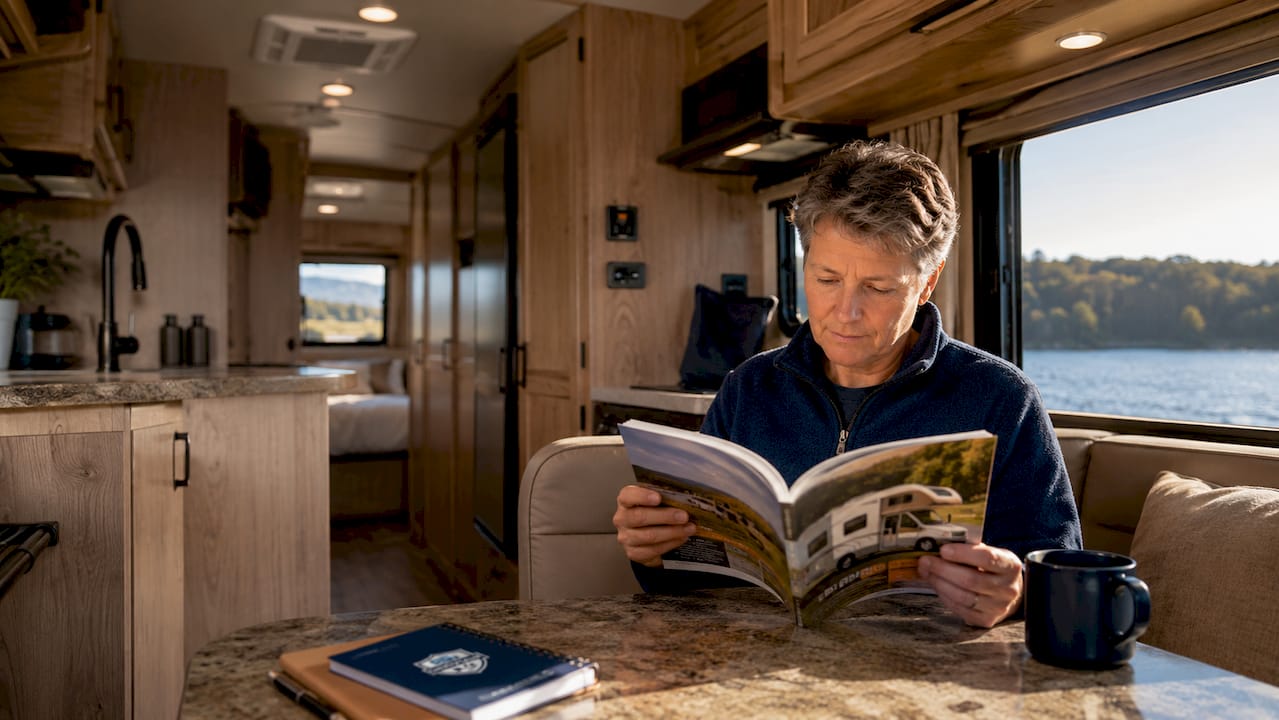
Full-time RV living is the practice of residing year-round in a recreational vehicle as your primary home, replacing a traditional house or apartment entirely. Nearly one million Americans have adopted this lifestyle as of 2026. That number signals a genuine cultural shift, not a fringe trend. The lifestyle, formally called full-time RVing or mobile domicile living, demands real planning around legal residency, finances, and daily logistics. First-time RV owners now represent 36% of all RV owners, showing how many people are making this leap with no prior experience. This guide covers what you actually need to know before you commit.
What does daily life look like living full-time in an RV?
Full-time RV living means managing a complete household inside 200 to 400 square feet. That is roughly the size of a studio apartment, but with wheels, a water tank, and a propane system. Every routine you take for granted at home requires a new system on the road.
Cooking happens in a compact galley kitchen, typically with a two or three-burner stove and a small oven or convection microwave. Laundry means finding a campground with hookups, using a portable washer, or locating a laundromat in town. Cleaning a small space is fast, but clutter builds up quickly when storage is limited. Successful full-time RVers build consistent daily routines that treat the rig like a home, not a vacation rental.
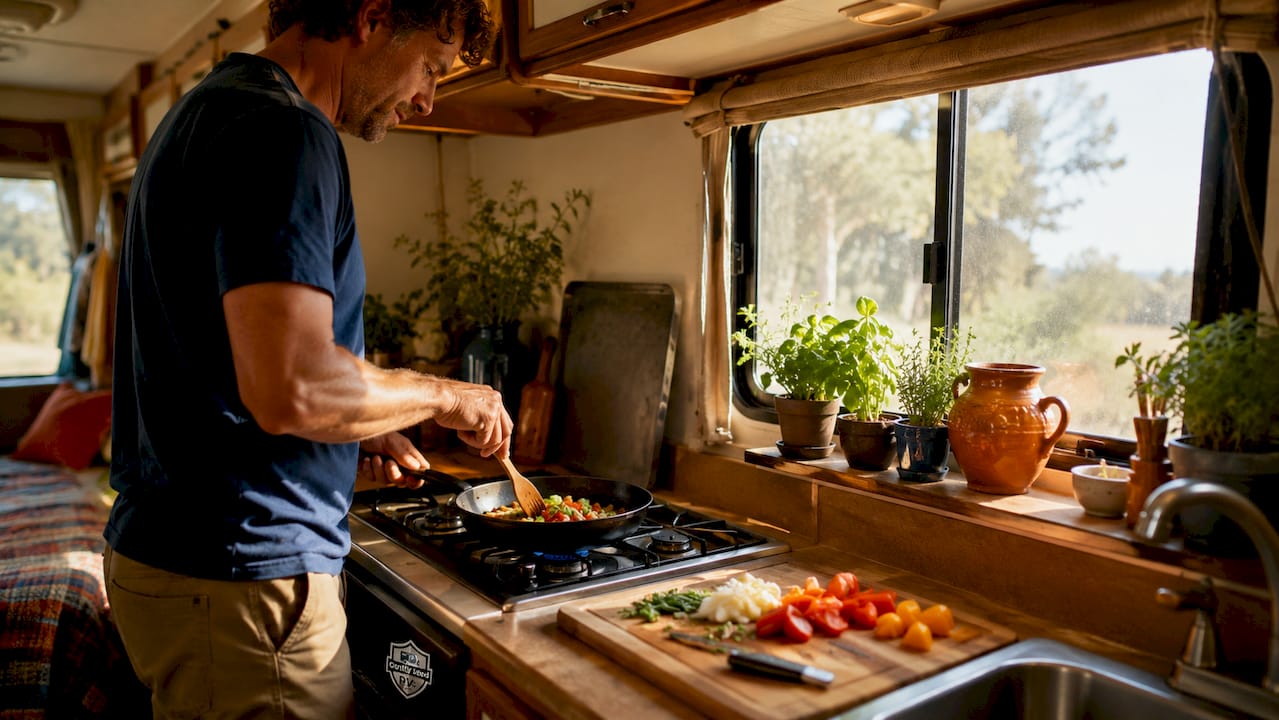
The mindset shift is the hardest part for most beginners. You are not camping. You are living. That distinction changes how you organize your space, manage your time, and handle problems. A leaky faucet or a dead battery is not an inconvenience you report to a landlord. It is your problem to fix, often in a campground parking lot.
Here is what your daily logistics will typically include:
- Water management: Monitoring fresh water, gray water, and black water tank levels daily
- Power tracking: Watching battery charge and shore power or solar input
- Propane checks: Keeping fuel topped off for cooking and heating
- Slide-out operation: Extending and retracting slides when moving or parking
- Leveling: Using leveling blocks or an auto-level system at each new site
Pro Tip: Set a weekly maintenance checklist on your phone. Checking tire pressure, fluid levels, and slide seals every seven days catches small problems before they become expensive ones.
Full-time RVing prioritizes experiences over possessions, which means downsizing aggressively before you move in. Most people discover they need far less than they think.
What are the costs of full-time RV living?
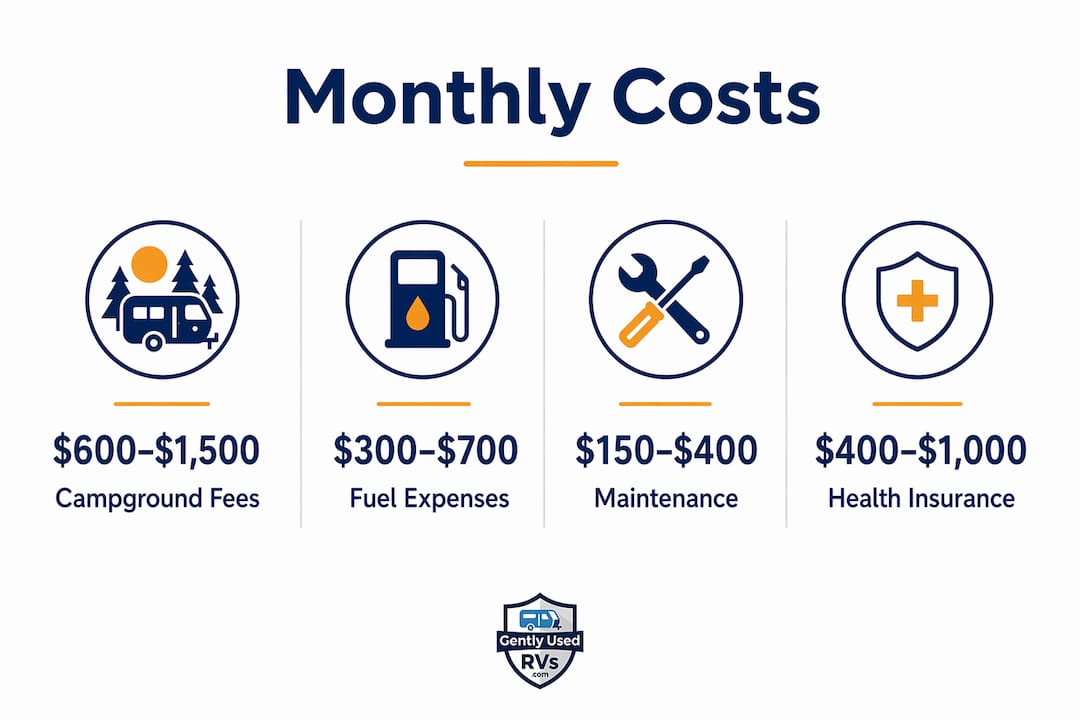
Monthly costs for full-time RV living vary widely based on travel pace, campground choices, and the age of your rig. A realistic monthly budget ranges from under $2,000 for a frugal slow traveler to over $5,000 for someone moving frequently and staying at premium resorts. No single number fits everyone, but understanding the cost categories helps you build a realistic plan.
Campground and fuel expenses
Campground fees are the biggest variable. Campgrounds use dynamic pricing similar to airlines, charging more on weekends, holidays, and peak seasons. A site that costs $35 per night on a Tuesday can run $65 on a Friday in july at a popular destination. Fuel costs depend entirely on how often you move and what you drive. A Class A diesel motorhome pulling 8 miles per gallon burns through money fast on long travel days.
Slow travel reduces costs significantly by enabling monthly campground rate negotiations and cutting fuel expenses. Staying in one location for 30 days instead of moving weekly can cut your site cost by 40% or more through negotiated monthly rates. Many state parks, Army Corps of Engineers campgrounds, and county parks offer long-term rates well below private campground prices.
Pro Tip: Membership programs like Thousand Trails, Harvest Hosts, and Passport America give you access to discounted or free camping. The annual fees pay for themselves within a few months of full-time travel.
Maintenance and unexpected repairs
Maintenance is the biggest ongoing reality of full-time RV life. Unlike a stationary home, an RV absorbs road vibration, weather extremes, and constant use simultaneously. Seals dry out. Slide mechanisms wear. Roof seams crack. Budget at least $100 to $200 per month into a dedicated repair fund, and expect one or two larger repairs per year.
| Expense Category | Estimated Monthly Cost | Notes |
|---|---|---|
| Campground fees | $600–$1,500 | Lower with slow travel and memberships |
| Fuel | $200–$800 | Depends on mileage and rig type |
| Maintenance and repairs | $100–$400 | Higher in first year of ownership |
| Food and groceries | $400–$700 | Similar to traditional housing |
| Insurance (RV and health) | $150–$400 | Varies by state and coverage level |
Health insurance deserves its own line in your budget. Without an employer plan, full-time RVers typically pay for individual coverage through the ACA marketplace or a health-sharing ministry. This cost alone can run $300 to $600 per month for a single adult depending on age and state of domicile.
How to choose the right RV for full-time living
The RV type you choose shapes every aspect of your daily life. Not every rig is built for year-round habitation. Choosing the wrong one is an expensive mistake that many beginners make.
The most common choices for full-time living are:
- Class A motorhomes: The largest option, typically 30–45 feet, with the most living space, storage, and residential features. Best for couples or families who prioritize comfort and plan to stay put for longer stretches.
- Class C motorhomes: Mid-size rigs with an over-cab sleeping area. More maneuverable than Class A and often more affordable. A solid choice for beginners.
- Fifth wheels: Towed by a pickup truck with a special hitch. They offer the most residential feel of any towable, with separate bedroom slides and full-size kitchens. Popular with full-timers who want space without a motorhome.
- Travel trailers: The most affordable entry point. Lighter and easier to tow, but typically less insulated and less spacious than fifth wheels.
- Class B campervans: Compact and fuel-efficient. Best for solo travelers or couples who prioritize mobility over space.
For year-round comfort, look for four-season insulation packages, dual-pane windows, heated underbelly systems, and residential-style refrigerators. These features are not standard on every rig. You need to check the spec sheet carefully before buying.
You can explore the full breakdown of RV types and features to compare options side by side before making a decision. If you are buying used, the guide on buying a used motorhome walks you through what to inspect and what to avoid.
| RV Type | Best For | Space | Typical Cost (Used) |
|---|---|---|---|
| Class A motorhome | Couples, families | 300–400 sq ft | $50,000–$200,000+ |
| Class C motorhome | Beginners, families | 200–300 sq ft | $30,000–$100,000 |
| Fifth wheel | Full-timers wanting space | 250–400 sq ft | $25,000–$80,000 |
| Travel trailer | Budget-conscious beginners | 150–250 sq ft | $10,000–$40,000 |
| Class B campervan | Solo travelers, couples | 60–100 sq ft | $40,000–$120,000 |
Community and legal logistics in full-time RV living
The legal side of full-time RV living catches most beginners off guard. You cannot simply sell your house and hit the road. You need a legal domicile, which is a state where you are officially a resident for tax, voting, insurance, and vehicle registration purposes.
Establishing a formal legal domicile is not optional. It governs your tax obligations, your driver’s license, your vehicle registration, and your right to vote. Most full-time RVers choose South Dakota, Texas, or Florida as their domicile state because these states have no income tax and offer straightforward residency processes for people without a fixed address.
Here is what you need to manage without a traditional home address:
- Mail: Use a mail forwarding service like Escapees RV Club or America’s Mailbox. They receive your mail, scan it, and forward packages on request.
- Vehicle registration: Registered in your domicile state, renewed annually by mail or online.
- Health insurance: Tied to your domicile state for ACA marketplace plans. Choose a state with nationwide network coverage.
- Voting: Register in your domicile state and request an absentee ballot for every election.
- Banking: Use a bank with no ATM fees and a nationwide network. Online banks like Ally or Charles Schwab work well for travelers.
The social side of full-time RV living is richer than most outsiders expect. The RV community is genuinely tight-knit. Organizations like the Escapees RV Club, Good Sam, and the Family Motor Coach Association host rallies, maintain campground networks, and run active online forums. Many full-timers say the community they found on the road replaced the neighborhood they left behind.
Key takeaways
Full-time RV living is a complete lifestyle shift that requires legal planning, financial discipline, and the right rig to succeed long-term.
| Point | Details |
|---|---|
| Legal domicile is non-negotiable | Choose a domicile state like South Dakota, Texas, or Florida before you hit the road. |
| Slow travel saves real money | Staying put for 30 days cuts campground costs and fuel expenses significantly. |
| Maintenance must be budgeted | Set aside $100–$200 per month minimum for repairs and upkeep. |
| RV type determines comfort | Class A motorhomes and fifth wheels offer the most livable space for full-timers. |
| Community is a genuine asset | Groups like Escapees RV Club provide mail services, campground networks, and social connection. |
What I have learned watching people make this leap
I have spent years watching people research this lifestyle, buy a rig, and then discover the gap between what they imagined and what full-time RV living actually demands. The ones who thrive share one trait: they prepared for the boring stuff, not just the adventure.
The biggest surprise for most newcomers is not the small space or the travel logistics. It is the maintenance. Many newcomers underestimate maintenance costs and the time investment, which creates real financial stress in the first six months. An RV is a house on a chassis. It has plumbing, electrical, HVAC, and a drivetrain all working simultaneously under road stress. Something will break. The question is whether you have the budget and the mindset to handle it without panic.
My honest advice: spend three to six months in your rig on weekends before you commit fully. Use that time to learn your systems, find your weak spots, and build your repair fund. The people who skip this step are the ones selling their rigs at a loss eighteen months later.
The rewards are real. Waking up in a new place, owning less, spending more time outside, and connecting with a community of people who chose the same unconventional path. Those things are genuinely worth the trade-offs. Just go in with clear eyes and a realistic budget, and you will be far ahead of most beginners.
— Christopher
Find your full-time home on Gently Used RVs
Ready to find the right rig for full-time living? Gently Used RVs lists Class A motorhomes, fifth wheels, travel trailers, Class B campervans, and more from private sellers and dealerships across the United States, Canada, and internationally.

Browse the full RV types guide to compare layouts, features, and price ranges before you start shopping. When you are ready to search inventory, used RVs for sale are listed by location so you see the closest options first. No account required to browse. No commissions if you sell. The platform is built for the RV community, by people who understand what full-time living actually demands from a rig.
FAQ
What is full-time RV living exactly?
Full-time RV living means using a recreational vehicle as your permanent, year-round primary residence instead of a traditional house or apartment. It requires establishing a legal domicile, managing all household logistics in a mobile space, and budgeting for campground fees and ongoing maintenance.
How much does full-time RV living cost per month?
Monthly costs typically range from under $2,000 for slow travelers using membership campgrounds to over $5,000 for those moving frequently and staying at premium sites. Campground fees, fuel, maintenance, and health insurance are the four largest budget categories.
What RV type is best for full-time living?
Class A motorhomes and fifth wheels offer the most living space and residential features for full-time use. Class C motorhomes are a strong choice for beginners who want a balance of space and maneuverability at a lower price point.
Do I need a permanent address for full-time RV living?
Yes. You must establish a legal domicile in a state to maintain your driver’s license, vehicle registration, voting rights, and insurance. South Dakota, Texas, and Florida are the most popular domicile states for full-time RVers due to their no-income-tax status and simple residency processes.
Is full-time RV living a growing trend?
The lifestyle has grown substantially. Nearly one million Americans now live in an RV full-time, and first-time RV owners represent 36% of all RV owners as of 2026, reflecting strong and continued growth in mobile living.