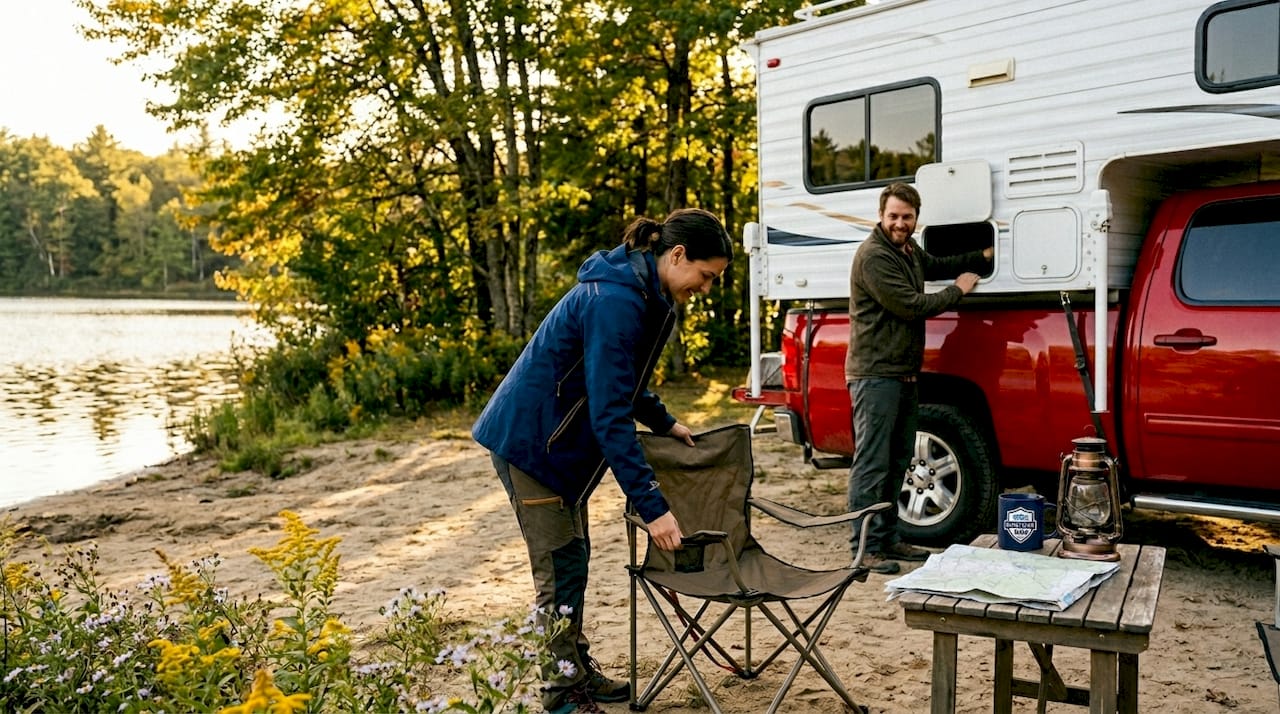
If you’re weighing your camping options and wondering what is a truck camper, you’re not alone. Plenty of first-timers mistake them for van conversions or slide-in trailers, and that confusion leads to bad buying decisions. A truck camper is a self-contained living unit that loads directly into the bed of a pickup truck, giving you a mobile home without the towing headaches. They go places most RVs simply cannot reach. This guide covers the definition, types, real-world advantages, honest drawbacks, and exactly what to expect from day-to-day use.
Table of Contents
- Key takeaways
- What is a truck camper, exactly?
- Hard-side vs. pop-up: which type fits you?
- Real advantages and honest challenges
- How to use a truck camper: loading to campsite
- My take on truck campers after years of watching buyers choose
- Find your truck camper on Gentlyusedrvs
- FAQ
Key takeaways
| Point | Details |
|---|---|
| Demountability defines them | A true truck camper loads into a pickup bed and can be removed, letting you use the truck independently. |
| Two main types exist | Hard-side campers suit four-season comfort; pop-up campers favor off-road trails and better fuel economy. |
| Versatility is the top strength | Truck campers let you tow boats or ATVs while camping, something no other RV configuration matches. |
| Wind is the biggest hazard | High-profile truck camper rigs are vulnerable to crosswinds, requiring specific driving awareness and technique. |
| Used options offer real value | Buying a used truck camper through a trusted marketplace saves money while still delivering full-featured camping. |
What is a truck camper, exactly?
The industry term you’ll hear most is slide-in camper, though “truck camper” is the phrase most people use and search for. Both refer to the same thing. A truck camper is demountable from the truck bed, and that one trait is what separates it from every other RV category. If it doesn’t come off the truck, it’s a truck bed conversion. Not a truck camper.
Here’s why that matters. When you reach your campsite, you can set the camper down on its jacks, unhitch, and drive the truck into town for groceries, to explore a trail, or to tow a boat out on the lake. You have two independent machines, not one locked-together unit.
Most truck campers share a core set of features regardless of price point:
- A sleeping area, usually a cabover bed above the truck cab
- A kitchen with a stove, sink, and refrigerator
- Fresh water tank, gray water tank, and a toilet or wet bath
- 12-volt electrical system with shore power hookup
- Heating and ventilation
“The truck camper is the original go-anywhere, camp-anywhere RV. Its defining characteristic isn’t what’s inside, it’s the fact that it comes off the truck when you want it to.” — Truck Camper Magazine
Many models also include solar panels, large battery banks, and holding tanks sized for extended dry camping off the grid. The footprint is small. The capability is not.
Hard-side vs. pop-up: which type fits you?
Two primary categories define the truck camper world, and choosing between them is the most important decision you’ll make before buying.
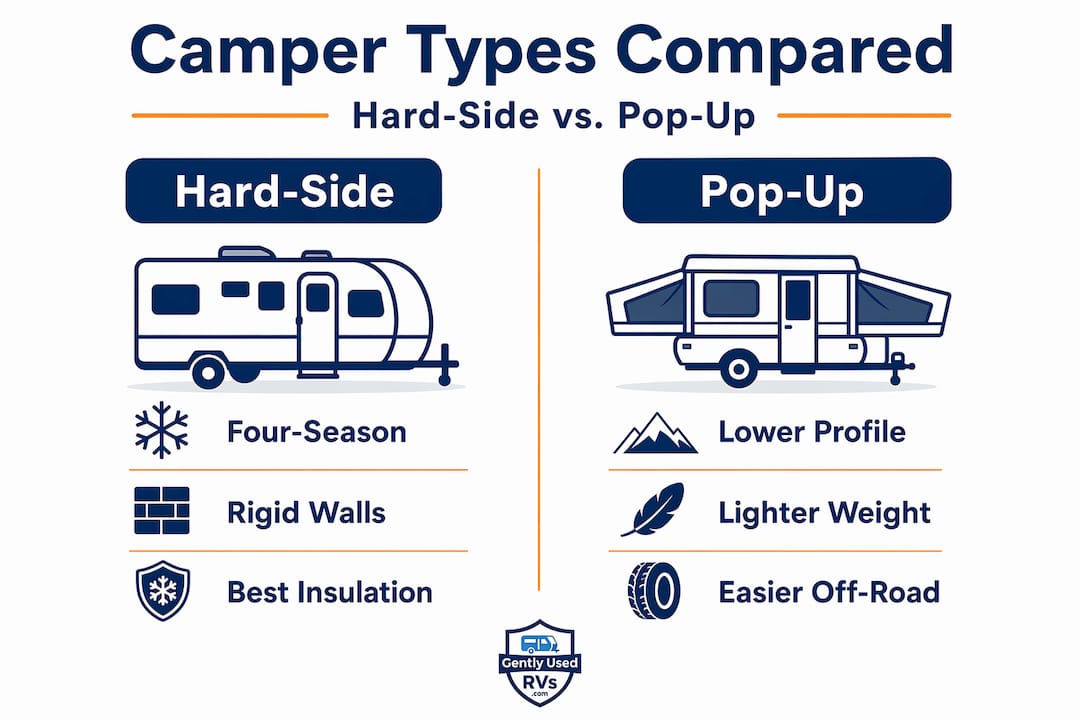
| Feature | Hard-side camper | Pop-up camper |
|---|---|---|
| Insulation | Excellent, four-season rated | Limited, better for mild climates |
| Height profile | Fixed and tall | Low when collapsed |
| Fuel economy | Lower due to weight and drag | Better, especially when folded down |
| Off-road clearance | Reduced | Improved |
| Interior space | More livable, full-height walls | Cozy, expandable when parked |
| Best for | Full-time travel, cold weather | Off-road trips, international shipping |
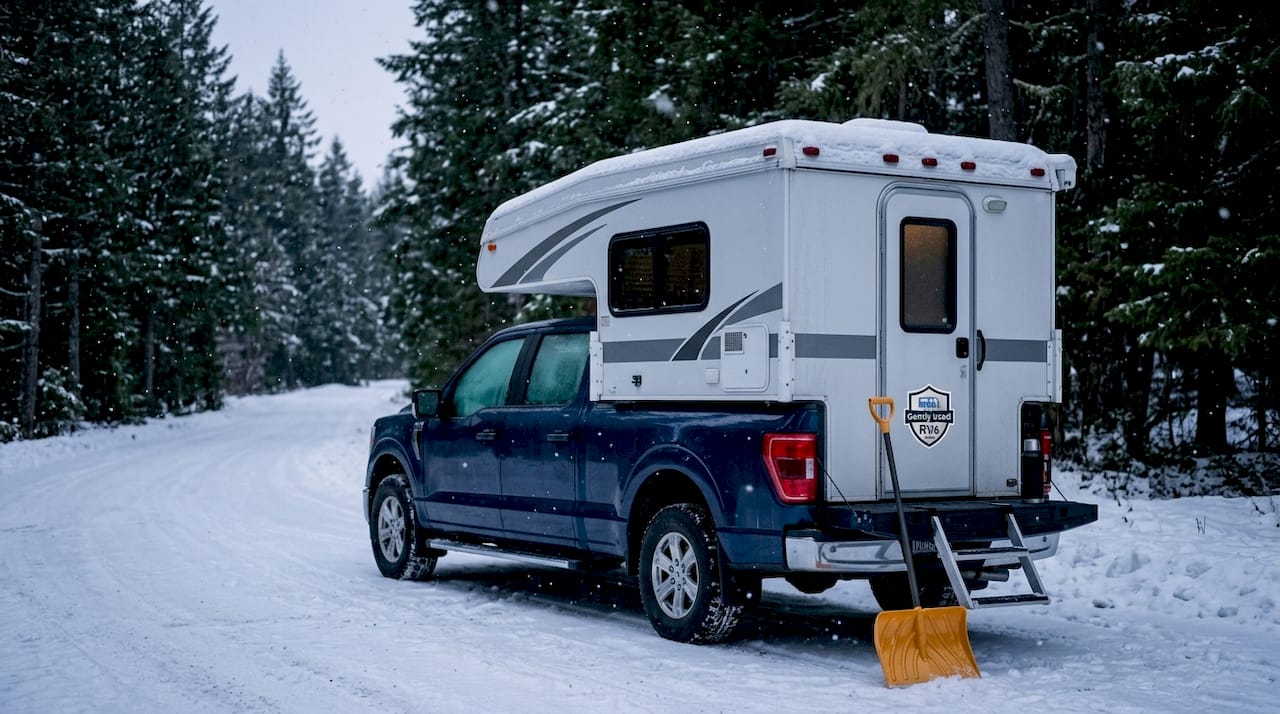
Hard-sided units suit four-season use, plain and simple. The rigid fiberglass or aluminum walls hold heat better, block road noise, and make the interior feel like a real living space. If you camp in Montana in October or plan winter trips in the Rockies, a hard-side is the obvious choice.
Pop-up campers collapse down when you’re driving, which lowers wind resistance, improves your sight lines, and lets you squeeze under branches on tight forest trails. Pop-ups are lighter and better suited for half-ton or smaller trucks that can’t safely carry a heavy hard-side rig. They appeal strongly to backpackers, off-roaders, and anyone who wants the lowest-cost entry into truck camping.
There’s a further split inside the pop-up category worth knowing. Hard-wall pop-ups use rigid panels that fold out, giving you more structural rigidity and insulation than a fabric model. Soft-wall pop-ups use canvas or vinyl for the raised sections, making them the lightest option of all. One practical note: pop-ups fit better in shipping containers with the truck still inside, which matters a lot if you’re planning international overland travel.
Pro Tip: If you’re unsure which type fits your style, map out your top three planned trips first. Cold weather or full-timer camping? Go hard-side. Tight trails and rough roads? Pop-up wins every time.
Real advantages and honest challenges
Truck campers earn their reputation for a reason. Over 70% of truck camper owners report towing boats, ATVs, or other gear alongside the camper because the truck’s hitch stays free. That’s a setup no travel trailer or fifth wheel can match. You camp in comfort, then tow your toys to the lake the next morning.
The off-road and boondocking capability is equally serious. Large holding tanks, battery banks, and solar panels allow extended dry camping that most other RV classes can’t replicate without major modifications. Pair a truck camper with a capable four-wheel-drive pickup and you can access dispersed camping spots that are completely off-limits to trailers and motorhomes.
That said, there are real challenges you should know about before you commit:
- Height restrictions: Most truck campers add 3 to 5 feet of height to your truck. Drive-through restaurants, parking garages, and low bridges become obstacles.
- Wind vulnerability: High wind speeds cause stability issues and driver fatigue faster than almost any other road situation. Crosswinds on open highways are the top complaint from experienced truck camper owners.
- Weight and payload: Your truck’s payload rating is not negotiable. Overloading a half-ton truck with a full-size hard-side camper will wear out your suspension, void your warranty, and create a dangerous driving situation.
- Parking: In cities and smaller campgrounds, a truck with a camper loaded can be genuinely difficult to park. Plan ahead.
Pro Tip: Before buying any camper, look up your truck’s payload capacity on the door jamb sticker. Subtract the weight of passengers, gear, and fluids. What’s left is your maximum camper weight. Don’t fudge this number.
How to use a truck camper: loading to campsite
Understanding the practical side of daily truck camper life matters as much as knowing the features. Here’s how a typical cycle works.
- Loading the camper onto the truck. Most campers require jacks or lifts to mount and dismount safely. You raise the camper on four corner jacks, back the truck under it, lower it into the bed, and lock it with camper tie-downs. It sounds complicated. After a few times, it takes about 15 minutes.
- Driving with awareness. Awareness of wind impact and height restrictions is the number one driving skill to develop. Give yourself extra stopping distance, reduce speed in crosswinds, and know your loaded height before entering any structure.
- Setting up at camp. Once parked, you lower the stabilizer jacks to take weight off the truck’s suspension and level the camper. Most modern units have a simple bubble level or a digital display to guide you. Plug into shore power if it’s available, or switch to battery and solar if you’re dry camping.
- Routine maintenance. Check your tie-down torque before every drive. Inspect the roof seals at least twice a year to prevent water intrusion. Flush holding tanks regularly and use RV-safe tank treatments to avoid odors and buildup.
Pro Tip: Keep a small notebook in the camper and log every campsite with GPS coordinates, cell signal quality, and your leveling setup notes. Your future self will thank you on return trips.
You can dig deeper into specific models and configurations in our truck camper types overview on Gentlyusedrvs, which breaks down features by use case and price range.
My take on truck campers after years of watching buyers choose
I’ve seen a lot of campers get sold and a lot of buyers walk away from a purchase they regretted within one season. Truck campers have the highest satisfaction rate of any RV category I follow closely, but only when the buyer matched the camper to their actual travel style instead of their fantasy travel style.
The freedom is real. You pull into a remote canyon, set the camper down, and the truck becomes a trail vehicle while your home stays put at camp. I’ve never seen that moment fail to impress someone experiencing it for the first time.
What I warn people about is the wind. Most new truck camper owners aren’t told clearly enough how much crosswinds affect handling on open stretches of highway. It’s not dangerous if you know what’s coming. It is genuinely unsettling if you don’t. Slow down, position yourself away from the worst exposed sections, and take breaks during sustained gusty conditions. That’s not weakness. That’s how experienced truck camper drivers operate.
My honest recommendation: if you camp more than eight weekends a year and you want access to places that trailers and motorhomes can’t reach, a truck camper is worth every penny. If you want a luxury basecamp and mostly stay in full-hookup parks, a travel trailer will likely serve you better. Neither answer is wrong. But knowing which one fits your life before you write the check matters enormously.
— Christopher
Find your truck camper on Gentlyusedrvs
Ready to find a used truck camper that fits your truck and your travel plans? Gentlyusedrvs is a free online classifieds marketplace where private sellers and RV dealerships list used rigs across the United States, Canada, and internationally. Browse listings without creating an account, with search results sorted by proximity so you see the closest options first.

Start by exploring the RV types guide to compare truck campers against other options like travel trailers or Class B motorhomes before you commit. When you’re ready to buy, always request a VIN check and a hands-on inspection. The Gentlyusedrvs scam safety guide walks you through exactly how to vet a seller and protect your money. Our community has your back.
FAQ
What is the basic truck camper definition?
A truck camper, also called a slide-in camper, is a demountable RV unit that loads into the bed of a pickup truck and can be removed independently. It includes sleeping, cooking, and bathroom facilities in a compact, self-contained unit.
How does a truck camper differ from other RVs?
Unlike motorhomes or travel trailers, a truck camper sits in the bed of a pickup you already own and can be dismounted at camp, freeing the truck for separate use. No separate tow vehicle is needed, and no additional commercial license is required.
What are the main truck camper features to look for?
Key features include a cabover sleeping area, a functional kitchen, a fresh and gray water tank, a 12-volt electrical system, and a heating source. Higher-end models add solar panels, composting toilets, and slide-out sections for more interior room.
Can you go off-road with a truck camper?
Yes, and off-road capability is one of the biggest truck camper benefits. Pop-up models offer the best clearance and lowest weight for rough trails, while any truck camper paired with a four-wheel-drive pickup can access dispersed camping far beyond the reach of trailers.
Is wind a serious concern when driving a truck camper?
It is. The high-profile rig catches crosswinds significantly, causing driver fatigue and stability issues at highway speeds. Reducing speed, anticipating gusts on open roads, and using stabilizing jacks at camp are standard safety practices for truck camper drivers.