
A correctly priced, well-presented travel trailer sells privately within 3 to 7 weeks. That’s the baseline every seller should plan around. Stretch that timeline to 4 to 6 months and you’re looking at a unit that’s overpriced, poorly photographed, or listed at the wrong time of year. This travel trailer selling timeline guide covers every variable that controls how fast your trailer moves, from choosing the right selling method to nailing your paperwork before the first buyer calls. Follow this step-by-step selling process and you’ll avoid the most common delays that cost sellers both time and money.
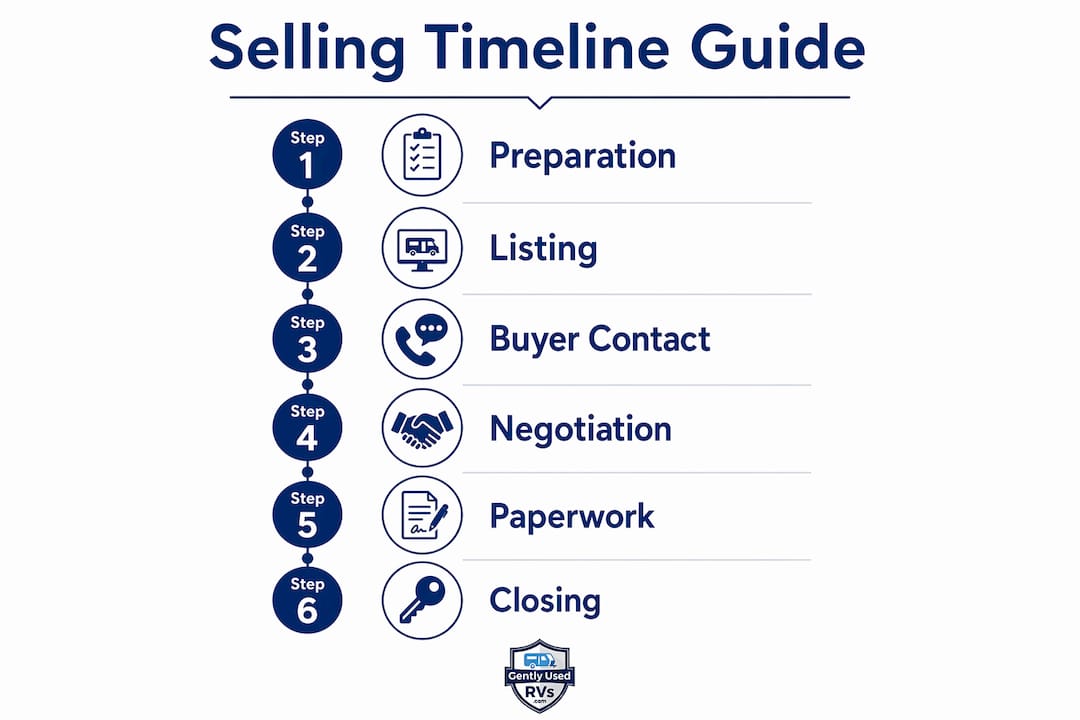
How does your selling method affect the travel trailer timeline?
Your selling method is the single biggest factor controlling how long your trailer sits. Private sale, consignment, and dealer trade-in each deliver very different timelines, effort levels, and returns.
Private sale is the sweet spot for most sellers. A well-priced private sale closes in 3 to 7 weeks for units in good condition. Smaller trailers priced under $20,000 often move in 2 to 4 weeks. You control the price, the negotiation, and the timeline. The trade-off is effort. You handle photos, listings, buyer calls, and paperwork yourself.

Consignment hands the work to a dealer but costs you time. Consignment sales average 90 to 120 days, and that’s for popular brands in good shape. Units with deferred maintenance or unusual floor plans can sit even longer. The best-case scenario for a well-known brand is still 45 to 75 days. You also pay a commission, typically 10%–20% of the sale price.
Dealer trade-in is the fastest option. You can walk out with a check the same day. The cost is real money. Dealers price trade-ins to resell at a profit, so you’ll almost always leave $3,000 to $8,000 on the table compared to a private sale.
| Method | Typical Timeline | Effort Level | Return | Price Control |
|---|---|---|---|---|
| Private Sale | 3–7 weeks | High | Highest | Full |
| Consignment | 90–120 days | Low | Moderate | Partial |
| Dealer Trade-In | Same day to 1 week | Minimal | Lowest | None |
Most sellers who want top dollar and a reasonable timeline choose private sale. If you want to explore consignment vs. dealer options before deciding, compare both carefully against your financial goals.
What preparation and pricing steps shorten your sale?
Preparation is where most sellers either win or waste months. The right price and presentation cut your timeline in half. Get them wrong and your listing goes stale fast.
Build a defensible asking price
A defensible asking price combines three data points: your NADA/JD Power baseline, 5 to 8 comparable private listings within 500 miles, and at least one dealer trade-in quote. Expert sellers recommend pricing in the lower third of comparable listings to attract serious buyers without looking desperate. Your private sale price should exceed the trade-in offer by at least $3,000 to justify the extra effort. Use the Gentlyusedrvs pricing strategy guide to cross-check your number against current market data before you publish.
Photograph like a professional
Professional-quality photography with 40+ daylight photos doubles buyer interest. Poor photo quality is the single largest cause of low inquiry volume, regardless of how good your unit actually is. Shoot every angle: exterior corners, hitch, roof, awning, interior living space, kitchen, bathroom, bedroom, and storage bays. Natural light beats flash every time. High-quality photos also attract more qualified buyers, which shortens your negotiation cycle.
Pro Tip: Shoot photos on a sunny morning with the trailer parked on a clean surface away from clutter. Open all blinds and turn on interior lights for a bright, welcoming interior look.
Your pre-listing checklist
Run through this before you publish your listing:
- Fix small issues: burned-out bulbs, loose cabinet hardware, worn weather stripping. Buyers use cosmetic issues as negotiation leverage, and every dollar they knock off hurts your return.
- Clean the unit thoroughly inside and out, including the roof and wheel wells.
- Gather all service records, manuals, and warranty documents.
- Confirm your title is clear and in your name.
- Test all appliances, slides, awning, and electrical systems.
- Take photos of any known issues and disclose them upfront to avoid deal-killing surprises at inspection.
When is the best time to list your travel trailer?
Timing your listing around buyer demand is one of the most underused tools in a seller’s kit. The RV market is seasonal, and listing at the wrong time of year adds weeks to your timeline for no reason.
Spring, from march through may, is peak selling season for travel trailers. Buyers are planning summer trips, financing is fresh, and demand is at its highest. A unit listed in march will attract far more inquiries than the same unit listed in november. Market activity slows sharply in fall and winter as camping season winds down and buyers shift their attention elsewhere.
Here’s how to time your listing for maximum impact:
- List in late february or early march to catch buyers before peak competition builds.
- Avoid listing in october through december unless you’re willing to accept a lower price or a longer wait.
- Regional variations matter. Sunbelt states like Florida, Texas, and Arizona see year-round buyer activity. Northern states see a much sharper seasonal drop-off.
- If you miss spring, late summer (july through august) is your next best window as buyers plan fall trips.
- Watch local inventory levels. If comparable trailers are flooding your market, wait two to three weeks for some to sell before adding yours.
Listing across multiple platforms also shortens your sale time versus relying on a single marketplace. More eyes on your listing means faster offers.
How do paperwork and payment handling affect your closing timeline?
Clean paperwork closes deals fast. Messy paperwork kills them. Sellers who skip this step often lose buyers at the finish line after weeks of effort.
Start before you list. If you have an outstanding loan, contact your lender immediately for a payoff quote. Without a clear title, a buyer cannot register the trailer, and your sale stalls for weeks while you sort it out. Get the title in hand or have a clear plan for same-day lien release before you accept any offers.
Pro Tip: Call your lender and ask for a “10-day payoff quote” in writing. This gives you an exact number to work with and speeds up the closing process significantly.
On payment, the rules are simple. Never accept personal checks. Cash, certified funds, or a verified escrow service are your only safe options. If a buyer offers a cashier’s check, call the issuing bank directly to verify it before handing over keys or title. For high-value transactions, an escrow service protects both parties and removes the risk of fraud entirely.
Your bill of sale must include:
- Full names and addresses of buyer and seller
- Year, make, model, VIN, and odometer reading
- Agreed sale price and payment method
- A clear “as-is” clause unless you are providing a warranty
- Signatures from both parties with date
Keep a copy. The buyer gets the original. This document protects you from any post-sale disputes.
What mistakes are prolonging your travel trailer sale?
Most sellers who are stuck after 60 or 90 days are making one of four fixable mistakes.
“Stale listings lose buyer trust. A unit that has been sitting for months signals something is wrong, even when nothing is.” — Easy Escapes RV
Overpricing is the top offender. Price anchoring $5,000 to $8,000 above local comparables nearly doubles your timeline from 3 to 7 weeks to 12 to 16 weeks. Buyers do their homework. If your price is out of step with the market, they move on. If you receive no serious inquiries within 14 days of listing, drop your price by 5% to 8% and refresh your photos.
Poor photos kill inquiries before they start. A listing with dark, blurry, or incomplete photos tells buyers the seller doesn’t care. That’s a red flag. Reshoot everything in daylight before you adjust price.
Failing to qualify buyers wastes your time. Strong buyer qualification from the start filters out browse-only inquiries and speeds up closing. Ask upfront: Is the buyer paying cash or financing? Have they been pre-approved? Are they ready to move within 30 days? Buyers who can’t answer these questions clearly are not serious yet.
Not adjusting after market feedback is a slow-motion mistake. Patience combined with active price adjustments and listing improvements produces far better results than holding firm on an above-market price. The market is telling you something. Listen to it.
You can also review negotiation tactics to handle lowball offers without losing good buyers or dragging out your timeline.
Key takeaways
A well-prepared, correctly priced travel trailer listed in spring sells privately in 3 to 7 weeks, while poor pricing or timing can push that to 4 to 6 months.
| Point | Details |
|---|---|
| Choose your method wisely | Private sale returns the most money; consignment takes 90–120 days; dealer trade-in is fastest but lowest return. |
| Price with data, not emotion | Use NADA, comparable listings, and a trade-in quote to set a price in the lower third of your local market. |
| Photos drive inquiries | Shoot 40+ daylight photos covering every angle; poor photos are the top cause of low inquiry volume. |
| List in spring for speed | March through may is peak demand; fall and winter listings take significantly longer to close. |
| Clear title before you list | Resolve any outstanding loans and have your title ready to avoid closing delays that lose buyers. |
What i’ve learned after watching hundreds of trailers sell
Sellers consistently underestimate how much preparation time is worth. I’ve seen units sit for four months because the owner refused to drop the price $2,000. I’ve also seen trailers sell in nine days because the seller did everything right upfront: clean unit, great photos, honest price, title in hand.
The pricing conversation is the hardest one. Most sellers have an emotional number in their head based on what they paid or what they’ve put into the unit. The market doesn’t care about that. It only cares about what comparable units are selling for right now. The sellers who accept that early sell fast. The ones who don’t end up chasing the market down for months.
One thing most guides skip: buyer qualification. Responding to every inquiry with equal energy is exhausting and counterproductive. Ask the cash-or-finance question in your first message. It takes five seconds and immediately separates serious buyers from window shoppers. Serious buyers respect the directness. Time-wasters disappear.
The other shortcut I’d push every seller toward is listing on multiple platforms from day one. Single-platform listings leave real buyers on the table. More exposure means faster offers, and faster offers mean you have leverage in negotiations.
— Christopher
List your travel trailer on Gentlyusedrvs today
Ready to put this travel trailer selling timeline guide into action? Gentlyusedrvs makes listing your travel trailer fast and completely free. No commissions, no hidden fees, and no account required for buyers to find your unit.

Post your listing in minutes using the AI-powered autofill tool, which pulls your year, make, model, specs, and photos automatically from any existing URL. Buyers across the U.S., Canada, and internationally search the platform daily. Upgrade to a Gold plan for nationwide visibility, live buyer chat, and appointment scheduling, all for $199 over six months. Whether you’re selling a budget trailer or a premium rig, Gentlyusedrvs connects you with motivated buyers faster. Start your free listing today and get your trailer in front of the right buyers before peak spring season arrives.
FAQ
How long does it take to sell a travel trailer privately?
A correctly priced, well-presented travel trailer sells privately in 3 to 7 weeks. Units under $20,000 often close in 2 to 4 weeks, while overpriced units can sit for 4 to 6 months.
What is the best time of year to sell a travel trailer?
Spring, specifically march through may, is the peak selling window for travel trailers. Buyer demand is highest as people plan summer trips, and listings move significantly faster than in fall or winter.
Should i use consignment or sell my travel trailer privately?
Private sale returns more money and typically closes faster, in 3 to 7 weeks versus 90 to 120 days for consignment. Consignment makes sense if you want a hands-off process and are willing to wait and pay a commission.
What payment methods are safe when selling a travel trailer?
Cash, certified funds, and verified escrow services are the only safe payment options. Never accept personal checks, and always verify cashier’s checks directly with the issuing bank before transferring the title.
How do i price my travel trailer to sell quickly?
Use NADA/JD Power as your baseline, compare 5 to 8 private listings within 500 miles, and get a dealer trade-in quote. Price in the lower third of your local market to attract serious buyers without undercutting your return.