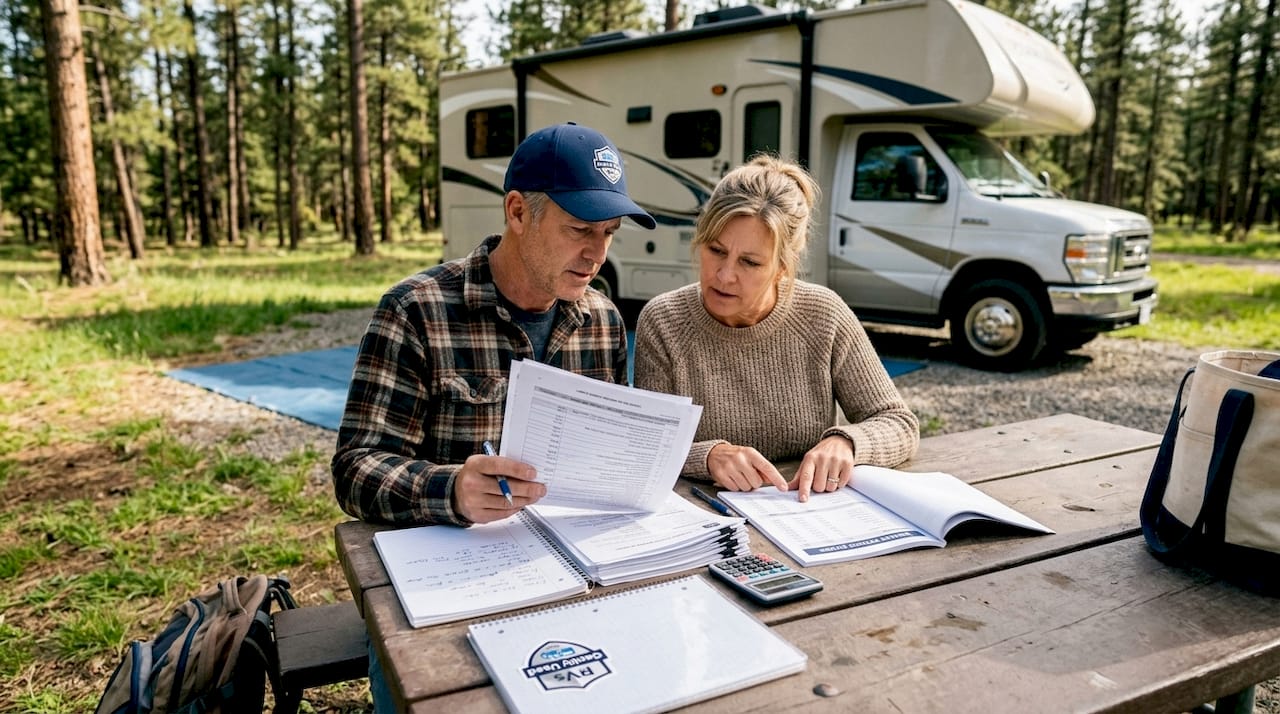
Effective used RV price negotiation is defined by preparation, market data, and timing rather than pressure tactics or luck. Informed buyers negotiate roughly 18% off asking price, while unprepared buyers average just 5%. That gap represents thousands of dollars on a Class A motorhome or fifth wheel. The strategies in this guide cover everything from NADA Guides benchmarking and inspection leverage to dealer psychology and private seller tactics, giving you a complete 2026 playbook before you set foot on any lot.
What tools and data do you need before negotiating a used RV price?
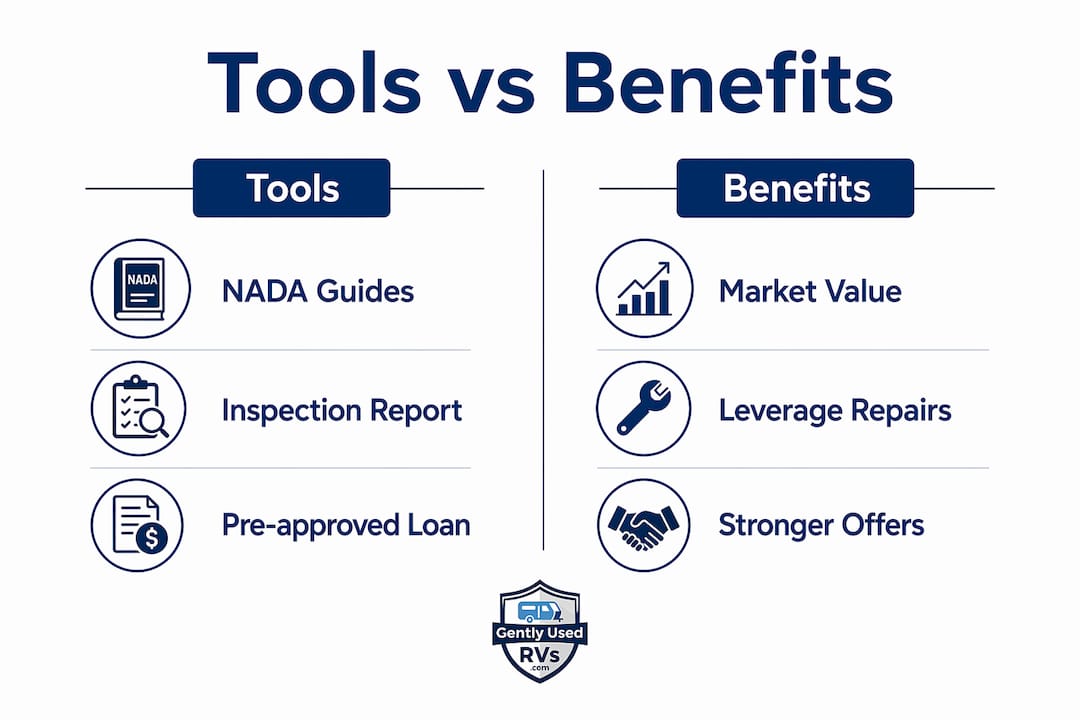
Preparation using data and inspection findings outperforms aggressive tactics every single time. Walking into a negotiation without market data is like showing up to a poker game without knowing the rules. You need three core tools before you open any conversation about price.
NADA Guides and regional comps
NADA Guides is the appraisal standard that most dealers use to set asking prices. Pull both the full retail value and the low retail value for the specific year, make, and model you want. Your goal as a buyer is to negotiate closer to low retail, especially if the unit has defects or high mileage. Pair NADA values with at least five comparable listings from your region to build a defensible price range before any conversation starts.
Pre-approved financing

Securing outside financing from a credit union like Navy Federal or a bank like Wells Fargo before you shop gives you two advantages. First, you know your real budget. Second, dealers cannot manipulate the deal through financing terms once you already have an approval in hand. This shifts the entire conversation to the out-the-door price, which is where it belongs.
Inspection report
Hire a certified RV inspector through the National RV Inspectors Association (NRVIA) before finalizing any purchase. An inspection report converts vague concerns into documented, dollar-quantified leverage. It also signals to the seller that you are a serious, prepared buyer rather than a casual browser.
Here is a quick reference for the tools and what each one does for your negotiation:
| Tool | Purpose | Negotiation Benefit |
|---|---|---|
| NADA Guides | Establishes market value range | Anchors your offer to industry data |
| Regional comps | Shows real asking prices near you | Exposes overpriced listings immediately |
| Pre-approved financing | Locks in your rate before shopping | Removes dealer financing leverage |
| NRVIA inspection report | Documents defects with repair costs | Justifies price reductions in writing |
| Itemized price sheet | Reveals hidden dealer fees | Lets you negotiate total out-the-door cost |
Pro Tip: Request a complete itemized price sheet from any dealer before you make an offer. Destination, doc, and prep fees can quietly add thousands to the sticker price. Knowing those line items upfront lets you negotiate the total cost rather than just the base price.
When is the best time to negotiate used RV prices?
Timing is a legitimate negotiation tool, not just a nice-to-have. Late fall and winter deliver the strongest buyer leverage, while summer is the worst time to negotiate because demand spikes and dealers have no urgency to move units. Buying a Class C motorhome in January versus June can mean a difference of several thousand dollars on the same vehicle.
Here are the timing windows ranked by buyer advantage:
- Late fall and winter (November through February): Lowest demand, highest inventory, dealers motivated to clear lots before year-end.
- Early spring (March): Demand starts rising but has not peaked. Still solid leverage, especially on units that sat through winter.
- End of month or end of quarter: Dealers working toward sales targets are more willing to accept lower offers to close deals before the deadline.
- Units aged 90 or more days on the lot: Aged inventory often receives 15 to 25% off because carrying costs accumulate and dealers want to recoup floor plan financing.
- Summer (June through August): Avoid negotiating during peak camping season. Sellers hold firm because replacement buyers are plentiful.
Pro Tip: Ask the dealer or private seller directly how long the unit has been listed. A travel trailer sitting for 100 days is a very different negotiation than one listed last week. Use days on lot as a formal anchor in your offer: “I see this has been on the market for 110 days, so I am factoring that into my offer.”
For additional context on how seasonal demand affects used RV pricing cycles, the Gentlyusedrvs blog breaks down exactly why late fall and winter create the most favorable conditions for buyers.
How do inspection findings translate into negotiation leverage?
A professional inspection converts a subjective “this thing has some issues” into a written, itemized document that moves negotiations from emotional to fact-based. Presenting findings in writing consistently produces better counteroffers because sellers respond to evidence, not confrontation.
Defects fall into four categories, and each carries a different discount formula:
- Cosmetic issues (faded decals, minor upholstery wear, small dents): Typical reduction of $500 to $1,000 off asking price.
- System repairs (water heater, slide-out motor, HVAC, electrical): Reduction of $1,000 to $2,500 depending on repair estimates.
- Structural damage (roof delamination, frame issues, water intrusion): Reduction of $3,000 to $10,000 or more, depending on severity.
- Deal-breakers (active mold, severe frame rot, flood damage): Walk away. No discount justifies the ongoing liability.
The offer math formula experienced negotiators use is straightforward: request $1,000 to $1,500 off the asking price for every $1,000 in documented repair costs. This multiplier accounts for your time, the inconvenience of managing repairs, and the risk that estimates run over. It is not aggressive. It is logical, and most reasonable sellers accept the framework once they see the written report.
Here is a comparison of how defect categories affect negotiation outcomes:
| Defect Category | Estimated Repair Cost | Recommended Price Reduction |
|---|---|---|
| Cosmetic (minor) | $300–$600 | $500–$1,000 |
| System failure | $800–$2,000 | $1,000–$2,500 |
| Structural damage | $2,500–$8,000 | $3,000–$10,000+ |
| Deal-breaker issues | Unpredictable | Walk away |
Pro Tip: Hand the seller or dealer a printed copy of the inspection report. Do not just describe the findings verbally. A physical document signals professionalism and makes the price reduction feel like a logical conclusion rather than a personal attack.
For a step-by-step walkthrough on using inspection results as leverage, the Gentlyusedrvs private seller buying guide covers the full process in detail.
What negotiation tactics work best for dealer vs. private seller sales?
Dealer negotiations and private seller negotiations require different approaches. Using the wrong tactics in the wrong context can kill a deal that was otherwise winnable.
Negotiating with dealers
Dealers have hidden margins baked into their asking prices. Invoice cost typically runs 30 to 40% below MSRP, and reconditioning fees of $1,500 to $5,000 plus dealer pack fees of $1,000 to $3,000 are often embedded in the price. Knowing this structure lets you frame credible offers rather than random lowballs.
Follow this sequence with dealers:
- Request the itemized price sheet before making any offer.
- Reference NADA low retail as your baseline.
- Cite days on lot and any inspection findings as objective constraints.
- Negotiate the total out-the-door price, not the monthly payment.
- Ask for added items (extended warranty, accessories, service package) if the price floor is firm.
Understanding invoice cost and inventory aging gives you the credibility to present offers that dealers take seriously. You can find current dealer listings and compare pricing through the Gentlyusedrvs dealer directory to benchmark what dealers in your area are actually asking.
Negotiating with private sellers
Private sellers are emotionally attached to their RVs in a way dealers are not. They named the price based on what they feel the unit is worth, not a spreadsheet. Respect that attachment while still presenting your case clearly.
- Open with genuine interest and a few specific compliments about the unit.
- Present inspection findings calmly, in writing, as shared information rather than accusations.
- Make a single, well-reasoned offer rather than a series of small increments.
- Be willing to walk away. A calm willingness to leave is one of the most effective tools in any negotiation, and private sellers often call back within 24 to 48 hours.
Understanding why private sellers price differently than dealers helps you calibrate your opening offer and avoid insulting a seller who might otherwise have been flexible.
What mistakes should you avoid during used RV negotiations?
Even well-prepared buyers make errors that cost them money or kill deals entirely. These are the most common ones to watch for.
- Negotiating monthly payment instead of total price. Monthly payment focus hides unfavorable loan terms and lets dealers inflate the total cost while keeping the payment number attractive. Always anchor to the out-the-door price.
- Skipping the inspection. No inspection means no leverage. You are negotiating blind, and sellers know it.
- Accepting the first price without running comps. NADA values and regional listings take 30 minutes to pull. That 30 minutes can save you $3,000 to $8,000.
- Falling in love with one unit. Emotional attachment to a specific Class A or fifth wheel destroys your willingness to walk away, which is your most powerful tool.
- Revealing your maximum budget. Once a dealer knows your ceiling, every negotiation moves toward it. Keep your budget private.
- Making the seller feel embarrassed. Sellers who feel cornered or disrespected dig in. Help them save face by framing your offer as a logical response to market data, not a judgment of their asking price.
Pro Tip: If a dealer or private seller will not budge on price, shift to asking for extras. Request a full tank of propane, a generator service, new tires, or an extended warranty. These additions have real dollar value and often cost the seller less than a straight price reduction.
Key takeaways
Successful used RV price negotiation requires NADA Guides data, a professional inspection report, and strategic timing to consistently achieve 10 to 25% off asking price.
| Point | Details |
|---|---|
| Use NADA Guides as your anchor | Target low retail value, not full retail, especially when defects exist. |
| Time your purchase strategically | Late fall and winter give you the most leverage; summer is the weakest window. |
| Convert inspection findings to dollars | Use the $1,000–$1,500 reduction formula per $1,000 in documented repair costs. |
| Negotiate total out-the-door price | Never focus on monthly payments; hidden fees inflate the real cost. |
| Walk away when needed | Calm willingness to leave is your strongest psychological tool in any negotiation. |
What 15 years of watching RV deals taught me about negotiating
The buyers who consistently get the best deals are not the loudest or most aggressive. They are the most prepared. I have watched buyers walk onto a lot with a printed NADA report, a written inspection summary, and a pre-approval letter, and watched dealers fold within 20 minutes because there was simply no room to push back. That is not luck. That is leverage built before the conversation started.
The single most underused tactic I see is the walk-away. Most buyers treat it as a last resort. The best negotiators treat it as a standard move. When you leave calmly and say “I appreciate your time, I need to think about it,” you shift all the psychological pressure to the seller. Private sellers especially tend to call back. Dealers facing end-of-month quotas often do too.
One more thing worth saying plainly: do not let a great deal on a bad RV cloud your judgment. I have seen buyers negotiate $4,000 off a unit with serious roof delamination and feel like they won, only to spend $9,000 in repairs six months later. The inspection is not optional. It is the foundation everything else is built on. If a seller refuses an inspection, that tells you everything you need to know.
— Christopher
Start your search with real listings and real prices

Knowing the right negotiation tactics is only half the equation. The other half is finding the right unit at the right price to begin with. Gentlyusedrvs gives you free access to thousands of used RV listings from private sellers and dealers across the United States, Canada, and internationally, with no account required to browse. Search used RVs for sale by type, location, and price range to build your regional comps before you ever contact a seller. Whether you are shopping for a Class B camper van or a full-size Class A motorhome, the RV types guide helps you understand what you are comparing so your negotiation starts from a position of knowledge.
FAQ
How much can you negotiate off a used RV price?
Informed buyers average 18% off asking price using market data and inspection findings, while unprepared buyers average around 5%. Data-driven negotiation can yield 10 to 25% savings depending on market conditions and defect severity.
What is the best time of year to buy a used RV?
Late fall and winter are the strongest seasons for negotiating used RV prices because demand drops and dealers are motivated to clear inventory. End-of-month and end-of-quarter timing adds additional leverage with dealers facing sales targets.
Should you negotiate based on monthly payment or total price?
Always negotiate the total out-the-door price. Monthly payment focus hides unfavorable loan terms and allows dealers to inflate the real cost while keeping the payment figure attractive.
How do inspection findings help lower the price?
A written inspection report converts defects into documented repair costs, which you can apply as a price reduction formula of $1,000 to $1,500 off per $1,000 in estimated repairs. Presenting findings in writing moves the negotiation from emotional to fact-based.
Is it harder to negotiate with a private seller than a dealer?
Private sellers are emotionally attached to their units, so respectful, evidence-based communication works better than aggressive tactics. Presenting a written inspection report and demonstrating a calm willingness to walk away consistently produces better outcomes in private party sales.