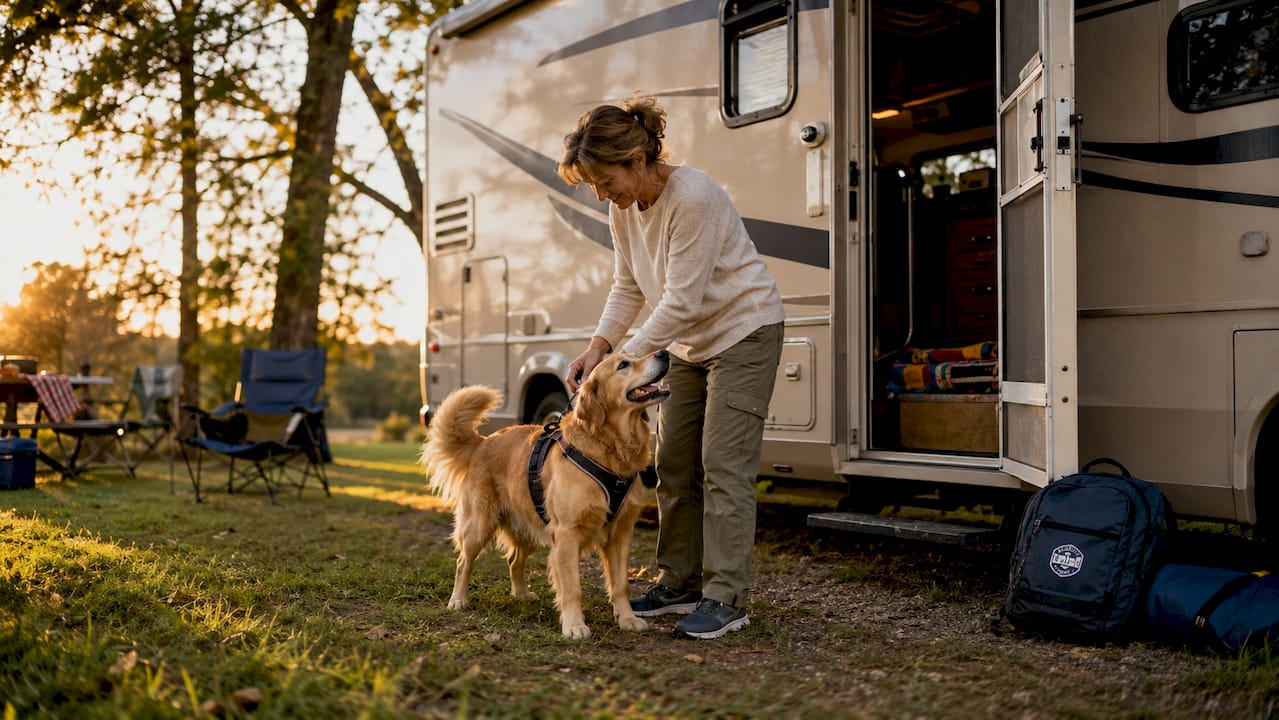
RV living with pets is defined as the practice of sharing a recreational vehicle as a primary or travel home with one or more animals, requiring deliberate planning around safety, comfort, and legal compliance. Done right, it is one of the most rewarding ways to travel with your animals. Done carelessly, it puts them at serious risk. The key areas that separate a great experience from a dangerous one are temperature control, escape prevention, routine management, and knowing the rules at every campground and state line you cross. This guide covers all of it, with current 2026 standards built in.
What are the essential RV pet safety precautions every owner must know?
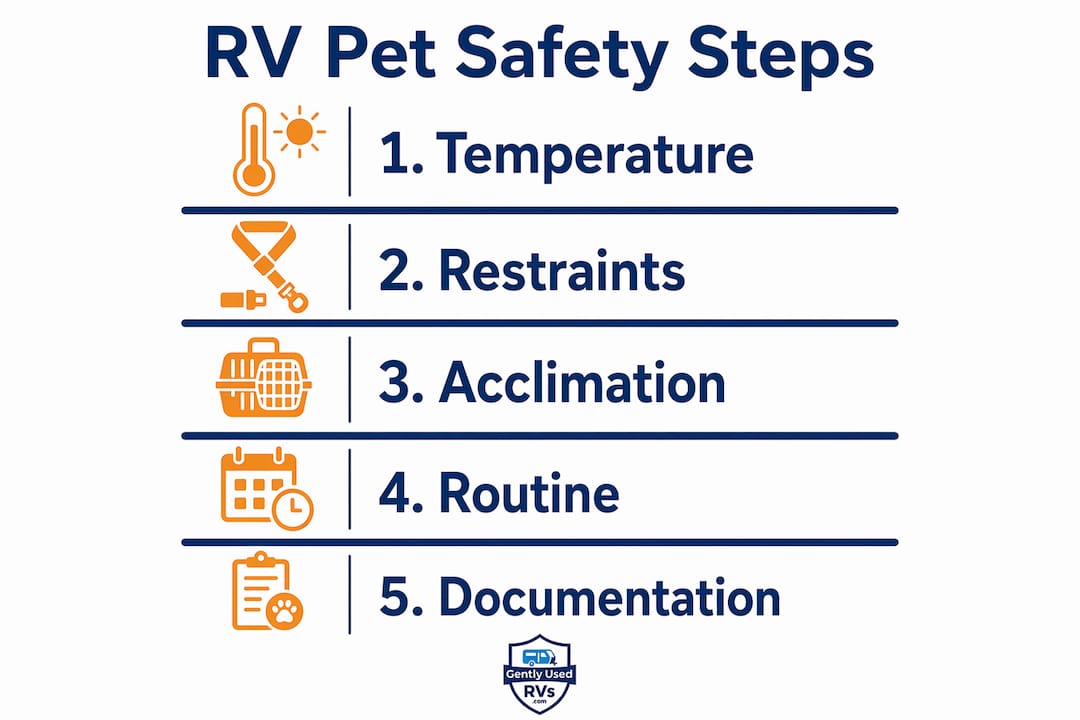
Temperature is the number one threat to pets inside an RV. An RV interior can exceed 100°F within 30 minutes when outside temperatures are just 70°F. That is not a slow creep. It is a life-threatening spike that can kill a dog whose normal body temperature sits between 101°F and 102.5°F.
Your air conditioning alone is not a safety plan. Shore power fails. Generators run out of fuel. A cell-connected temperature monitor is the backup that sends you a real-time alert before the situation becomes fatal. Install one before your first trip, not after your first scare.
Escape hazards are the second major risk category. RVs have more hidden gaps than most owners realize.
- Slide mechanisms can trap or injure a small pet that wanders underneath
- Gaps under bench seats and inside storage compartments are common hiding spots for cats
- Open exterior compartment doors create a path to the undercarriage
- Automatic vent fans with rain sensors can close unexpectedly and trap heat while you are away
Pro Tip: Before your first overnight, do a full walkthrough at your pet’s eye level. Get on the floor. Look for gaps, exposed wiring, and tight spaces your cat or small dog could squeeze into. This “pet perspective” check catches hazards that a standing inspection misses entirely.
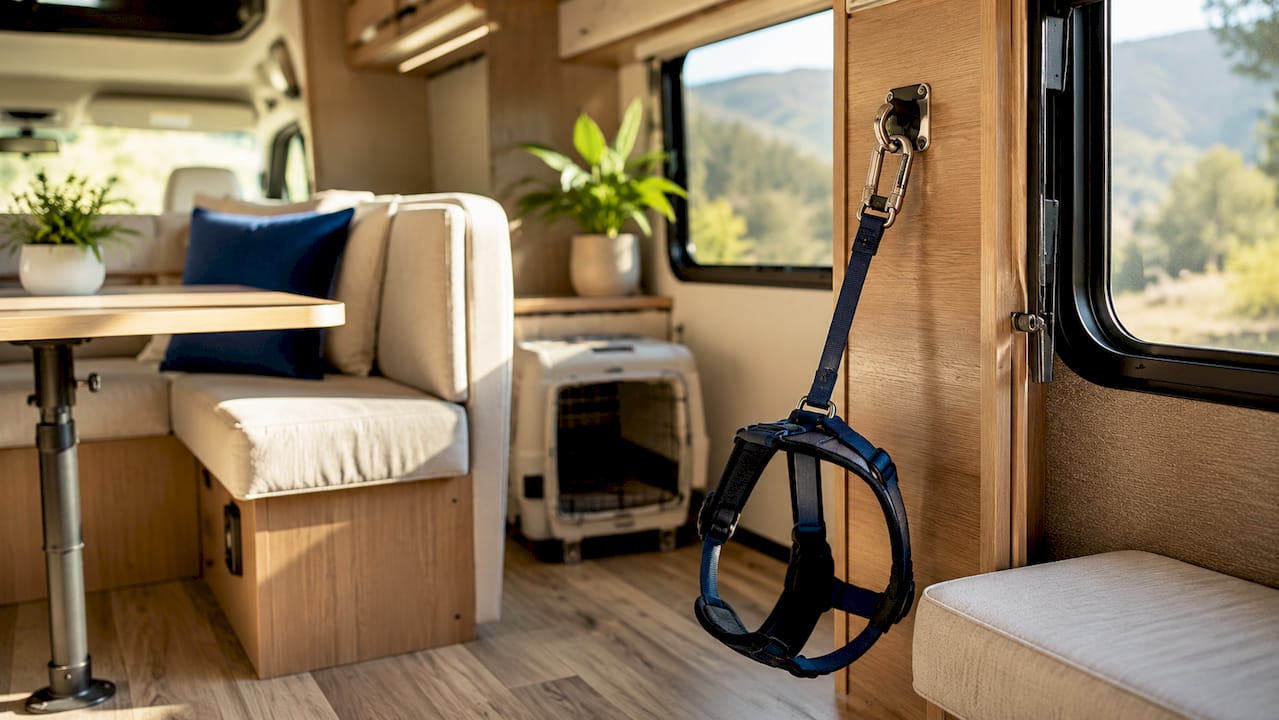
During travel, crates and crash-tested harnesses are the standard. An unrestrained pet in a moving RV becomes a projectile in a sudden stop. Crates secured to the floor or a fixed surface give your pet a safe zone and reduce driver distraction.
How to create an RV environment that keeps pets comfortable and stress-free?
Pets do not adapt instantly to RV life. Gradual acclimation is the method that works. Start by letting your pet explore the parked RV for several days before any movement. Run the slides, turn on the generator, and let them hear the sounds without the added stress of motion.
Practice overnight stays in your driveway. This builds a sense of “home” inside the vehicle before the road introduces new variables. Full-time RVers consistently report that pets who went through this process settled into travel life far faster than those who were loaded up and driven away on day one.
Inside the RV, your pet needs a dedicated space that belongs to them.
- A fixed sleeping spot with a familiar bed or blanket
- A storage area for toys, leashes, and feeding supplies
- A litter box location for cats that stays consistent at every stop
- A water bowl that does not slide or tip during travel
Routine is the most underrated comfort tool in RV life with animals. Feed at the same times. Walk at the same times. Sleep schedules matter more on the road than at home because everything else is changing. A dog that gets its morning walk at 7:00 AM every day adjusts to new locations far better than one whose schedule shifts constantly.
Pro Tip: Bring one item from home that carries a familiar scent, like an unwashed blanket or a worn T-shirt. Familiar smells reduce anxiety in dogs and cats more reliably than most commercial calming products.
Managing shedding in a small space is a real challenge. A handheld vacuum, washable seat covers, and a lint roller kept at the door handle the daily reality. Grooming your pet before a long drive also reduces the amount of hair that ends up in the vents.
What legal considerations and campground rules must you know?
State and local laws create real legal exposure for RV travelers with pets. Certain exotic pets, including ferrets, are outright banned in California and Hawaii. Breed-specific legislation restricts certain dog breeds in dozens of municipalities across the country. Crossing a state line without knowing the rules is not just inconvenient. It can result in confiscation.
Campground policies add another layer of requirements. Most pet-friendly campgrounds in 2026 enforce the following:
- Leash length limits of 6 feet maximum at all times outside the RV
- Proof of current rabies vaccination required at check-in
- No leaving pets unattended outside the RV, even briefly
- Limits on the number of pets per site, typically two
Documentation is not optional. Vaccination records and a Certificate of Veterinary Inspection should be stored digitally on your phone and backed up in the cloud. Many campgrounds and state border checkpoints require these documents for entry. A paper copy that gets wet or lost creates a problem at the worst possible moment.
Call every campground before you book. Websites are often outdated. Breed restrictions and pet fees change without notice. A two-minute phone call confirms the current policy and saves you from arriving with a dog that is not allowed on the property.
How to plan RV travel routines that protect your pet’s wellbeing?
Travel pacing directly affects your pet’s physical and mental health. Experts recommend the following structure for pet-friendly travel days:
- Limit daily driving to approximately 300 miles. Longer travel days increase stress and physical exhaustion for pets. Three hundred miles is the point where most dogs and cats begin showing signs of fatigue and restlessness.
- Stop every 2–3 hours. Each stop should include a potty break, fresh water, and at least 10 minutes of movement. Sitting in a crate for 6 hours straight is hard on joints and raises anxiety.
- Plan routes around pet-friendly campgrounds. Use your route planning to identify overnight stops that accept your pet’s breed and size before you leave home. Last-minute campground hunting with a large dog in tow is stressful for everyone.
- Locate veterinary clinics along your route. Identify at least one emergency vet clinic per major leg of your trip. Save the addresses and phone numbers in your phone before you depart.
- Use a pet camera inside the RV. When you leave your pet alone for a short errand, a camera with two-way audio lets you check in and calm an anxious animal remotely. Pair it with your temperature monitor for complete oversight.
Safe door protocols matter more than most new RVers expect. Pets learn quickly that an open door means freedom. Establish a “wait” command before every door opening, and use a leash clip at the door frame as a physical backup while your pet learns the rule.
For route planning and destination ideas, look for stops that combine outdoor access with pet-friendly amenities. Trails, open fields, and dog parks give your animals the mental stimulation they need after hours of confinement.
What RV features and modifications work best for pet owners?
Choosing the right RV for your animals is as important as any safety protocol. The layout, flooring, and storage capacity of your vehicle determine how comfortable daily life actually is.
| Feature | Why it matters for pet owners |
|---|---|
| Vinyl or tile flooring | Easier to clean than carpet; resists odors and pet accidents |
| Slide-out rooms | Adds floor space for pet beds, crates, and movement |
| Exterior storage bays | Keeps muddy gear, leashes, and food bins out of the living area |
| Screened windows and vents | Allows airflow without escape risk for cats |
| Low entry steps or a ramp | Reduces joint stress for older dogs getting in and out |
Class B motorhomes and smaller Class C units work well for one or two pets because they are easier to maneuver into pet-friendly campsites. Larger Class A motorhomes offer more interior space but limit campground access. Travel trailers and fifth wheels give you the most floor space per dollar, which matters when you are sharing the space with a large breed dog.
Modifications worth making before your first trip include installing a pet ramp at the main door, adding a window perch for cats, and securing all cabinet latches with child-proof locks. Slide mechanisms should have a physical barrier or sensor that prevents operation when a pet is in the slide zone.
The RV types guide at Gently Used RVs breaks down the specific dimensions, layouts, and features of every major RV class. It is a practical starting point for matching your pet’s size and personality to the right vehicle type.
For pet owners traveling with families, the best RVs for families guide covers models with the space and layout flexibility that works for both kids and animals.
Key takeaways
Successful RV living with pets requires temperature monitoring, legal preparation, and consistent routine before and during every trip.
| Point | Details |
|---|---|
| Temperature is the top threat | Install a cell-connected monitor; RV interiors can exceed 100°F in 30 minutes. |
| Acclimate before you drive | Practice overnight stays and slide operation at home before hitting the road. |
| Know the law at every stop | Research breed restrictions and exotic pet bans for each state on your route. |
| Limit daily miles | Cap travel days at roughly 300 miles to reduce stress and exhaustion in pets. |
| Documentation saves trips | Keep vaccination records and a Certificate of Veterinary Inspection digitally accessible. |
What eight years of RV travel with pets actually taught me
Most new RVers focus on the gear list and skip the mindset shift. That is the mistake I see over and over.
My first long trip with a dog taught me that patience is not a soft skill. It is a survival strategy. My dog needed three full weeks before she stopped pacing at every new campsite. I almost cut the trip short. I am glad I did not. By week four, she was the first one to the door every morning, tail going, ready to explore.
The technology piece surprised me too. I thought a temperature monitor was overkill until shore power dropped at a campground in Texas on a 95°F afternoon. That alert on my phone was the difference between a close call and a tragedy. If you take one piece of hardware seriously, make it that.
The other thing nobody tells you: your pet’s behavior on the road becomes a mirror for your own stress levels. When you are rushed and anxious, they are anxious. When you slow down and keep the routine steady, they settle. The 300-mile daily limit is not just about pet fatigue. It is about keeping the whole system calm.
Treat your pet as a full member of the travel plan, not an afterthought. Build their needs into every decision, from campground selection to route timing. That shift in thinking changes everything about how the trip feels.
— Christopher
Finding the right RV for you and your pets
Picking the right vehicle is where the whole plan comes together. The wrong RV creates daily friction. The right one makes life with your animals genuinely easy.

Gently Used RVs lists travel trailers, motorhomes, and fifth wheels across every size and class, with no account required to browse. Whether you need a compact Class B for solo travel with one dog or a spacious fifth wheel for a multi-pet household, the inventory covers the full range. Listings are geotargeted, so you see the closest options first. Browse the full RV inventory and filter by type to find a vehicle that fits your animals as well as it fits your budget.
FAQ
How hot can an RV get with pets inside?
An RV interior can exceed 100°F within 30 minutes when outside temperatures are just 70°F. This makes a cell-connected temperature monitor a non-negotiable safety tool, not an optional accessory.
What documents do I need when traveling with pets in an RV?
You need current vaccination records and a Certificate of Veterinary Inspection stored digitally on your phone. Many campgrounds and state border checkpoints require these documents for entry.
How many miles should I drive per day with a pet in the RV?
Experts recommend capping travel days at roughly 300 miles and stopping every 2–3 hours for water, potty breaks, and movement. Longer days increase stress and physical exhaustion in pets.
Are all dog breeds allowed at pet-friendly campgrounds?
No. Many campgrounds enforce breed-specific restrictions, and some municipalities have laws banning certain breeds entirely. Always call the campground directly before booking to confirm their current pet policy.
What RV type works best for pet owners?
Class B motorhomes suit one or two pets well due to their maneuverability and compact layout. Travel trailers and fifth wheels offer more floor space for larger breeds or multiple animals. The RV classes guide at Gently Used RVs breaks down the trade-offs for each type.