The best RV travel destinations combine accessible roads, campground infrastructure, and scenery worth the drive. Grand Canyon National Park holds the top spot for 2026, drawing approximately five million visitors annually to its rim-side campgrounds. Route 66, the Texas highway network, and Utah’s Mighty 5 parks round out the short list of places every serious RV traveler should plan around. Whether you’re rolling in a compact Class B van or a 40-foot Class A motorhome, the right destination depends on your rig, your timeline, and how much solitude you actually want.
1. What are the best RV travel destinations in the U.S.?
The best places to RV in the United States share three traits: paved access roads wide enough for large rigs, campgrounds with at least partial hookups, and scenery that justifies the fuel bill. Grand Canyon tops every credible ranking for 2026. Yellowstone, the Utah Mighty 5 corridor, and the Pacific Coast Highway fill out the top tier. Each destination rewards different rig sizes and travel styles, so matching your setup to the location matters as much as picking the destination itself.
2. Iconic national parks every RV traveler should know
Grand Canyon is the undisputed leader among top RV camping spots, but its popularity creates real logistical challenges. Campgrounds inside the park fill fast, and the South Rim’s Mather Campground limits rig length, so arriving without a reservation is a gamble you will likely lose.
Yellowstone offers the most RV capacity of any national park, with 2,028 sites spread across 11 campgrounds. That scale sounds reassuring until you realize those sites still sell out. Booking 90 days in advance is not optional at Yellowstone. It is the minimum.
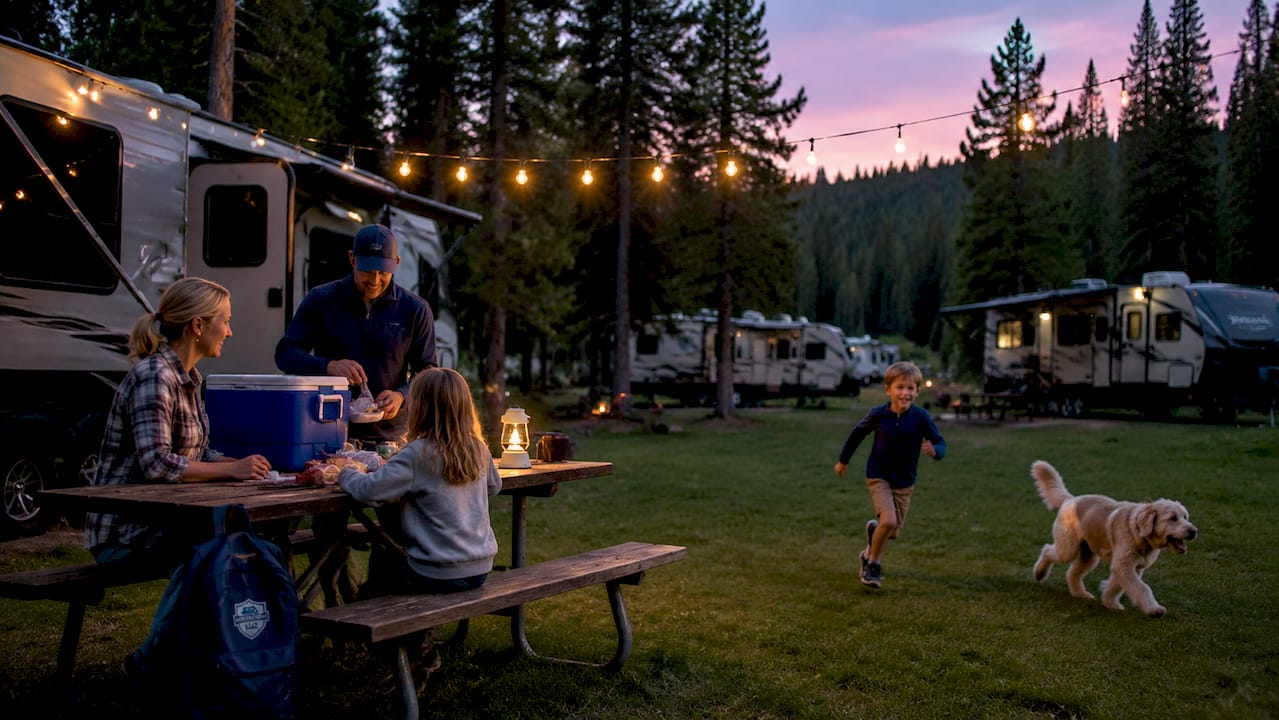
Utah’s Mighty 5 parks (Zion, Bryce Canyon, Arches, Canyonlands, and Capitol Reef) offer a connected loop that rewards multi-week trips. Each park has different rig-length tolerances, and some internal roads are off-limits to rigs over 21 feet. Nearby private campgrounds in Springdale, Moab, and Torrey fill the gap with full hookups and pull-through sites.
Key facts to know before you book any national park campground:
- Most park campgrounds accommodate rigs under 27 feet. Larger rigs must verify site-specific limits before arrival.
- Full hookups inside national parks are rare. Colter Bay in Grand Teton and Morefield in Mesa Verde are among the few exceptions.
- Reservation systems open 90 days out and sell out within seconds, often to automated bots. Always have a private campground backup ready.
Pro Tip: Book your in-park reservation the moment the 90-day window opens, then immediately reserve a private campground nearby as a backup. You can always cancel one. You cannot always find a last-minute spot.
3. Underrated destinations worth putting on your radar
The parks getting less attention often deliver the better experience. Black Canyon of the Gunnison, Crater Lake, Glacier, Death Valley, and Canyonlands all offer dramatic scenery with noticeably thinner crowds than Grand Canyon or Zion. That solitude translates directly into easier campsite access and a calmer trip.
Wyoming leads the country in RV park and campground density, with 29.3 parks per 100,000 residents. That density means you are rarely more than a short drive from a workable campsite, even when the main park is full. It makes Wyoming a smart base for exploring Yellowstone, Grand Teton, and the surrounding backcountry without the stress of a single-point reservation failure.
Lesser-visited parks also tend to have more flexible camping arrangements. Many offer managed boondocking areas where you can dry camp legally without a reservation. Death Valley, for example, has dispersed camping zones that work well for self-contained rigs with strong battery banks and full water tanks.
A few underrated destinations worth serious consideration:
- Black Canyon of the Gunnison, Colorado: A short, dramatic canyon with a small campground that rarely sells out weeks in advance.
- Crater Lake, Oregon: One of the most visually striking parks in the country, with a campground that accommodates rigs up to 50 feet at Mazama Village.
- Glacier National Park, Montana: The Going-to-the-Sun Road restricts vehicles over 21 feet and 8 feet wide, but the surrounding national forest campgrounds are excellent for larger rigs.
- Death Valley, California: Open year-round with multiple campground options and dispersed camping zones for boondockers.
4. Best RV road trip routes for 2026
Popular RV routes are not all created equal. Some reward any rig size. Others will punish you for not doing your homework first.
Route 66 is the sentimental favorite and a legitimate bucket-list drive. The full corridor takes about 14 days, with camping fees running $39–$120 per night and an estimated $680 in fuel costs for the complete route. Route 66’s centennial in 2026 has renewed interest, which means more traffic and tighter campsite availability along the popular stretches through Arizona and New Mexico. Budget-conscious travelers who want a similar cross-country feel with less congestion should consider the Southern Tier route along US-90 instead.
Blue Ridge Parkway is one of the most photographed roads in America and one of the most dangerous for large rigs. Low-clearance tunnels and narrow winding roads make it genuinely hazardous for rigs over 35 feet. Class C motorhomes and travel trailers under 30 feet handle it well. Class A owners should research every tunnel clearance before committing.
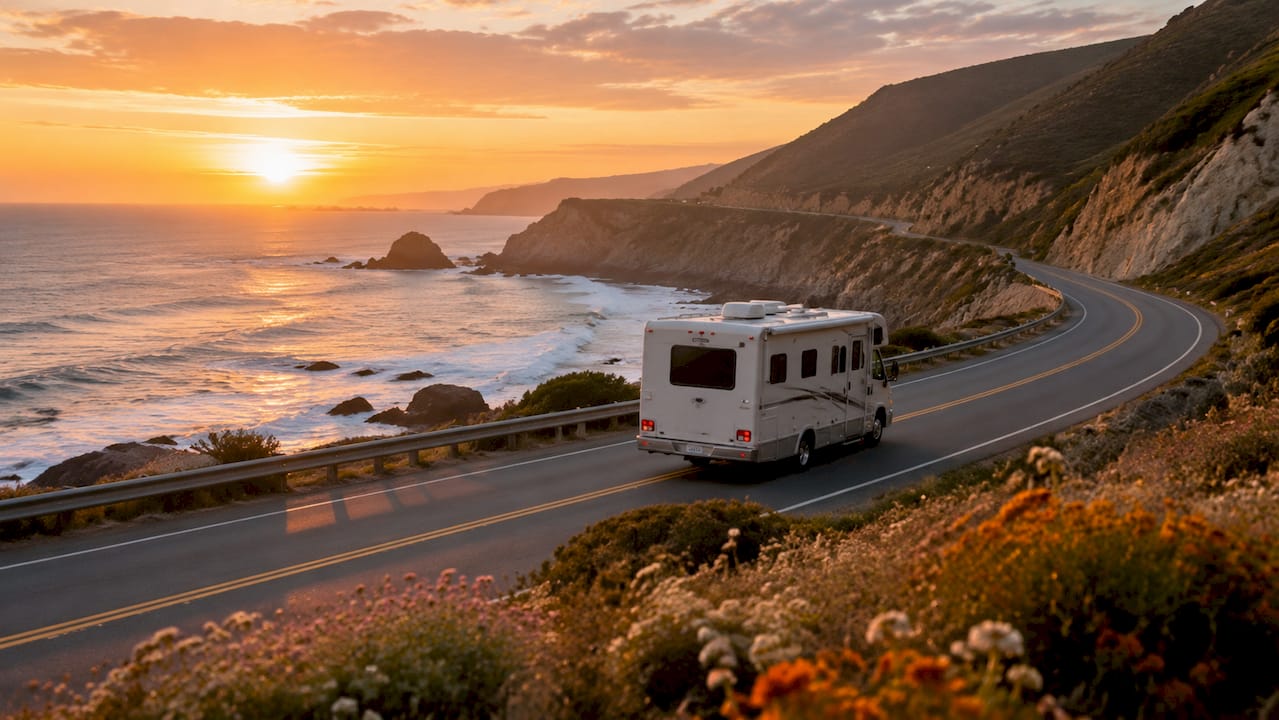
Pacific Coast Highway (Highway 1) carries the same warning for large rigs. The Big Sur section has tight curves, crumbling shoulders, and no room for error in a 40-foot rig. Rigs under 35 feet can manage it with care. Anything larger should take US-101 as the parallel alternative.
The Grand Circle loop through Utah and Arizona is the most rewarding multi-park route in the country. It covers roughly 1,800 miles and takes 18–21 days to experience fully. Direction of travel matters. Some sections of the loop include unpaved or steep roads that are unsuitable for RVs, so clockwise versus counterclockwise routing is a real planning decision, not a preference.
| Route | Best rig size | Estimated duration | Key challenge |
|---|---|---|---|
| Route 66 | Any | 14 days | Campsite availability in 2026 |
| Blue Ridge Parkway | Under 35 feet | 7–10 days | Low tunnels, narrow roads |
| Pacific Coast Highway | Under 35 feet | 5–7 days | Tight curves, Big Sur section |
| Grand Circle Loop | Under 30 feet preferred | 18–21 days | Unpaved sections, advance booking |
Pro Tip: Texas ranks at the top for RV road trips with a score of 9.80, driven by 518,000 miles of highways and fuel costs around $2.69 per gallon. If you want a long-haul route with minimal logistical stress, Texas is the most forgiving state to drive.
5. How to choose the right destination for your rig and travel style
Your rig size is the single most important filter when choosing where to go RVing. A 45-foot Class A with a toad vehicle needs a fundamentally different campground than a 19-foot travel trailer. Getting this wrong means turning around on a mountain road or paying for a site your slides cannot fully open in.
Use these criteria to match your setup to the right destination:
- Class A motorhomes (35+ feet): Prioritize private campgrounds near national parks rather than in-park sites. Look for pull-through sites with 50-amp service. Texas, Florida, and the Southwest corridor have the best private campground infrastructure for large rigs.
- Class B and C motorhomes (under 30 feet): You have the most flexibility. Most national park campgrounds, state parks, and managed boondocking areas work. The RV classes guide at Gently Used RVs breaks down which rig types suit which travel scenarios.
- Travel trailers and fifth wheels: Check travel trailer size options carefully before committing to a route. Fifth wheels over 30 feet face the same restrictions as large motorhomes on scenic byways.
- Boondockers and dry campers: Boondocking requires careful management of power and water. Only a small number of national park sites offer full hookups, so self-contained rigs with solar and large water tanks have the most destination flexibility.
Families traveling with kids benefit most from private resort-style campgrounds adjacent to national parks. These typically offer pools, playgrounds, laundry, and reliable Wi-Fi, none of which you will find inside most national parks. The best RVs for families guide covers which models handle these longer, amenity-dependent trips best.
Pro Tip: Always identify two backup campgrounds for every in-park reservation you attempt. Private campgrounds near park entrances book up fast too, but they typically have more inventory and more flexible cancellation policies.
Key takeaways
The best RV travel destinations reward travelers who match their rig size to campground constraints, book 90 days out, and always carry a backup plan.
| Point | Details |
|---|---|
| Grand Canyon leads in 2026 | It draws five million visitors annually, making advance booking non-negotiable. |
| Rig size determines destination | Most national park campgrounds cap rigs at 27 feet; large rigs need private campgrounds nearby. |
| Yellowstone has the most capacity | Its 2,028 sites across 11 campgrounds still sell out, so book the day the window opens. |
| Route planning is rig-specific | Blue Ridge Parkway and Pacific Coast Highway are hazardous for rigs over 35 feet. |
| Underrated parks offer real value | Wyoming’s campground density and parks like Crater Lake give you scenery without the booking chaos. |
What I’ve learned from chasing the “perfect” RV destination
After years of watching RV travelers make the same mistakes, the pattern is clear. People choose destinations based on Instagram photos and bucket lists. They book the campsite as an afterthought. Then they show up with a 38-foot Class A to a campground that maxes out at 25 feet and spend the first night in a Walmart parking lot.
The travelers who consistently have the best trips do the opposite. They start with their rig’s limitations, then find destinations that fit. A 45-foot motorhome owner who targets private campgrounds near Zion’s entrance will have a far better experience than one who fights for an in-park site that barely fits a 22-foot trailer.
The underrated parks are genuinely underrated, not just a consolation prize. Black Canyon of the Gunnison is one of the most dramatic landscapes in the country, and you can often get a site without a reservation made months in advance. Crater Lake is visually comparable to anything in the Mighty 5. Death Valley in the winter is extraordinary and nearly empty.
My honest recommendation: build your 2026 trip around one iconic park and two lesser-known parks. Use the iconic park as your anchor reservation, book it the second the 90-day window opens, and let the lesser-known parks be the places you actually relax. That balance is where the best RV trips actually live.
— Christopher
The right RV makes every destination better

Choosing where to go is only half the equation. The rig you drive there matters just as much. A Class B camper van opens up campgrounds a 40-foot motorhome can never reach. A fifth wheel with a full kitchen changes how long you can comfortably stay. Gently Used RVs lists Class A, B, and C motorhomes, travel trailers, fifth wheels, toy haulers, and more, all searchable by location with no account required. Browse the full RV types guide to understand which setup fits your travel style, then search used RVs near you to find the right rig at the right price. If you prefer working with a dealer, the RV dealer directory connects you with vetted dealerships across the U.S.
FAQ
What is the #1 RV destination in the U.S. for 2026?
Grand Canyon National Park is the top-rated RV destination for 2026, drawing approximately five million visitors annually. Advance reservations are required, and large rigs should book private campgrounds near the South Rim entrance.
How far in advance should I book a national park campsite?
Reservations open 90 days in advance and sell out within seconds at popular parks. Always have a private campground booked as a backup before your trip date.
What rig size works best for most national park campgrounds?
Most national park campgrounds accommodate rigs under 27 feet. Larger rigs should target private campgrounds near park entrances, which typically offer pull-through sites and full hookups.
Is Route 66 worth doing in 2026?
Route 66 is a legitimate bucket-list drive, but 2026 centennial traffic makes it busier than usual. Budget 14 days, expect camping fees of $39–$120 per night, and book campsites well ahead along the Arizona and New Mexico stretches.
What is boondocking and which destinations support it?
Boondocking means dry camping without hookups, relying on your rig’s onboard power and water. Death Valley, Wyoming’s national forests, and many Bureau of Land Management areas across the Southwest support boondocking for self-contained rigs.