RV living for beginners is the process of adapting your home and lifestyle into a mobile, compact space on wheels for flexible, road-based living, either full-time or part-time. The industry term for this lifestyle is “recreational vehicle living,” and it covers everything from weekend camping trips to permanent residency on the road. Most beginners take 3–6 months to plan the transition effectively. Rushing that process leads to burnout and missed logistics. This guide gives you the practical steps, real cost figures, and honest advice to start right.
What does RV living for beginners actually involve?
RV living means replacing a fixed address with a vehicle that serves as your home. You cook, sleep, work, and relax inside your rig, whether that is a Class A motorhome, a travel trailer, or a compact Class B van. The lifestyle splits into two camps: full-time RV living, where the RV is your only home, and part-time living, where you hit the road for weeks or months while keeping a home base.
The biggest shift is not logistical. It is mental. The mindset moves from owning things to collecting experiences. Beginners who hold onto that framing tend to adapt faster and enjoy the lifestyle longer. Those who treat it like a permanent vacation usually burn out within the first year.
How do you choose the right RV as a beginner?
Choosing your first RV is the single most consequential decision you will make. Get it wrong and you will spend your first year fixing problems instead of exploring. Get it right and the whole lifestyle clicks into place.
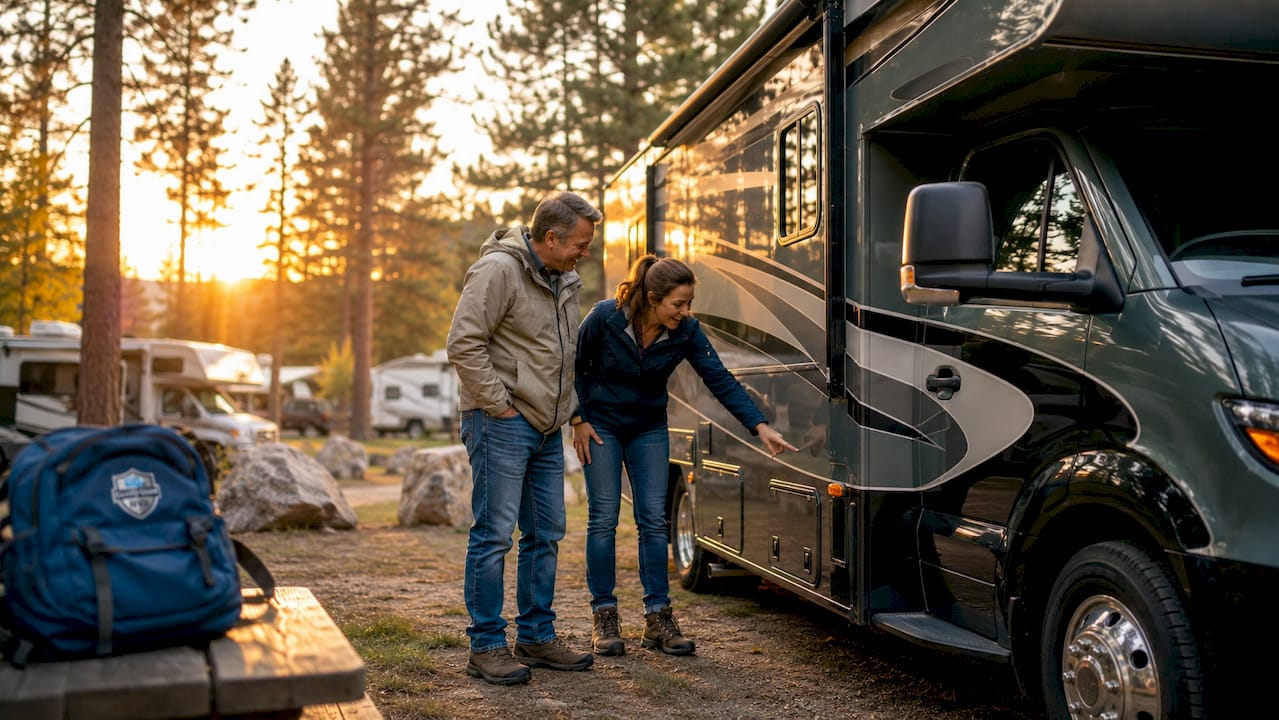
RV types at a glance
The main RV types each suit different needs:
- Class A motorhomes: The largest option, 26–45 feet long, with full living amenities. Great for full-timers but harder to drive and park.
- Class B motorhomes (campervans): Compact, fuel-efficient, and easy to maneuver. Best for solo travelers or couples who prioritize mobility.
- Class C motorhomes: A middle ground. Built on a truck chassis with a distinctive cab-over bunk. Popular with families.
- Travel trailers: Towed by a separate vehicle. Wide price range, no engine to maintain, and easy to unhitch at a campsite.
- Fifth wheels: Towed by a pickup truck. Offer more living space than travel trailers and a more stable ride.
For most beginners, a Class C motorhome or a mid-size travel trailer hits the sweet spot between livability and manageability.
Used vs. new: the smart beginner move
Buying a used, well-maintained RV helps you learn your preferences without overcommitting financially. New RVs depreciate fast, and your first RV is rarely your forever rig. Focus on must-haves and skip the premium features you may never use. Pre-purchase inspections are non-negotiable, even for used units. Hidden water damage, roof leaks, and slide-out problems are common and expensive.
Pro Tip: Rent two or three different RV types before you buy. A weekend in a Class A and a weekend in a travel trailer will tell you more than any spec sheet.
How much does RV living actually cost?
Cost is where most beginners get blindsided. The purchase price is just the entry fee.
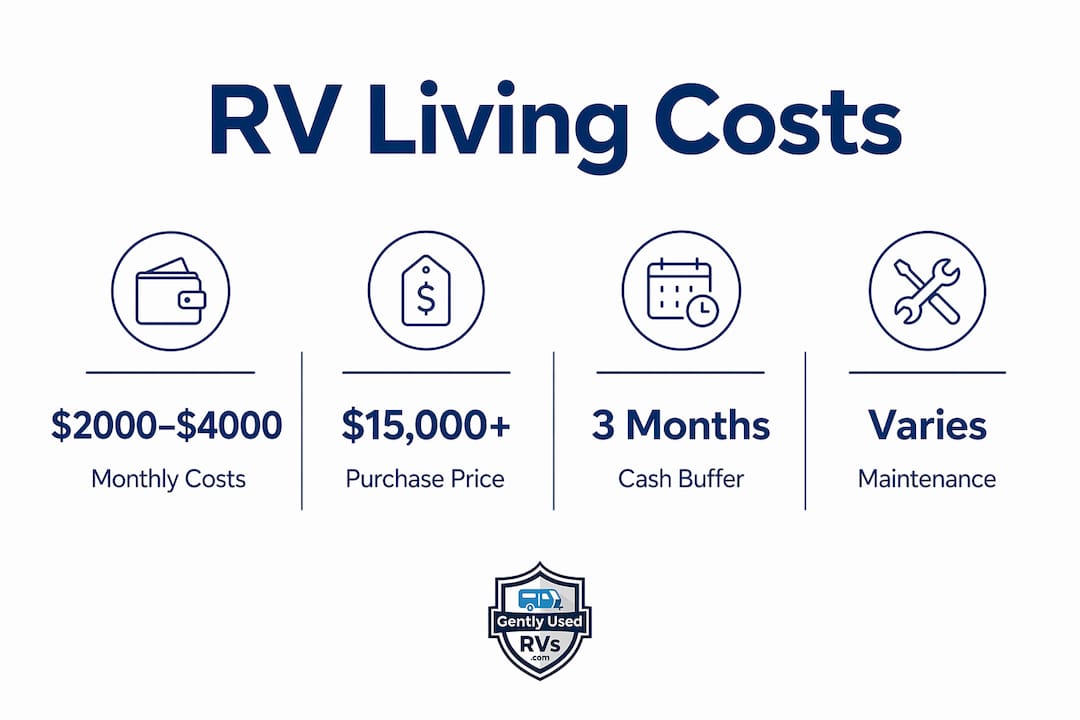
Full-time RVers typically spend $2,000–$4,000 per month on all living expenses combined. That figure includes campsite fees, fuel, food, utilities, and maintenance. Purchase costs range from $15,000 to $250,000 depending on the rig. Annual insurance runs $600–$3,000, and setup gear averages $500–$2,000 upfront. If you need a tow vehicle, add $20,000–$70,000 to your startup budget.
Where the money actually goes
| Expense category | Typical range |
|---|---|
| Monthly living costs | $2,000–$4,000 |
| RV purchase price | $15,000–$250,000 |
| Annual insurance | $600–$3,000 |
| Setup gear (one-time) | $500–$2,000 |
| Tow vehicle (if needed) | $20,000–$70,000 |
Part-timers spend significantly less because they keep a home base and only pay campsite fees during trips. Full-timers who mix campground types, rotating between boondocking, monthly rates, and paid sites, manage costs most effectively. Boondocking means camping without hookups on public land, often for free.
Pro Tip: Build a three-month cash buffer before you leave. Unexpected repairs, a blown tire, or a failed water pump will happen. Having that buffer means a bad week does not become a financial crisis.
Financial planning and savings buffers are the difference between thriving on the road and retreating home early. Treat your RV budget like a business budget: track every category, review monthly, and adjust before problems compound.
How do you pack and manage space in an RV?
Space management is a skill, and most beginners underestimate how much it matters. A 30-foot RV sounds spacious until you fill it with the contents of a three-bedroom house.
The one-in, one-out rule is the most effective packing discipline for RV living. Every new item that enters the rig requires removing one item of equal or greater size. This single habit prevents clutter from accumulating and keeps your living space functional. Apply it from day one, not after you feel overwhelmed.
Securing items for travel is the other critical habit. Unsecured items become dangerous projectiles when the rig is moving. Use cabinet latches, non-slip drawer liners, and bungee cords inside storage areas. Never leave anything loose on counters or tables while driving.
Here is a practical packing framework for beginners:
- Keep: Clothes for two weeks maximum, one set of tools, one set of kitchen basics, medications, and work gear
- Leave behind: Decorative items, duplicate tools, excess linens, and anything you have not used in six months
- Add: A quality first-aid kit, a portable power station, a water filter, and a surge protector for shore power
Pro Tip: Use vacuum storage bags for bedding and seasonal clothing. They compress bulk by more than half and keep moisture out, which matters in a humid climate.
How do you plan your first RV trips safely?
Your first few trips set the tone for the entire lifestyle. Plan them to build confidence, not to cover maximum ground.
Experts recommend keeping first trips to 2–3 nights and staying within a 1–3 hour drive from home. That range gives you a real experience without stranding you far from help if something goes wrong. Limit daily driving to around 200 miles or 4 hours to prevent fatigue errors. Fatigue is the leading cause of beginner driving mistakes in large vehicles.
Choosing your first campground
Book campgrounds with full hookups for your first two or three trips. Full hookups means water, sewer, and electric connections are all provided at your site. That setup removes the need to manage tanks, generators, or water conservation on your first outings. It lets you focus on learning to drive, set up, and live in the rig without juggling multiple new skills at once.
Step-by-step first trip checklist
- Book in advance. Do not rely on walk-in availability, especially on weekends or holidays.
- Load your RV-specific GPS app. Standard GPS apps route RVers through roads that cannot accommodate large vehicles. Input your rig’s height, width, and weight to avoid low bridges and weight-restricted roads.
- Do a pre-departure walkthrough. Check tire pressure, hitch connections, slide-outs, and all exterior lights before every drive.
- Pack a trip kit. Include leveling blocks, a water pressure regulator, a sewer hose kit, and a 30-amp to 15-amp adapter.
- Plan your stops. Identify fuel stations with pull-through access and rest areas large enough for your rig.
- Set a hard stop time. Arrive at your campsite before dark for your first several trips. Setting up in daylight is dramatically easier.
Joining an RV club early gives you access to community knowledge, campground discounts, and a network of experienced travelers who have solved every problem you will face. Organizations like Escapees RV Club offer both resources and real human connection, which matters more than most beginners expect.
What I have learned from watching beginners hit the road
The biggest mistake I see new RVers make is treating the first month like a highlight reel. They book a new campsite every two nights, drive five hours a day, and try to see everything at once. By week three, they are exhausted, irritated, and questioning the whole decision.
RV lifestyle experts consistently find that slowing down is what makes the lifestyle sustainable. Staying three to five nights in one place lets you actually experience a location instead of just passing through it. It also gives your rig time to rest, and gives you time to handle small maintenance tasks before they become big ones.
The other thing beginners underestimate is community. Connecting with other RVers through clubs, campground neighbors, and online groups is not optional for long-term success. It is how you learn faster, stay safer, and actually enjoy the lifestyle instead of grinding through it alone. The RV community is genuinely one of the most generous and helpful groups of people I have encountered. Lean into it early.
— Christopher
Finding your first RV on Gently Used RVs
Ready to take the next step? Gently Used RVs is a free online classifieds marketplace where private sellers and dealerships list used recreational vehicles across the United States, Canada, and internationally. You can browse listings without creating an account, and search results show you the closest available rigs first.

Start by browsing the RV types guide to compare Class A, B, and C motorhomes, travel trailers, fifth wheels, and more, all in one place. When you are ready to buy from a professional, the RV dealer directory connects you with trusted dealerships near you. For first-time buyers, a used motorhome guide walks you through exactly what to inspect and what to avoid. Gently Used RVs makes finding the right beginner rig straightforward, without the pressure of a dealership floor.
Key takeaways
Successful RV living for beginners requires choosing the right rig, building a realistic budget, packing with discipline, and planning short, confidence-building first trips before committing to longer adventures.
| Point | Details |
|---|---|
| Choose used over new | A used, inspected RV saves money and lets you learn preferences before upgrading. |
| Budget $2,000–$4,000/month | Full-time living costs add up fast; build a three-month cash buffer before departing. |
| Apply the one-in, one-out rule | Consistent packing discipline prevents clutter and keeps your living space functional. |
| Start with short, nearby trips | First trips of 2–3 nights within 200 miles build skills without high-stakes risk. |
| Join an RV community early | Clubs and fellow RVers accelerate learning and prevent isolation on the road. |
FAQ
What is the best RV type for a beginner?
A Class C motorhome or a mid-size travel trailer suits most beginners because both offer livable space without the driving complexity of a full Class A. Travel trailers are especially popular because they unhitch at the campsite, leaving you a separate vehicle for local errands.
How long does it take to prepare for full-time RV living?
Most beginners need 3–6 months to plan the transition effectively, covering budgeting, downsizing, vehicle selection, and logistics. Rushing the process increases the risk of burnout and overlooked details.
Do I need a special license to drive an RV?
Most Class A, B, and C motorhomes under 26,000 pounds gross vehicle weight require only a standard driver’s license in most U.S. states. Larger rigs may require a non-commercial Class B license; check your state’s DMV requirements before purchasing.
How do I avoid getting lost or routed onto restricted roads?
Use an RV-specific GPS app and input your rig’s exact height, width, and weight before every trip. Standard navigation apps do not account for low bridges, weight limits, or road width restrictions that affect larger vehicles.
Is part-time RV living cheaper than full-time?
Part-time RV living costs significantly less because you maintain a home base and only pay campsite fees and fuel during trips. Full-time living eliminates rent or mortgage but replaces those costs with monthly campsite fees, fuel, maintenance, and insurance.