Common Problems with Used RVs: 2026 Buyer’s Guide
Water damage, electrical failures, slide-out malfunctions, plumbing leaks, and tire deterioration are the most common problems with used RVs. Left undetected, these issues can cost you $15,000–$40,000 in repairs within 24 months of purchase. A certified pre-purchase inspection, the kind endorsed by the National RV Inspectors Association (NRVIA), identifies an average of $2,400–$8,500 in hidden damage for around $495. That math makes skipping an inspection one of the most expensive decisions you can make. Knowing what to look for before you sign gives you real protection and real negotiating power.
1. Common problems with used RVs start with water damage
Water intrusion is the single most expensive and widespread failure in pre-owned recreational vehicles. It enters through roof seams, slide-out seals, vents, skylights, and windows. Once inside, it quietly rots wood substrates and delaminates wall panels before you ever notice a stain.
The visible signs include brown ceiling stains, soft spots on floors or walls, and a musty smell that no amount of air freshener covers. Sealants around roof seams and vents degrade and should be inspected and resealed every 6 months. Skipping that schedule is how a $200 tube of sealant turns into a $5,000 repair bill.
Repair costs tell the full story:
- Seal crack repairs: $185–$485
- Substrate rot remediation: $585–$8,500+
- Delaminated sidewall panels: $1,250–$2,850 per panel
A thorough roof inspection takes 45–60 minutes to detect subtle substrate rot. Quick walk-arounds miss it almost every time.
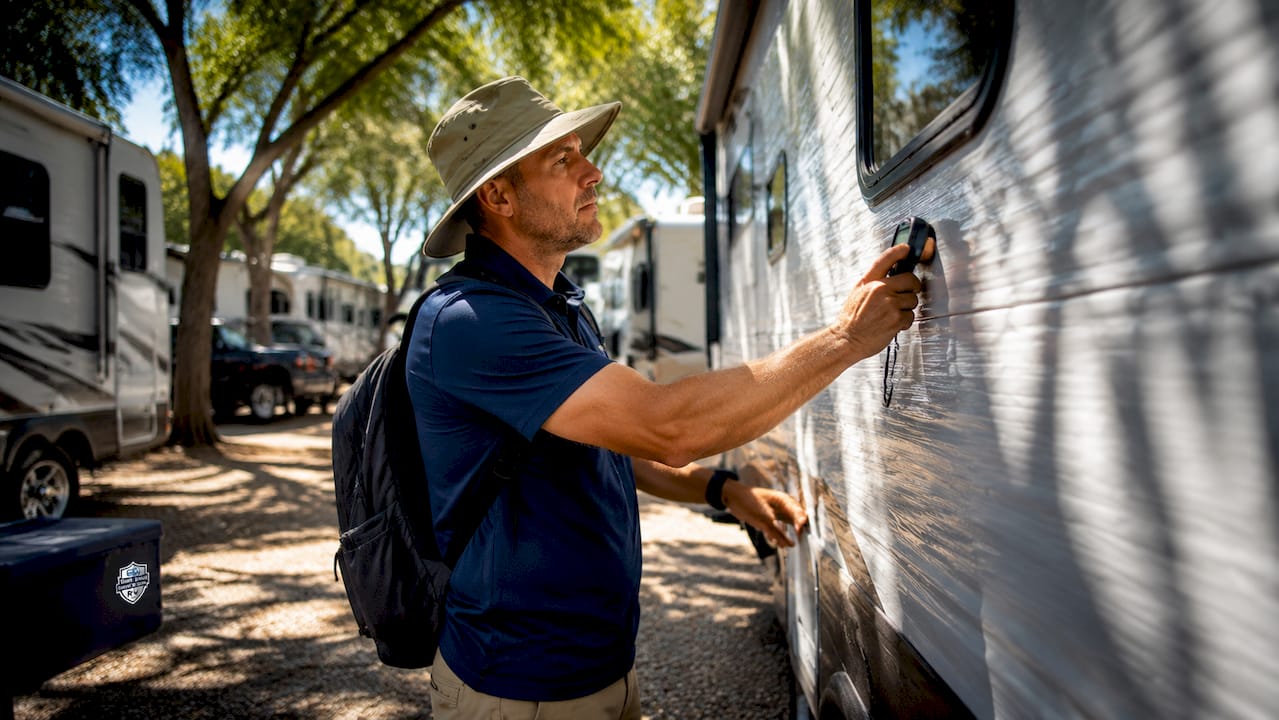
Pro Tip: Bring a moisture meter to any used RV inspection. Press it against walls near windows, slide-out frames, and ceiling edges. A reading above 15% signals active moisture and warrants a deeper look before you go any further.
2. Electrical system failures and battery issues
Electrical problems in used RVs range from annoying to genuinely dangerous. Common failures include reverse polarity, open neutral issues, corroded shore power cords, and failed GFCI outlets. Any one of these can damage appliances, trip breakers, or create a fire risk.
Battery aging is another silent killer. Many sellers do not disclose that batteries have been sitting discharged for months, which permanently reduces capacity. A load test during your inspection reveals the true state of the battery bank. Converter and inverter failures often follow neglected batteries, adding another $145–$985 in repair costs depending on the component.
- Reverse polarity: Damages sensitive electronics and appliances
- Open neutral: Creates shock hazards and erratic appliance behavior
- Corroded cords: Cause voltage drops and overheating
- Failed GFCI outlets: Leave wet areas like bathrooms unprotected
Pro Tip: Ask the seller to plug into shore power before your visit. Walk through every outlet with a simple outlet tester from any hardware store. It takes five minutes and immediately flags polarity and grounding problems.
3. Slide-out malfunctions and structural damage
Slide-outs add living space, but they are one of the most failure-prone systems on any used RV. Worn motors, stripped gear packs, and misaligned tracks cause grinding noises, sluggish travel, and full lockups. Motor and gear pack repairs run $385–$985. That is manageable. What is not manageable is the water damage hiding behind a leaking slide seal.
When slide seals fail, water tracks along the slide frame and soaks into the floor and wall substrate. That substrate damage costs $3,500–$9,000 to fix properly. The repair often requires removing the entire slide unit, which means labor costs stack fast.
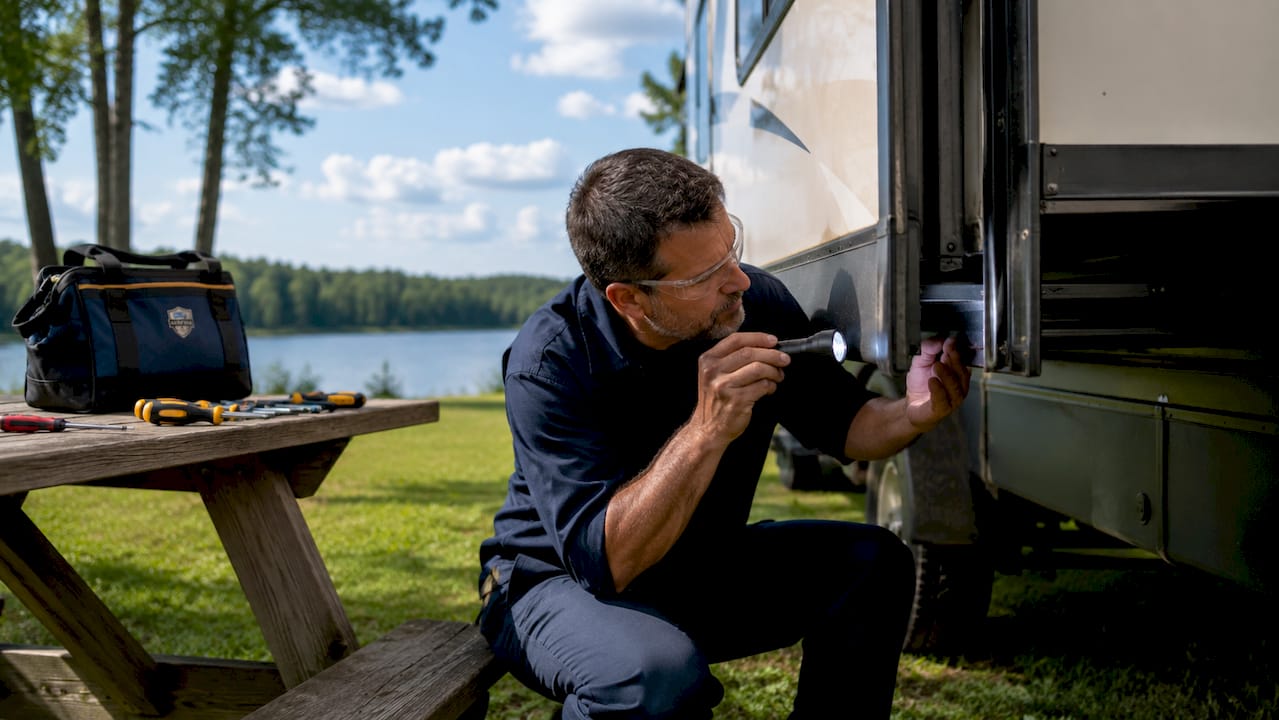
During any inspection, cycle the slide-out through its full extension and retraction at least twice. Check the seal perimeter by hand for gaps, tears, or compression failure. Look at the floor directly inside and outside the slide for soft spots or discoloration. These are the tells that separate a clean unit from a money pit.
A slide-out problem is not automatically a deal-breaker, but substrate rot or frame damage behind a slide absolutely is. Walk away from those.
4. Plumbing leaks, water heaters, and appliance failures
Plumbing problems in used RVs are common and often invisible until water is already pooling under a cabinet. Leaks appear at pipe fittings, toilet base seals, tank sensor connections, and fresh water pump check valves. Water pump check valve replacements run $325–$525, and that is before you factor in any water damage to surrounding cabinetry.
Water heaters deserve specific attention. The anode rod inside a tank-style water heater corrodes over time and should be replaced annually. A neglected anode rod leads to internal tank corrosion and a full replacement costing $300–$700 or more. Many sellers have never touched the anode rod in years of ownership.
Key plumbing checks to run before buying:
- Pressurize the fresh water system and watch for drips at every fitting
- Flush the toilet and check the base seal for seepage
- Test the water pump for normal pressure and listen for check valve chatter
- Inspect under sinks and around the water heater for staining or mineral deposits
Routine maintenance on plumbing extends appliance life significantly. A buyer who inherits a well-maintained system saves hundreds in the first year alone.
5. Tire condition and blowout risks
Tires are the most underestimated safety issue on a used RV. Tires older than 7 years carry serious blowout risk from dry rot, even when tread depth looks fine. Dry rot develops from UV exposure, ozone, and long storage periods. The cracks appear in the sidewall first, where stress concentrates during highway travel.
Every tire carries a DOT date code on the sidewall. The last four digits tell you the week and year of manufacture. A tire stamped “2318” was made in the 23rd week of 2018. That tire is past its safe service life regardless of how it looks.
Underinflation compounds the risk. RV tires run at high pressures, and even a 10% drop increases heat buildup and sidewall flex. Both accelerate failure.
- Check all DOT codes before purchase
- Look for sidewall cracking, especially near the rim
- Confirm inflation matches the placard on the RV door frame
- Budget for full replacement if any tire exceeds 7 years
Pro Tip: Store your RV with tire covers whenever it sits for more than two weeks. UV exposure is the fastest way to age rubber, and covers cost less than $50 for a set.
6. Appliance and HVAC system failures
Appliances and HVAC systems in used RVs fail quietly and expensively. Air conditioners, furnaces, refrigerators, and propane systems all have finite service lives, and previous owners do not always disclose deferred maintenance. An air conditioner that runs but does not cool is a common used RV buying issue that only surfaces on a hot day.
Propane system integrity is non-negotiable. A failed propane leak test is a hard stop. Buyers should walk away if inspections reveal failed propane leak tests, as repairs can exceed the unit’s value in older models. Test every burner on the range, the furnace ignition, and the water heater’s propane mode during your inspection.
Refrigerators in older RVs often use absorption cooling technology. These units are sensitive to leveling and ventilation. A refrigerator that was run while the RV sat unlevel for extended periods may have a damaged cooling unit, which costs as much as a full replacement to repair.
Check the furnace by running it for at least 10 minutes. Listen for ignition lockouts, smell for propane, and confirm heat comes out of all registers. A furnace that cycles off repeatedly has a problem worth diagnosing before purchase.
7. Salvage titles and undisclosed insurance claims
A salvage title is a red flag that most buyers overlook until it is too late. An RV with a salvage title was declared a total loss by an insurance company, typically after flood damage, fire, or a major collision. Repairs may look cosmetically clean while hiding structural compromise underneath.
Run a VIN check on every used RV you seriously consider. Services like Carfax and the National Insurance Crime Bureau (NICB) database reveal prior insurance claims, flood designations, and title brands. A clean VIN report does not guarantee a clean RV, but a dirty one tells you to walk away immediately.
Private sellers are not required to disclose prior insurance claims in most states. That puts the research burden entirely on you. When buying from a private seller, ask directly for any prior claim history and get the answer in writing. Silence or deflection is its own answer.
Dealers listed through reputable platforms carry more accountability, but VIN checks remain your best protection regardless of the seller type.
Key Takeaways
A certified pre-purchase inspection is the single most effective tool for avoiding costly used RV repairs, identifying hidden damage that typically costs far more to fix than the inspection itself.
| Point | Details |
|---|---|
| Water damage tops the risk list | Seal repairs cost $185–$485, but substrate rot can reach $8,500 or more. |
| Electrical checks protect safety | Reverse polarity and open neutral issues cause appliance damage and shock hazards. |
| Slide-out leaks compound costs | Substrate damage behind a leaking slide runs $3,500–$9,000 to repair properly. |
| Tire age beats tread depth | Replace any tire older than 7 years regardless of how much tread remains. |
| VIN checks reveal hidden history | Flood titles and prior insurance claims do not always show up in seller disclosures. |
What I’ve learned from watching buyers skip the hard steps
I have watched buyers fall in love with an RV before they ever opened a cabinet door. That emotional attachment is the most expensive mistake in this market. You start rationalizing the soft spot near the slide-out. You tell yourself the musty smell is just from storage. Then the inspection report arrives and the repair estimate is $11,000. Half of those buyers still bought the unit anyway.
The NRVIA-certified inspection process exists precisely because emotional detachment is hard. A third-party inspector has no stake in whether you buy. Their report is the only document in the transaction that is purely on your side. Use it as negotiating leverage, not just a checklist. A documented $4,000 repair estimate gives you a concrete number to put on the table when you counter the asking price. That is real money back in your pocket.
The 2026 used RV market has softened from its pandemic-era highs. Inventory is up and sellers are more motivated. Patience pays right now. If an inspection reveals salvage history or frame damage, walk away cleanly. Another unit will appear within weeks. The buyers who get burned are the ones who convince themselves this particular RV is the only one. It never is.
One more thing: check the RV dealership vs. private seller dynamic before you commit to either path. Each carries different disclosure obligations and risk profiles. Knowing the difference before you start shopping saves you from surprises at the worst possible moment.
— Christopher
Browse verified listings and skip the guesswork
Knowing the most common used RV problems is only half the work. Finding a unit with a clean history and a seller who stands behind it is the other half.

Gently Used RVs connects buyers with private sellers and dealers across the United States, Canada, and internationally. Every listing is searchable by location, so you see the closest available units first. Browse the full RV dealer directory to find dealerships near you with verified inventory and real accountability. If you are still deciding on the right RV type, the RV types guide covers every category from Class A motorhomes to teardrop trailers. No account required to search. No fees to browse. Just clean listings and the information you need to buy with confidence.
FAQ
What are the most expensive problems on a used RV?
Water damage and slide-out substrate rot are the costliest repairs, with substrate remediation reaching $8,500 or more and slide-out structural damage running $3,500–$9,000.
How do I check a used RV for water damage?
Press a moisture meter against walls near windows, slide-out frames, and ceiling edges. Readings above 15% signal active moisture that warrants a full professional inspection.
How old is too old for RV tires?
Any tire older than 7 years poses a blowout risk from dry rot, even when tread depth appears adequate. Always check the DOT date code on the sidewall before purchase.
Is a pre-purchase RV inspection worth the cost?
A certified inspection costs around $495 and identifies an average of $2,400–$8,500 in hidden damage, making it one of the highest-return investments in the buying process.
What should make me walk away from a used RV deal?
Walk away if the inspection reveals substrate rot, frame damage, a salvage title without documentation, evidence of flooding, or a failed propane leak test. Repair costs in those cases routinely exceed the unit’s market value.