Buying an RV from a private seller is a defined process covering inspection, document verification, negotiation, and ownership transfer. Skip any one of those steps and you risk inheriting someone else’s water damage, lien, or mechanical nightmare. Private sales offer real savings compared to dealerships, but they come with zero warranty protection and zero recourse once the title changes hands. This guide walks you through every critical phase of the private seller RV buying steps so you can close with confidence and protect your investment from day one.
What are the private seller RV buying steps?
The private RV sale process breaks into four sequential phases: physical inspection, paperwork verification, price negotiation, and secure closing. Each phase depends on the one before it. Skipping the inspection before negotiating, for example, means you have no leverage and no facts. First-time buyers frequently overlook hidden damage, title encumbrances, and the absence of any warranty protection in private sales. That oversight can turn a bargain into a $10,000 repair bill within months.
The good news is that the process is learnable and repeatable. Whether you are looking at a Class A motorhome, a fifth wheel, or a travel trailer, the same framework applies. Buying a 2 to 5 year old used RV typically delivers the best balance of modern features, reliability, and depreciation savings. Start there when filtering listings.
How to inspect an RV thoroughly before buying from a private seller
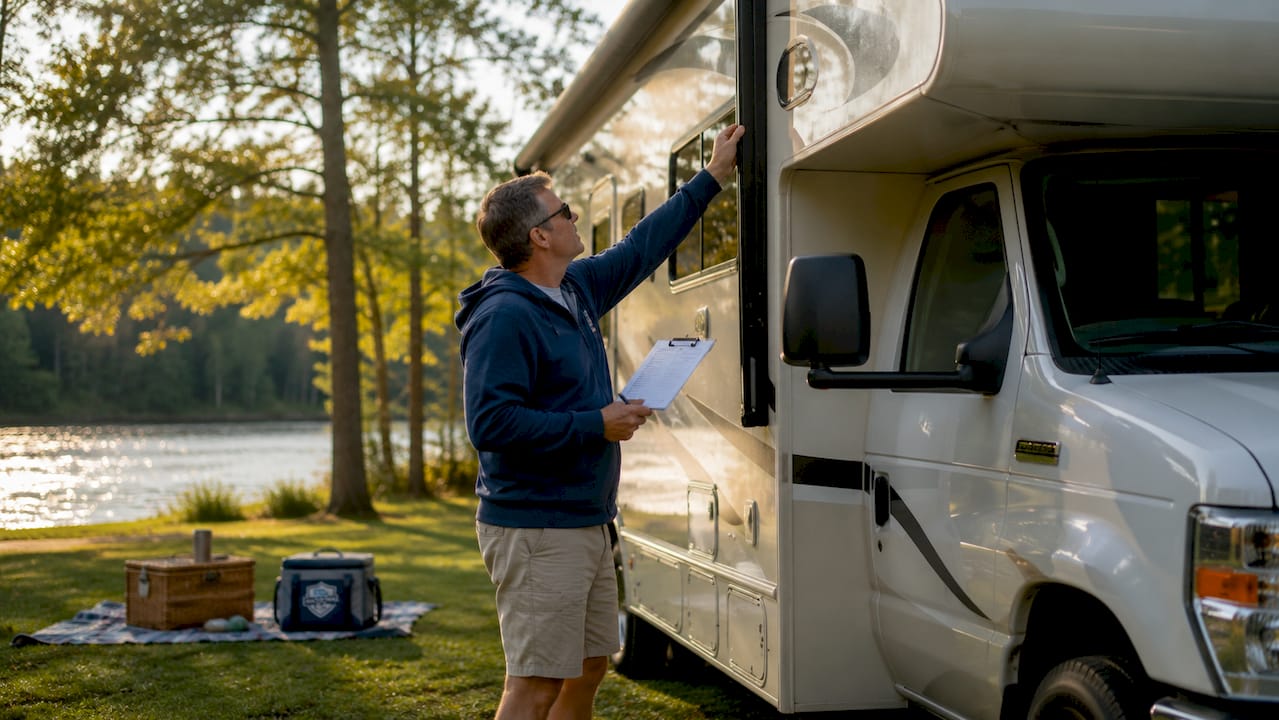
A physical inspection is the single most important step in the entire private RV sale process. You are looking for evidence of water intrusion, deferred maintenance, and system failures that the seller may not disclose or may not even know about. Bring a flashlight, a moisture meter if you can borrow one, and a detailed checklist.
Start with the roof and exterior.
- Press along the roof surface and around every seam, vent, and skylight. Soft spots indicate water has already entered.
- Look for delamination on fiberglass sidewalls. Bubbling or separation means moisture is trapped inside the wall structure.
- Check slide-out seals for cracking or compression failure. Leaking slide-outs are one of the most common and expensive repairs in used RVs.
- Inspect the undercarriage for rust, frame cracks, or signs of collision repair on motorized units.
Check the tires with the DOT date code, not just tread depth. Tires older than 5 to 7 years are unsafe regardless of how much tread remains, because rubber degrades from UV exposure and oxidation. Replacement costs run from $500 to $2,000 depending on the RV type. Factor that into your offer if the tires are aged.
Inside the RV, focus on these areas:
- Press down on the floor around the entry door, slide-out edges, and bathroom. Soft or spongy flooring is a water damage red flag.
- Open every cabinet and check for staining, mold, or musty odors along the walls and ceiling.
- Run every faucet and flush the toilet to test water pressure and drainage.
- Turn on the furnace, air conditioner, refrigerator, microwave, and water heater. Replacing a single major appliance can cost $1,000 or more, so verifying function before purchase is non-negotiable.
- Test every electrical outlet, light switch, and 12-volt system.
For motorized RVs, a test drive is mandatory. Listen for transmission hesitation, check the brakes on a slight downgrade, and watch the temperature gauge. Inspect the engine bay for oil leaks, coolant stains, and belt condition.
Pro Tip: Bring a detailed inspection checklist covering roof, slide-outs, plumbing, electrical, tires, and all appliances. A checklist keeps you systematic and prevents the excitement of the moment from causing you to skip critical items.

What paperwork should you verify in a private RV sale?
Documentation confirms legal ownership and reveals financial or structural history that a visual inspection cannot catch. Request all paperwork before you commit to any price discussion. Here is the sequence to follow:
- Match the VIN on the title to the VIN on the RV. The VIN is typically stamped on the door frame, dashboard, or chassis. Any mismatch is a hard stop.
- Check the title type. A salvage or rebuilt title means the RV was declared a total loss at some point. That affects insurability, resale value, and financing options. Know what you are buying.
- Verify the title is lien-free. A clean title with no liens is non-negotiable before ownership transfer. If a lender’s name appears on the title, the seller must pay off that loan and obtain a clear title before you hand over any money.
- Request service and maintenance records. A seller who has kept receipts for oil changes, roof reseals, and appliance repairs is demonstrating responsible ownership. Gaps in records are not automatically disqualifying, but they shift more risk onto you.
- Ask for all original manuals. Manuals for the chassis, appliances, and slide-out systems save significant time and money during ownership.
- Get a signed bill of sale. This document must include the buyer’s full name, seller’s full name, RV year, make, model, VIN, agreed purchase price, and the date of sale. Some states require notarization. Check your state’s DMV requirements before closing.
Never agree to handle a lien payoff after the sale closes. That is the seller’s responsibility, and accepting that arrangement puts you at serious legal and financial risk.
How to use professional RV inspections and appraisals effectively
A self-inspection catches obvious problems. A certified professional inspection catches everything else. The National RV Inspectors Association (NRVIA) trains and certifies independent inspectors who follow a standardized evaluation process covering safety systems, structural integrity, mechanical components, and all onboard systems.
NRVIA-certified inspections cost between $150 and $500 depending on RV size and inspection scope. Standard inspections run $150 to $300, while comprehensive evaluations for larger or older units reach $200 to $500. For any RV priced above $40,000 or older than 10 years, a professional inspection can prevent $5,000 to $10,000 in unexpected repair costs. That math makes the inspection fee one of the best investments in the entire buying process.
| Inspection type | Who performs it | Cost range | Best used for |
|---|---|---|---|
| Self-inspection | Buyer | Free | Initial screening, obvious defects |
| NRVIA certified inspection | Independent certified inspector | $150 to $500 | Pre-purchase due diligence on any serious offer |
| Dealer inspection | Dealership technician | Varies | Dealer purchases only, not applicable to private sales |
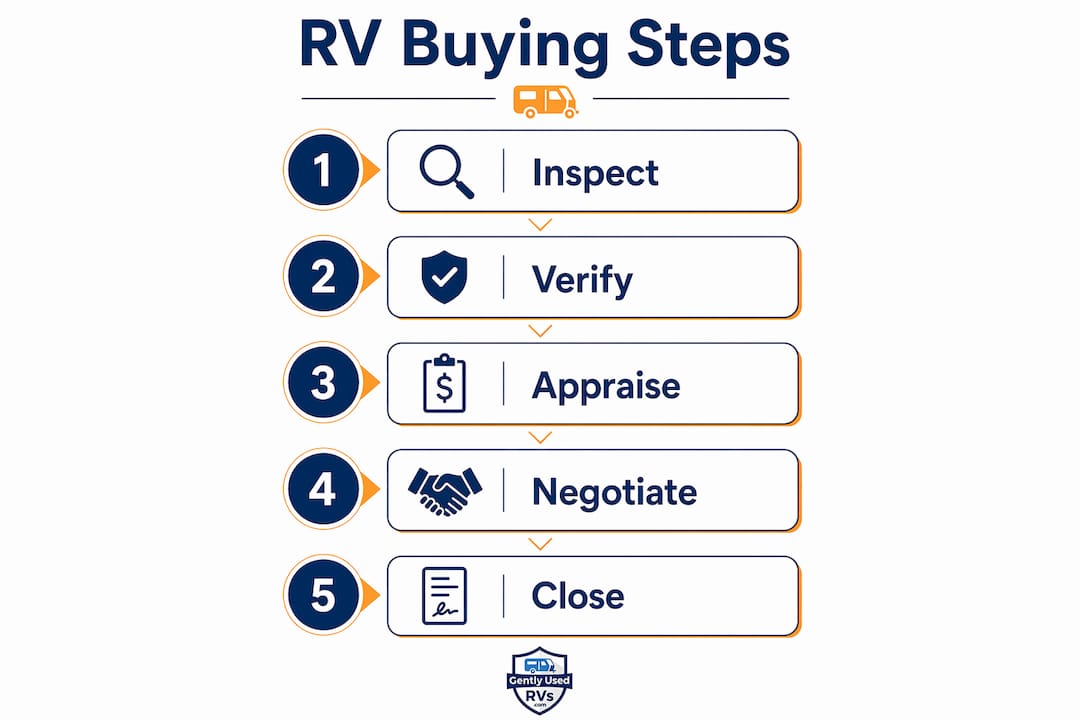
Once you have the inspection report, use it as a negotiation tool. Independent inspection reports surface problems the seller may not have known about, and every documented defect justifies a price reduction request. Pair the inspection findings with NADA appraisal guide values to build a complete picture of what the RV is actually worth.
Pro Tip: Schedule the professional inspection before finalizing any price agreement. If the seller refuses to allow an independent inspection, walk away. That resistance is one of the clearest warning signs in the entire private RV sale process.
How to negotiate and close the deal with a private RV seller
Negotiation without data is guesswork. Before you make any offer, pull the NADA appraisal guide values for the specific year, make, and model. NADA provides both low retail and average retail figures. Negotiating toward the low retail value is a standard buyer strategy when repairs or updates are needed, and it gives you a defensible number to present.
Here is how to approach the closing sequence:
- Get pre-qualified for financing before you negotiate. Knowing your budget ceiling prevents emotional overspending and speeds up closing. Credit unions typically offer better RV loan rates than banks.
- Calculate total ownership costs. Insurance, registration, campsite fees, fuel, and maintenance all add to the purchase price. A $30,000 RV with $4,000 in needed repairs and aged tires may cost more than a $35,000 unit in clean condition.
- Present repair costs as line items. If the inspection found a failing water heater and two aged tires, price those repairs and subtract them from your offer. This approach is professional and hard to argue against.
- Use comparable listings as market evidence. Showing the seller two or three similar RVs listed at lower prices on platforms like Gentlyusedrvs strengthens your position without being confrontational.
- Agree on payment method before closing day. A cashier’s check or wire transfer to an escrow service is the safest approach. Never pay with cash for a large transaction, and never use peer-to-peer payment apps for a purchase of this size.
- Confirm the title is signed over correctly. The seller signs the back of the title, and you take it directly to your state’s DMV to complete the transfer. Do not leave without the signed title in hand.
Negotiation success depends on combining comparable market data, appraisal guide values, and inspection findings. Use all three together, and you negotiate from a position of facts rather than feelings.
Common pitfalls to avoid when buying an RV privately
Private sales carry higher total cost risks than dealer purchases, primarily because there is no warranty, no return policy, and no service department to call after the sale. Knowing where buyers go wrong is half the battle.
The most costly mistakes follow a predictable pattern:
- Falling in love with the RV before completing the inspection. Emotional attachment clouds judgment and leads buyers to rationalize red flags.
- Accepting a title with an unresolved lien. This is not a paperwork technicality. It is a legal liability that can result in repossession of the RV even after you have paid for it.
- Skipping the test drive on a motorized unit. A Class A or Class C motorhome with transmission or brake issues can cost $3,000 to $8,000 to repair.
- Ignoring the total cost of ownership. Many buyers focus on the purchase price and forget to budget for insurance, registration, storage, and the first season of maintenance.
- Failing to verify that every appliance and system works before signing anything.
“If a private seller resists a thorough inspection or rushes you toward closing, treat that as a serious warning. Motivated sellers with nothing to hide welcome scrutiny. Sellers who push back on inspection requests are telling you something important.”
Pro Tip: Run a VIN check through the National Motor Vehicle Title Information System (NMVTIS) or a service like Carfax for RVs before committing to any purchase. This reveals accident history, title brands, and odometer discrepancies that the seller may not disclose.
Key takeaways
Buying an RV from a private seller requires a disciplined sequence of inspection, document verification, professional appraisal, and secure closing to protect your investment and avoid costly surprises.
| Point | Details |
|---|---|
| Inspect before negotiating | Complete a full physical and professional inspection before discussing price to build negotiation leverage. |
| Verify the title is lien-free | Confirm no lender holds a claim on the title before transferring any money to the seller. |
| Use NADA and inspection data | Combine NADA appraisal values with inspection findings to justify a fair, evidence-based offer. |
| Budget for total ownership costs | Factor in insurance, registration, repairs, and maintenance beyond the purchase price. |
| Never skip the professional inspection | An NRVIA-certified inspection costing $150 to $500 can prevent $5,000 to $10,000 in surprise repairs. |
My honest take on private RV purchases
I have reviewed hundreds of private RV transactions, and the pattern is consistent. Buyers who get burned almost always skipped one of two things: the professional inspection or the title check. They trusted the seller’s word, got excited about the price, and moved fast. That combination is expensive.
The inspection is not optional. It is the one step that converts a leap of faith into an informed decision. Spending $300 on an NRVIA-certified inspector before handing over $40,000 is not caution. It is basic financial sense. And if the seller pushes back on that request, you have your answer about whether this deal is worth pursuing.
On paperwork, the lien issue trips up more buyers than any other single problem. A seller who owes money on the RV cannot legally transfer a clean title until that debt is cleared. Verify this before you negotiate, not after.
My advice is simple: slow down, follow the steps in order, and be willing to walk away. The right RV at the right price with clean paperwork exists. You do not have to settle for a risky deal because you fell in love with a floor plan.
— Christopher
Find your next RV on Gentlyusedrvs
Ready to put these steps into practice? Gentlyusedrvs is a free online classifieds marketplace where private sellers and dealerships list used RVs across the United States, Canada, and internationally. You can browse RV listings without creating an account, and search results are geotargeted so you see the closest options first.

Before you start contacting sellers, use the RV types guide to narrow down which Class A, B, or C motorhome, travel trailer, fifth wheel, or toy hauler fits your lifestyle and budget. Knowing exactly what you want before you start inspecting saves time and prevents you from being talked into the wrong unit. Gentlyusedrvs also has a scam safety guide to help you vet sellers and spot red flags before they cost you money.
FAQ
What documents do I need when buying an RV from a private seller?
You need the original title with a matching VIN, a signed bill of sale, and confirmation that the title carries no liens. Service records and appliance manuals are strongly recommended but not legally required in most states.
How much does a professional RV inspection cost?
NRVIA-certified inspections typically cost between $150 and $500, depending on RV size and inspection depth. For any RV priced above $40,000, the inspection fee is a small cost relative to the repairs it can prevent.
Can I negotiate the price on a private RV sale?
Yes, and you should. Use NADA appraisal guide values alongside your inspection report to justify a lower offer. Documented repair needs and comparable listings on platforms like Gentlyusedrvs give you concrete evidence to support your position.
What happens if the RV has a lien on the title?
The seller must pay off the lien and obtain a clear title before the sale can legally close. Never accept responsibility for paying off a seller’s loan after the transaction, as this creates serious legal and financial risk for you.
How do I verify the RV’s history before buying privately?
Run a VIN check through NMVTIS or a vehicle history service that covers RVs to uncover accident history, title brands, and odometer issues. This check takes minutes and can reveal problems the seller has not disclosed.