
RV value is defined by make and model more than any other single factor, including age or mileage. The industry term for this is “brand-driven depreciation,” and it explains why two five-year-old Class A motorhomes with identical mileage can differ in price by tens of thousands of dollars. Understanding why RV make and model affect value gives you real leverage whether you are buying, selling, or just trying to know what your rig is worth. Industry guides like NADA and Black Book build their entire valuation frameworks around make and model as primary inputs.
Why RV make and model affect value: the depreciation story
Depreciation is the single biggest financial event in RV ownership, and make and model control how fast it happens. RVs typically lose 15–19% of their value in the first year alone. After year six, that rate slows to roughly 2–6% annually. The brand and maintenance history of a specific unit determine where in that range it lands.
Not all RV classes depreciate at the same speed. Class B camper vans retain 50–53% of their value after five years, outperforming both Class A and Class C motorhomes. That gap exists because Class B vans are built on commercial van chassis, carry lower price tags, and attract a loyal buyer base willing to pay a premium for compact, fuel-efficient travel. Class A coaches, by contrast, carry high sticker prices and complex mechanical systems that scare off buyers as units age.
Model year matters too. When a manufacturer releases a significant redesign or chassis upgrade, the previous generation loses value faster. Buyers chase the updated floor plan or the new slide configuration, leaving older versions with less demand. The NADA RV guide captures these model-year premiums directly, using wholesale auction data and dealer transaction records to reflect real market behavior.
Pro Tip: If you are shopping for a used RV, look for a model that was redesigned two or three years ago. The previous generation often sells at a steep discount even though the mechanical platform is nearly identical.
| RV Class | Approximate 5-year value retention | Key driver |
|---|---|---|
| Class B camper van | 50–53% | Compact size, loyal buyer base |
| Travel trailer (premium brand) | 62–64% | Brand reputation, lower depreciation rate |
| Class A motorhome | Below 50% | High sticker price, mechanical complexity |
| Class C motorhome | Moderate | Mid-range demand, chassis familiarity |
How does brand reputation affect RV resale price?
Brand reputation is not just marketing. It translates directly into dollars at resale. Legacy brands like Airstream and Winnebago hold higher resale values because buyers trust their parts availability, dealer service networks, and long-term durability. That trust creates a price floor that budget-tier manufacturers simply cannot match.
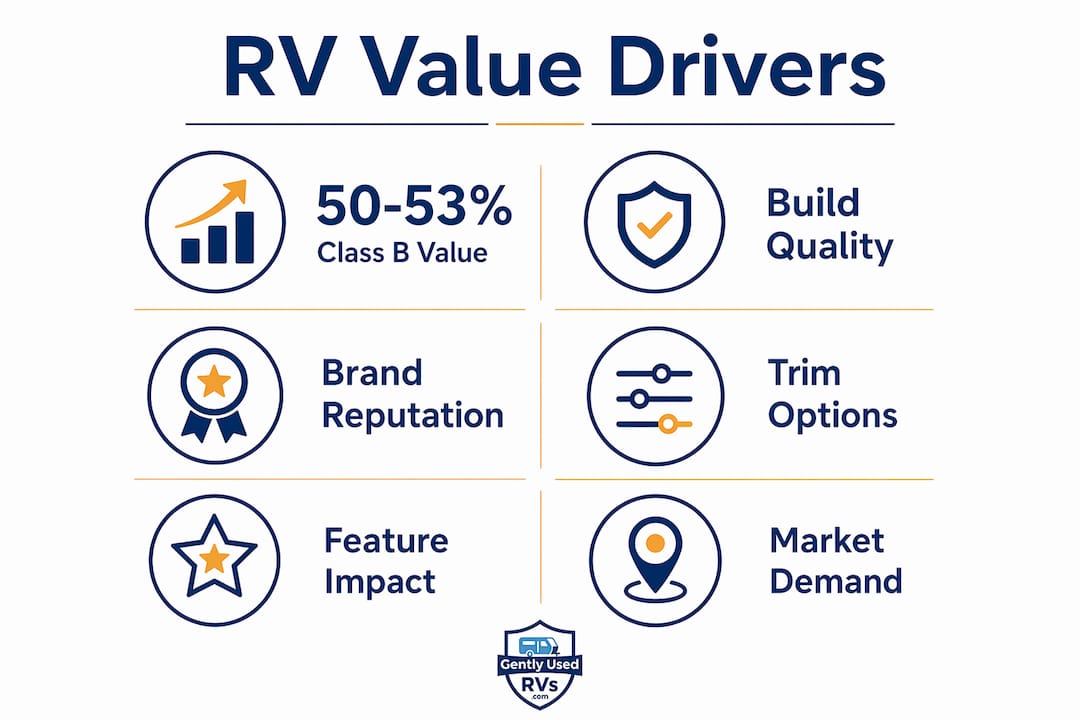
Build quality is the foundation of that reputation. Airstream’s aluminum-riveted construction requires approximately 350 labor hours per trailer. A typical competitor uses 50–60 hours for a comparable-sized unit. That difference shows up in how the trailer holds up over a decade and, by extension, what buyers will pay for a used one.
Budget-tier manufacturers produce units that are affordable new but lose value quickly. Buyers in the used market know the difference. They factor in the cost of repairs, the availability of replacement parts, and the likelihood of finding a qualified technician. When those answers are uncertain, they discount the price accordingly.
Here is what drives brand-based value retention:
- Parts and service availability. Brands with wide dealer networks keep repair costs predictable, which supports resale value.
- Warranty reputation. Manufacturers known for honoring warranties attract buyers who see lower ownership risk.
- Owner community. Active owner forums and clubs for brands like Airstream and Winnebago create demand that outlasts the original production run.
- Construction method. Aluminum-riveted, laminated, or fiberglass construction each carries a different durability profile that buyers price in.
- Brand perception in the used market. Condition, maintenance history, and brand perception are the primary variables separating RV values as the market normalizes after the pandemic-era price surge.
Pro Tip: Before you list a used RV, pull the brand’s owner forum and note what common repairs come up. Address those issues before listing. Buyers who have done their research will ask about them, and a clean maintenance record turns those questions into selling points.
Why do specific model features and trim levels matter for resale?
Within a single brand, trim level and model configuration create significant price differences. A base-trim travel trailer and a premium-trim version of the same model can differ by $15,000 or more when new. That gap narrows at resale, but it never disappears entirely.
Trim level and feature packages drive value differences within the same manufacturer’s lineup more than the brand name alone. A model with a residential refrigerator, a power awning, and a solid-surface countertop holds more value than a stripped version because buyers in the used market still want those features. They are not willing to pay full new-unit prices, but they will pay a meaningful premium over a bare-bones equivalent.
Four model-specific factors that consistently affect resale value:
- Floor plan popularity. Bunkhouse layouts and rear living configurations attract families and full-timers. Unpopular floor plans sit on the market longer and sell for less.
- Chassis upgrades. A model built on a commercial truck chassis or a purpose-built motorhome chassis commands more confidence from buyers than one on a modified light-duty platform.
- Factory options versus aftermarket additions. Factory-installed solar, generator packages, and slide-outs add more value than equivalent aftermarket installs because buyers trust the integration and the warranty coverage.
- Discontinued models. When a manufacturer stops producing a model, parts availability becomes a concern. Buyers discount discontinued units to account for future repair uncertainty, even if the unit is in excellent condition today.
Understanding the RV classes explained helps you see how these trim and feature differences play out across the full spectrum of RV types, from pop-up campers to Class A diesel pushers.
What market factors shape how buyers value specific makes and models?
Market conditions amplify or compress the value differences that make and model create. During the 2020–2022 demand surge, nearly every RV brand held value unusually well. As demand has normalized, the gap between strong and weak brands has widened again. The makes and models with genuine quality and loyal buyer bases have held their ground. The rest have given back their pandemic-era gains.
Geographic demand is a real factor too. A four-season-capable fifth wheel from a brand known for cold-weather insulation sells faster and at a higher price in Minnesota than in Arizona. A lightweight travel trailer built for dry climates faces the opposite dynamic. RV location affects price in ways that interact directly with make and model preferences.
Industry valuation guides reflect these dynamics in real time. NADA and Black Book both use wholesale auction results and retail transaction data to set their reference values. Those guides treat make and model as primary variables, not secondary ones. A buyer or seller who ignores them is negotiating blind.
Dealers’ trade-in offers typically run 20–30% below private-party retail prices. That gap reflects wholesale market data and dealer reconditioning costs. It also means that knowing your RV’s make and model value in the private market gives you real negotiating power when a dealer makes an offer.
Key Takeaways
RV make and model are the primary determinants of resale value, controlling depreciation rate, buyer demand, and the price floor that a unit can realistically hold over time.
| Point | Details |
|---|---|
| Depreciation varies by class | Class B vans retain 50–53% of value after five years; Class A motorhomes drop further and faster. |
| Brand reputation creates a price floor | Legacy brands with strong service networks and build quality hold value that budget-tier units cannot match. |
| Trim and features drive within-brand differences | Factory options and popular floor plans add measurable resale value; discontinued models lose it. |
| Market conditions amplify brand gaps | Post-pandemic normalization has widened the value gap between strong and weak brands. |
| Private sale beats dealer trade-in | Dealer trade-in offers run 20–30% below private-party retail, making private listings worth the effort. |
The uncomfortable truth about RV brand loyalty and value
I have watched buyers overpay for a name and undersell because they did not know what they had. Both mistakes come from the same place: treating make and model as a label instead of a financial variable.
The market is not sentimental. A well-maintained Airstream from 2015 will outsell a neglected one from 2022 every time. Brand reputation sets the ceiling, but condition and documentation determine where in that range you actually land. I have seen sellers leave thousands on the table because they could not prove their maintenance history, even on a unit from a premium brand.
The other misconception I see constantly is buyers assuming that a newer model year automatically means better value. That is only true when the manufacturer made a meaningful change. A cosmetic refresh with new upholstery does not justify a $5,000 premium. A new chassis or a redesigned slide system does. Learn to tell the difference before you negotiate.
If you are selling, price your used RV using both NADA and Black Book as reference points, then adjust for your specific trim, condition, and documented service history. Do not anchor to what you paid. Anchor to what comparable units are actually selling for right now.
— Christopher
Find the right RV by make and model on Gently Used RVs
Knowing how make and model affect value is only useful if you can act on it. Gently Used RVs makes it easy to browse used RVs by type and class, so you can compare makes and models side by side and see what the market is actually asking.

Listings on Gently Used RVs are posted by private sellers and dealerships across the United States, Canada, and internationally. There are no commissions and no hidden fees for sellers. Buyers can search without creating an account. Whether you are tracking down a used Winnebago Thrive or evaluating a travel trailer from a premium brand, the platform gives you real listings at real prices to ground your research in the actual market.
FAQ
Why does RV make and model affect resale value so much?
Make and model determine build quality, parts availability, buyer demand, and depreciation rate. These factors combine to set the price floor and ceiling for any used unit in the market.
Which RV class holds its value best?
Class B camper vans retain 50–53% of their value after five years, outperforming Class A and Class C motorhomes. Their compact size and loyal buyer base drive stronger demand in the used market.
How do NADA and Black Book use make and model in valuations?
Both guides treat make and model as primary variables, using wholesale auction results and retail transaction data to assign reference values. Model-year upgrades and chassis changes create measurable premiums in their systems.
Does trim level affect RV resale value within the same brand?
Yes. Factory-installed features like residential appliances, power awnings, and solar packages add measurable resale value compared to base-trim versions of the same model.
Is a dealer trade-in offer a fair reflection of my RV’s value?
Dealer trade-in offers typically run 20–30% below private-party retail prices. Selling privately through a platform like Gently Used RVs usually returns significantly more than accepting a dealer trade-in.