RV Friendly Campgrounds: Your 2026 Traveler’s Guide
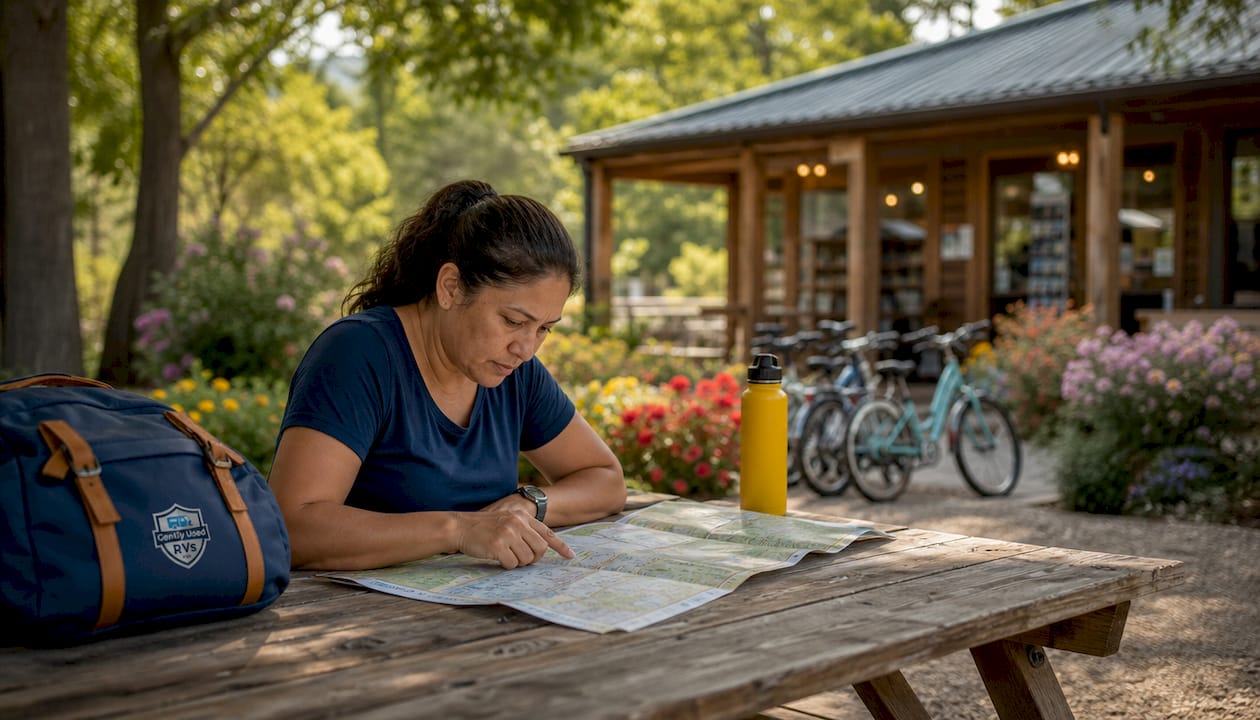
RV friendly campgrounds are designated sites that provide full hookups (water, sewer, and electric), enough space for large vehicles, and amenities built around the needs of RV travelers. The industry term for these sites is “full-hookup campgrounds,” though “RV friendly” has become the standard shorthand across booking platforms and traveler communities. Choosing the right campground means matching your rig’s length, power requirements, and travel goals to what a site actually delivers. Get it wrong, and you’re either squeezed into a site that won’t fit your Class A or dry camping without a plan.
1. What makes a campground truly RV friendly?
The baseline for any RV friendly campground is infrastructure. Full hookups mean water, sewer, and electric service at the site. Electric service comes in two standards: 30 amp and 50 amp. Most modern Class A and Class C motorhomes require 50 amp service to run air conditioning, slides, and appliances simultaneously. A campground advertising “hookups” without specifying amp service is a red flag worth investigating before you book.
Site length matters just as much as power. Sites are categorized by amp service and rig length, with big-rig friendly sites accommodating vehicles up to 45 feet. If your rig runs 40 feet plus a tow vehicle, you need a pull-through site or a very forgiving back-in. Always call ahead and confirm the actual usable site length, not just the listed maximum.
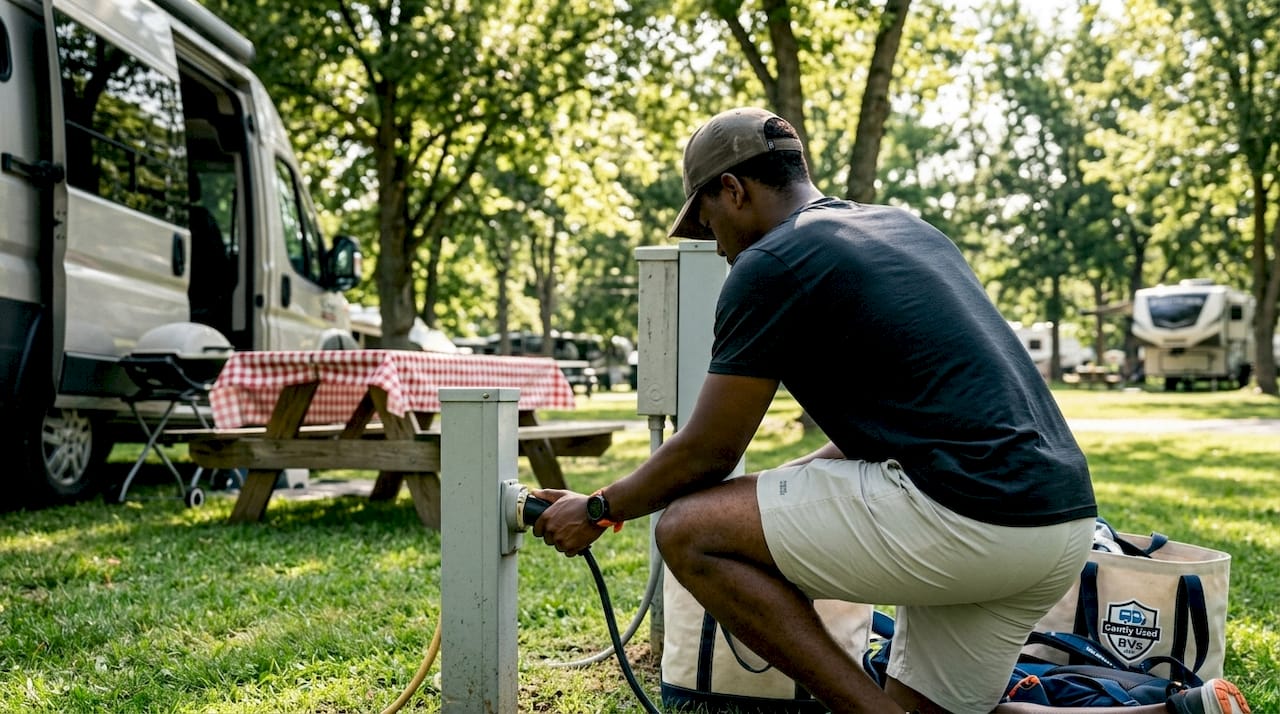
Beyond hookups and space, the best campgrounds for RVs add value through Wi-Fi, laundry facilities, pet-friendly policies, and family activities. These extras separate a functional stopover from a destination worth staying at for a week.
2. Top RV camping sites for big rigs and long vehicles
Big-rig travelers face a specific problem: most campground listings don’t clearly state whether a 45-foot Class A with a toad (towed vehicle) will actually fit. Many older campgrounds limit rig length to under 35–40 feet, making it critical to verify site specifications before arrival. Showing up with a 44-foot motorhome to a campground designed for travel trailers is a situation nobody wants.
The features that define a genuinely big-rig friendly site include:
- Pull-through sites with at least 65–70 feet of usable length to accommodate rig plus tow vehicle
- 50 amp electric service for full power to slides, HVAC, and appliances
- Full sewer hookup at the site rather than a dump station only
- Wide paved or gravel pads that handle the weight and width of a Class A
- Low-hanging branch clearance and no tight turns at the campground entrance
Campgrounds in the western United States, particularly in states like Texas, Nevada, and Arizona, tend to offer more big-rig-friendly infrastructure than older parks in the Northeast, where trees and terrain create natural constraints.
Pro Tip: Before booking, search the campground’s name plus “big rig” or “45 feet” in RV travel forums. Real travelers post photos and measurements that campground websites rarely include.
3. Family-friendly RV parks with recreational amenities
Family-friendly RV parks go well beyond a pool and a playground. Modern family-oriented resorts commonly include swimming pools, jumping pillows, miniature golf, and organized events. That range of programming matters because it keeps kids engaged for multiple days, which means you actually get to relax instead of managing boredom.
The financial logic of amenity-rich parks is worth understanding. A private resort charging $80–$100 per night with a pool, mini golf, and daily activities can cost less than a budget campground plus separate entertainment for a family of four. When you bundle the experience into one location, you reduce driving, fuel costs, and the mental load of planning daily outings.
When choosing a family-friendly site, look for:
- Dedicated kids’ programming with scheduled activities (not just a playground)
- Pool hours and supervision policies so you know what’s staffed
- Pet-friendly policies if you’re traveling with a dog
- Site spacing that gives families room without feeling on top of neighbors
The best family travel RV picks pair well with resorts that offer back-in sites near activity centers, so kids can move freely without crossing traffic.
Pro Tip: Book family-friendly parks for friday and Saturday arrivals during summer. Many resorts run their biggest organized events on weekend evenings, and you’ll get the full experience rather than catching the tail end.
4. National park campgrounds with full hookups
Full-hookup sites inside national parks are rare. Only 18 of 136 sites at Furnace Creek Campground in Death Valley National Park offer hookups, making advance booking non-negotiable. The National Park Service does not add hookup infrastructure easily, so the parks that have it tend to be heavily booked months out.
The cost advantage is real. Full-hookup rates at national park campgrounds can run as low as $44 per night, compared to $80–$110 or more at private luxury parks. That price difference adds up fast on a two-week trip.
| Feature | National Park Campgrounds | Private RV Resorts |
|---|---|---|
| Full hookup availability | Very limited (often under 15% of sites) | Standard at most resorts |
| Nightly cost | As low as $44 | $80–$110+ |
| Amenities | Minimal (nature access, basic facilities) | Pools, Wi-Fi, activities |
| Booking lead time | Months in advance | Days to weeks |
| Scenery and access | Unmatched | Variable |
The trade-off is clear. National park sites offer unbeatable scenery and low cost, but you sacrifice amenities and booking flexibility. Private resorts offer comfort and convenience at a higher price with easier availability.
5. Essential amenities and technology at modern RV parks
The definition of “RV friendly” has shifted. Modern travelers now expect flat pads, fiber or hardwired ethernet, and valet services at top-tier resorts. That expectation reflects a growing segment of full-time RV travelers who work remotely and need reliable connectivity as much as they need water and power.
The gap between a resort and a standard campground is widening. Resorts offering fiber Wi-Fi and valet services deliver a fundamentally different experience than public land campgrounds, which often have no connectivity at all. For a traveler who needs to join a video call on monday morning, that difference determines where they book.
Key amenities that define top RV camping sites in 2026:
- High-speed Wi-Fi or hardwired ethernet at the site (not just in the clubhouse)
- Concrete or paved pads that stay level and drain properly
- Valet or concierge services at luxury resorts for setup assistance
- Laundry facilities on-site with enough machines for the campground size
- Pet-friendly policies with designated dog walk areas and waste stations
- Security and gated access for overnight safety
Understanding RV classes helps you match your rig’s power and space needs to what a campground actually provides. A Class B van camper has very different hookup requirements than a 40-foot Class A diesel pusher.
6. How to choose the right campground for your rig and travel style
Choosing where to camp with an RV comes down to four factors: rig size, travel goals, budget, and flexibility. Work through them in that order and you’ll avoid most booking mistakes.
- Measure your total rig length. Include the tow vehicle or towed car if applicable. Add at least five feet of buffer when comparing to listed site lengths.
- Identify your power requirements. A 50-amp rig plugged into a 30-amp pedestal runs on reduced power. Know what you can and can’t run before you arrive.
- Decide between hookup and dry camping. High-demand parks require planning for both, since hookup sites fill first. Have a dry camping backup plan with full tanks and charged batteries.
- Match amenities to your travel goals. A scenic national park stay needs minimal amenities. A week-long family vacation needs programming, a pool, and reliable Wi-Fi.
- Book early for popular destinations. Affordable RV camping spots in national parks and state parks fill months in advance, especially for summer and holiday weekends.
- Read recent traveler reviews. Campground listings go stale. A site listed as “pull-through” may have added a fence or tree that now blocks access. Recent photos from travelers are the most reliable source.
The best campground depends on your travel goal: prioritize infrastructure for rugged environments, and choose amenity-rich resorts when comfort is the priority. Neither choice is wrong. They just serve different trips.
Key takeaways
The most effective approach to finding RV friendly campgrounds is matching your rig’s size and power needs to verified site specifications before you book, then layering in amenities based on your travel goals and budget.
| Point | Details |
|---|---|
| Verify site length and amp service | Confirm usable site length and 30/50 amp availability directly with the campground before booking. |
| Book national park hookups early | Full-hookup sites in national parks are scarce and fill months in advance at rates as low as $44/night. |
| Match amenities to travel goals | Family trips benefit from resort amenities; scenic trips prioritize location over services. |
| Plan for dry camping as a backup | High-demand destinations require a dry camping contingency when hookup sites are unavailable. |
| Use traveler reviews for accuracy | Recent photos and forum posts reveal site conditions that official listings often miss. |
What I’ve learned from choosing campgrounds the hard way
The conventional wisdom says to always book the campground with the most amenities. I disagree. The campground with the most amenities is often the one where you spend your whole trip inside the resort instead of actually experiencing where you are.
My turning point came after a week at a luxury resort in Tennessee. The pool was great. The mini golf was fun. But I drove 900 miles to be in the Smoky Mountains and spent most of my time in a campground that could have been anywhere in the country. The next trip, I booked a simpler site with a better location and had a more memorable experience with fewer amenities.
That said, I’ve also made the opposite mistake. I booked a national park site without confirming hookup availability, arrived with a full-size Class C, and spent three nights dry camping in 95-degree heat because the hookup sites were taken. That’s not adventure. That’s poor planning.
The balance I’ve landed on: use resorts for trips centered on the campground itself (family vacations, holiday weekends), and use simpler sites for trips centered on a destination. Your rig’s needs don’t change, but your priorities do. Build your campground selection around the trip’s purpose, not just the amenity checklist.
— Christopher
Finding the right RV for every campground you’ll visit
The campground you choose is only half the equation. The RV you drive determines which sites you can actually use.

A 45-foot Class A opens up big-rig-friendly resorts but closes the door on many national park sites. A compact Class B van fits almost anywhere but trades living space for flexibility. Knowing which RV type matches your camping style saves you from buying a rig that limits your options. Gently Used RVs lists travel trailers, fifth wheels, Class A, B, and C motorhomes, and more from private sellers and dealerships across the United States. Browse used RVs for sale and filter by type to find a rig that fits the campgrounds on your list.
FAQ
What does “full hookup” mean at an RV campground?
Full hookup means the site provides water, sewer, and electric connections at the pad. Electric service is either 30 amp or 50 amp, and larger rigs typically require 50 amp to run all systems.
How far in advance should I book RV sites in national parks?
Book national park hookup sites at least three to six months in advance. Sites like Furnace Creek in Death Valley have only 18 full-hookup sites out of 136 total, and they fill quickly.
What is a pull-through site and why does it matter for big rigs?
A pull-through site lets you drive in from one end and exit from the other without backing up. For rigs over 35 feet, especially those towing a vehicle, pull-throughs are the safest and most practical option.
Are pet-friendly campgrounds easy to find?
Most private RV resorts and many state park campgrounds allow pets, but policies vary on breed restrictions, leash rules, and designated areas. Always confirm pet policies before booking.
What is the cost difference between national park and private RV campgrounds?
National park full-hookup sites can cost as low as $44 per night. Private luxury RV resorts typically run $80–$110 or more per night, though they offer significantly more amenities and easier availability.