National park RV camping requires advance reservations, knowledge of size limits, and a willingness to dry camp. Most campgrounds inside national parks operate on a 6-month booking window that opens at 10:00 AM ET, and prime sites sell out within seconds. Full hookups are rare across the entire National Park Service system, so self-sufficiency is not optional. Understanding park-specific rules around generator use, stay limits, and entry permits separates a smooth trip from a frustrating one. These national park RV camping tips cover everything you need to plan confidently.
1. How to book national park RV campsites before they’re gone
Reservations at most national park campgrounds open exactly 6 months in advance at 10:00 AM ET. For a July 4 trip, that window opens january 4 at 10:00 AM ET, and sites fill within seconds. Treating booking day like a ticketed concert is the right mindset.
Recreation.gov is the official booking platform for the majority of national park campgrounds. Filter your search by RV length and site type before the reservation window opens. Have your payment information saved and your preferred dates ranked in order of priority.
Opening multiple browser tabs during the release causes system errors and can trigger double-booking issues. Log in on a single tab with everything ready. If your first-choice dates are gone in seconds, move immediately to your backup dates rather than refreshing repeatedly.
Pro Tip: Set a calendar alert for exactly 6 months before your target arrival date. Log in to Recreation.gov the night before to confirm your account and payment details are current.
Some parks require a separate timed-entry or vehicle permit on top of your camping reservation. Verify park-specific permit rules on the official NPS.gov page for your destination before you assume your campsite reservation covers park entry.
2. Understanding RV size limits and picking the right campground
RV size is the single biggest factor in determining where you can camp inside a national park. About 84% of national park campgrounds accommodate rigs under 29 feet, and availability drops sharply for anything over 32 feet. Knowing your rig’s total length before you search saves you from booking a site you physically cannot use.
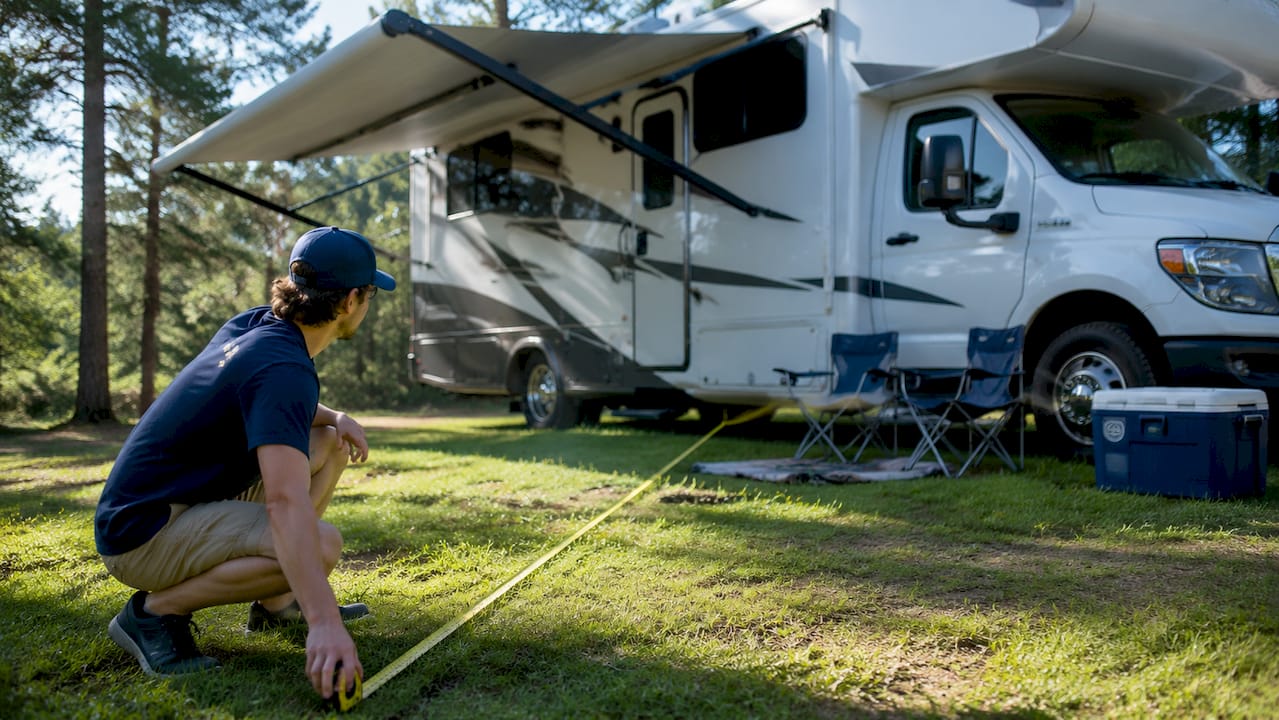
The “maximum RV length” listed on a campsite is not just your coach. It includes your tow vehicle, any hitch overhang, and the maneuvering room required to get in and out. Book sites 5–10 feet longer than your actual rig length to avoid tight fits on irregular or narrow pads.
Here is a quick reference for size compatibility across popular parks:
| Park | Max RV Length | Notes |
|---|---|---|
| Grand Canyon South Rim | 50 feet | One of the most generous limits in the system |
| Zion (Watchman) | 40 feet | Pull-through sites available |
| Shenandoah | No stated limit | Verify individual site dimensions |
| Yellowstone | 30–40 feet | Varies by campground |
| Yosemite | 35 feet | Some loops restricted to shorter rigs |
- Measure your rig from the front of the tow vehicle to the rear of the trailer before booking anything.
- Filter Recreation.gov results by your total length, not just your coach length.
- Call the park visitor center if you own a Class A over 40 feet. Staff can confirm which loops physically work.
- Consider a smaller Class B or travel trailer if you want maximum campground access across the most parks.
Pro Tip: Zion’s Watchman Campground accepts rigs up to 40 feet and offers pull-through sites, making it one of the most accessible options for larger rigs in the Southwest.
3. Managing hookups and dry camping in national parks
Full hookups inside national park campgrounds are the exception, not the rule. Only about a dozen campgrounds across the entire National Park Service system offer any partial or full utility connections. Plan every trip assuming you will dry camp.
Zion’s Watchman Campground is one of the most cited examples of what “partial hookups” actually means inside a park. It offers 20/30 amp electric service only. There is no water hookup at the site and no sewer connection. You fill your fresh tank at a central water station and use the campground dump station when you leave.
Practical steps for managing a dry camping setup:
- Fill your fresh water tank completely before entering the park. Central fill stations exist but lines can be long.
- Know your gray and black tank capacity. A family of four can fill a 40-gallon black tank in 3–4 days.
- Use a water-saving showerhead and turn off the pump when not actively using water.
- Locate the dump station on the park map before you need it. Some parks have only one.
- Carry a 25-foot water hose and a pressure regulator for the rare sites that do offer a spigot.
Generator use is tightly controlled in most parks. Quiet hours typically run from 9:00 PM to 6:00 AM, and noise restrictions often cap generators at 60 decibels at 50 feet. Running your generator outside those windows is a fast way to get a citation and alienate your neighbors.
Pro Tip: A lithium battery bank paired with solar panels lets you skip the generator entirely. You get silent power, no fuel cost, and zero conflict with quiet-hour rules.
4. Essential gear for your national park camping checklist
Packing the right gear separates a comfortable trip from a miserable one. National park campgrounds often have uneven, rocky ground with minimal site preparation. Leveling blocks and a surge protector are not optional accessories. They protect your RV’s systems and keep your refrigerator running correctly.
Your national park camping checklist should include these non-negotiables:
- Leveling blocks: Uneven pads are standard. Carry at least 8 interlocking blocks per side.
- Surge protector: Electrical pedestals in parks can deliver inconsistent voltage. A 30-amp or 50-amp surge protector guards your appliances.
- Water pressure regulator: Campground spigots can spike above 80 PSI and crack your water lines.
- Offline maps: Cell service is unreliable or nonexistent in most parks. Download Gaia GPS or AllTrails maps before you arrive.
- Bear canister or bear box: Many parks require bear-proof food storage. Leaving food in your RV is not always sufficient.
- First aid kit: Distance from urgent care facilities makes a well-stocked kit a real safety item.
“Leave No Trace principles apply to RV campers just as much as backpackers. Pack out everything you pack in, stay on designated roads and pads, and leave your site cleaner than you found it. The national parks belong to everyone.”
Weather in national parks changes fast, especially at elevation. Carry extra layers, rain gear, and a battery-powered weather radio. Connectivity for weather apps is not reliable enough to depend on alone.
Pro Tip: Download the NPS app for your specific park before you leave home. It includes offline maps, trail info, and campground details that work without cell service.
5. What are the best national park campgrounds for RVers?
The best campground for your rig depends on your size, hookup needs, and what you want to be close to. Not every highly rated campground works for every RV. Matching your priorities to site features is the real skill in RV camping in national parks.
Factors to evaluate when choosing a site:
- Pull-through vs. back-in: Pull-throughs are easier for long rigs and solo travelers. Back-in sites often offer more privacy and shade.
- Site length: Always verify the listed maximum against your total rig length, including tow vehicle.
- Shade and exposure: Desert parks like Zion and Joshua Tree offer little shade. Forested parks like Great Smoky Mountains provide natural cover but tighter lanes.
- Proximity to amenities: Sites near restrooms and dump stations are more convenient but also noisier. Sites at the loop’s edge trade convenience for quiet.
- Shuttle access: Parks like Zion and Acadia require you to use shuttles during peak season. Camping near a shuttle stop reduces daily driving inside the park.
| Campground | Park | Max Length | Hookups | Best For |
|---|---|---|---|---|
| Watchman | Zion | 40 feet | 20/30 amp electric | Larger rigs, electric access |
| Trailer Village | Grand Canyon | 50 feet | Full hookups | Families, Class A rigs |
| Fishing Bridge RV Park | Yellowstone | 45 feet | Full hookups | Self-contained rigs |
| Elkmont | Great Smoky Mtns | 35 feet | None | Wooded, quieter experience |
| Loft Mountain | Shenandoah | No limit stated | None | Flexible rig sizes |
Pro Tip: Trailer Village at the Grand Canyon South Rim is one of the only campgrounds inside a major national park offering full hookups. It books out months in advance, so set your 6-month alarm and treat it like a concert ticket.
The trade-off between hookups and ambiance is real. Electric hookup sites at Watchman sit in an open desert environment with limited shade. Forested no-hookup sites at Elkmont in Great Smoky Mountains National Park feel more immersive but demand full self-sufficiency. Neither is wrong. They serve different travelers.
Most national park campgrounds enforce a 14-day consecutive stay limit as standard National Park Service policy. That limit exists to keep access fair for all visitors. Plan your itinerary around it, especially if you want to spend extended time in one park.
Check the best RV travel destinations for 2026 if you are still deciding which parks to prioritize this season.
Key takeaways
Successful RV camping in national parks requires booking 6 months out, knowing your rig’s total length, and planning for dry camping as the default condition.
| Point | Details |
|---|---|
| Book at exactly 6 months | Recreation.gov reservations open at 10:00 AM ET; prime sites sell out in seconds. |
| Know your total rig length | Include tow vehicle and book sites 5–10 feet longer than your rig to avoid tight fits. |
| Expect dry camping | Full hookups exist at fewer than a dozen parks; fill tanks before entering and locate dump stations early. |
| Pack critical gear | Leveling blocks, a surge protector, and offline maps are non-negotiable for national park sites. |
| Respect stay limits | The 14-day maximum stay rule is standard NPS policy and applies across most campgrounds. |
What I’ve learned after years of RVing in national parks
The biggest mistake I see RV travelers make is treating national park camping like a private campground stay. You cannot just show up, find a site, and plug in. The parks operate on a completely different set of rules, and the consequences of ignoring them range from a wasted trip to a citation.
Flexibility has saved my trips more times than any amount of planning. Parks close loops for bear activity, staffing shortages, or weather with almost no notice. I always have a backup campground identified, ideally one outside the park boundary, so I am never stranded without a plan. The NPS.gov alerts page for each park is worth checking the week before you leave.
Rig size is a decision I think about differently now. I used to want the biggest coach I could drive. After getting turned away from a loop I had my heart set on because my rig was two feet too long, I started thinking about access first. A 28-foot travel trailer gets you into more parks, more loops, and more interesting sites than a 42-foot Class A. That trade-off is worth considering before you buy.
Dry camping inside a national park is genuinely one of the best experiences in RV travel. No generator noise, no sewer smell, no crowded hookup rows. Just your rig, a fire ring, and one of the most spectacular pieces of land on earth outside your window. Embrace it. The parks were designed for that kind of quiet.
— Christopher
Finding the right RV for your next national park trip
Planning a national park trip is the perfect time to think seriously about what rig you are driving. Smaller rigs in the 25–32 foot range open up the most campground options, and a gently used travel trailer or Class B motorhome can get you into parks that turn away larger coaches.
Gently Used RVs is a free marketplace where you can browse travel trailers, fifth wheels, Class B vans, and more from private sellers and dealerships across the United States. No account required to search. Start with the RV types guide to match your camping style to the right rig, or browse the full used RV inventory to see what is available near you. If you want dealer options, the RV dealer directory lists verified dealerships by location.
FAQ
How far in advance do I need to book a national park campsite?
Most national park campgrounds open reservations exactly 6 months before the arrival date at 10:00 AM ET. Prime sites at popular parks like Zion and Yellowstone sell out within seconds of the window opening.
What is the maximum RV length allowed in national parks?
About 84% of national park campgrounds accommodate RVs under 29 feet, with most handling up to 32 feet. A few parks like the Grand Canyon South Rim allow rigs up to 50 feet, but very large coaches face limited options across the system.
Do national park campgrounds have hookups?
Full hookups are rare inside national parks. Only about a dozen campgrounds offer any utility connections, and most of those provide only 20/30 amp electric service with no water or sewer at the site.
How long can I stay at a national park campground?
The National Park Service enforces a 14-day consecutive stay limit at most campgrounds. This standard policy applies system-wide and exists to keep access fair for all visitors.
Do I need a separate permit to enter the park if I have a camping reservation?
A camping reservation covers your site but not always park entry. Some parks require a separate timed-entry or vehicle permit in addition to your campsite booking. Always verify the specific permit requirements on the park’s NPS.gov page before you arrive.