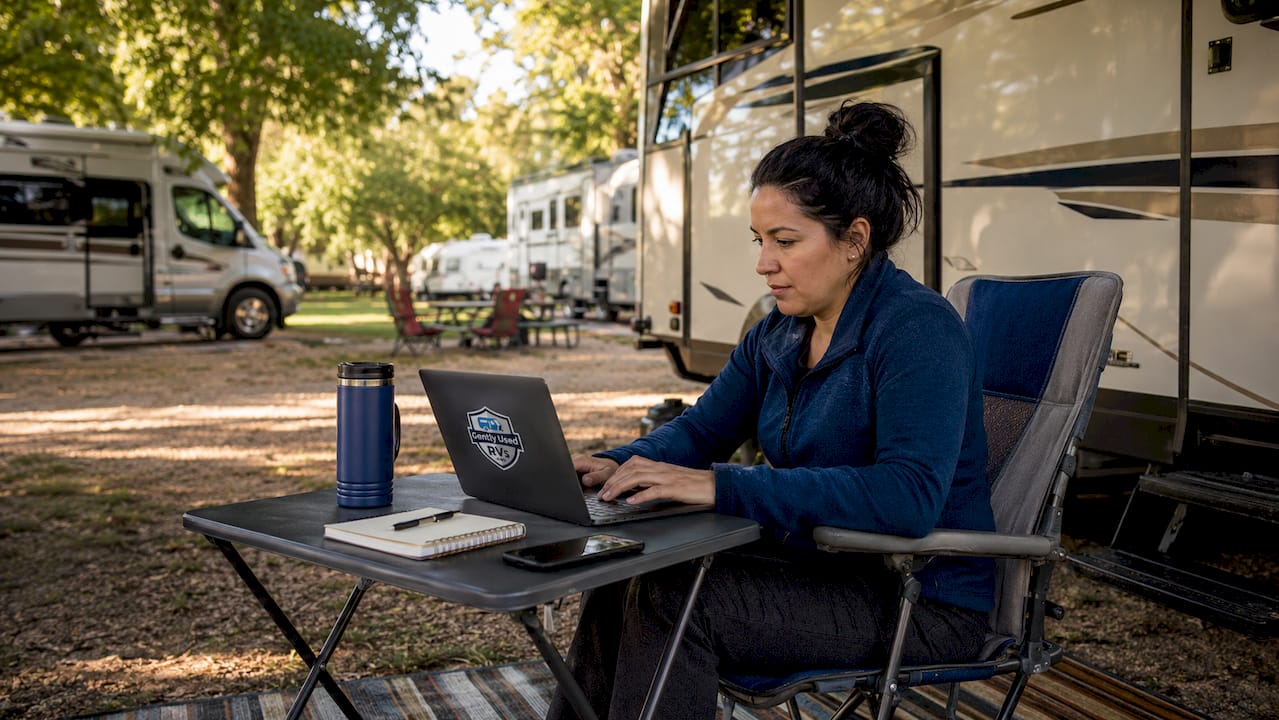
The remote work RV lifestyle is the intentional blend of full-time travel and professional remote work, made possible by reliable connectivity, a dedicated workspace, and a disciplined daily routine. Over 35 million Americans now identify as digital nomads, and a growing share of them have traded the apartment lease for a Class A motorhome or a fifth wheel. This guide covers the exact infrastructure, scheduling strategies, and job types that make digital nomad RV living sustainable, not just romantic.
What does a reliable RV internet setup look like for remote professionals?
Connectivity is the single most critical factor in the remote work RV lifestyle. Without it, everything else collapses. The good news is that the technology available in 2026 makes a truly reliable setup achievable for most remote professionals.
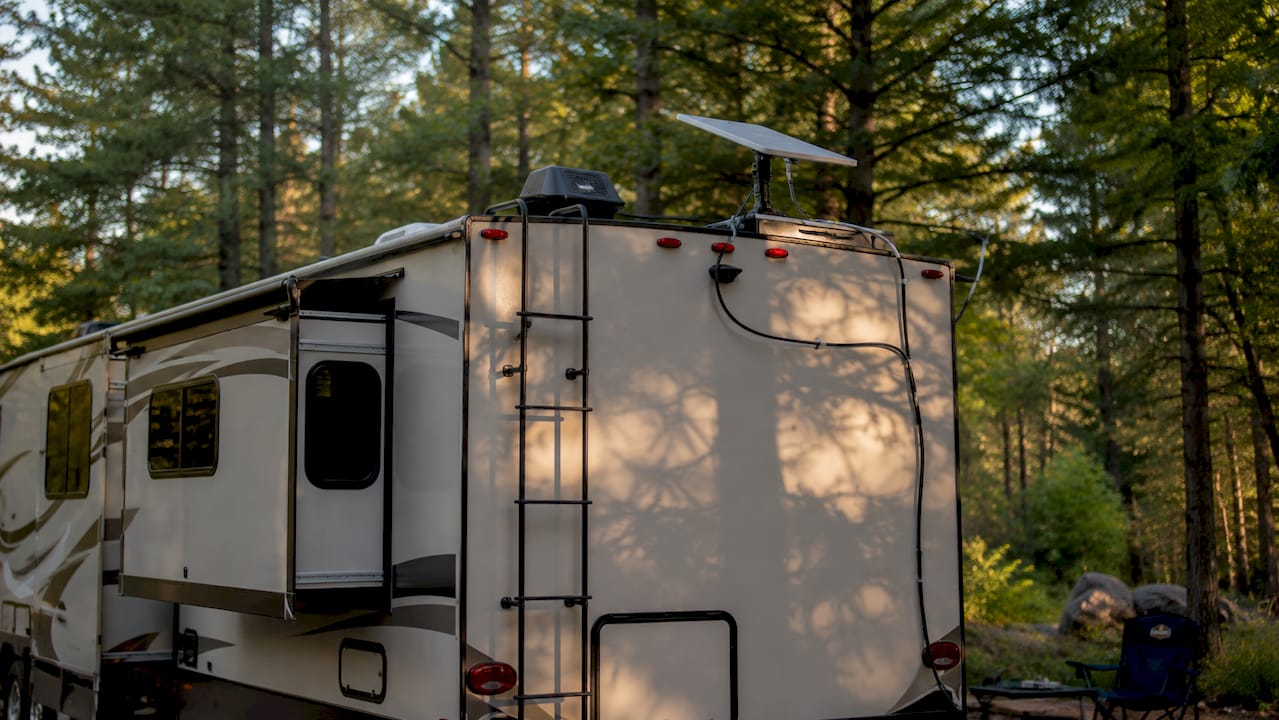
The gold standard is a two-layer connectivity strategy that combines a Starlink satellite dish with a cellular hotspot on a separate carrier. Starlink covers rural gaps where cell towers don’t reach. The cellular hotspot picks up the slack in urban areas where satellite signals can be obstructed by buildings or trees. Together, they deliver close to 99% uptime.
Bandwidth matters as much as uptime. Video calls require 5–10 Mbps, and heavy cloud-based work like uploading large files or running virtual machines demands 10–25 Mbps or more. A multi-network cellular router with automatic failover handles the switching between connections without dropping your Zoom call mid-sentence.
Here is what a complete connectivity kit looks like for a working RV professional:
- Starlink satellite dish mounted on the roof for rural and remote coverage
- Multi-network cellular router with SIM slots for two or more carriers
- Signal booster to amplify weak cellular signals in fringe areas
- Mobile hotspot backup on a third carrier for emergency redundancy
- Campground Wi-Fi as a supplemental option, never a primary source
Many modernized campgrounds now offer dedicated co-working zones with high-speed Wi-Fi designed specifically for remote professionals. These spaces are worth factoring into your route planning, especially during work-heavy weeks.
Pro Tip: Before committing to a campground for a work week, call ahead and ask for the actual Wi-Fi speed in Mbps. “High-speed” means different things to different parks, and a 5 Mbps shared connection won’t cut it for video calls.
How to create a productive workspace inside an RV?
A productive workspace inside an RV requires deliberate design. The default dinette table is not a workspace. It is a dining surface that doubles as a distraction zone. Remote professionals need a dedicated spot that signals “work mode” to their brain and stays set up between sessions.
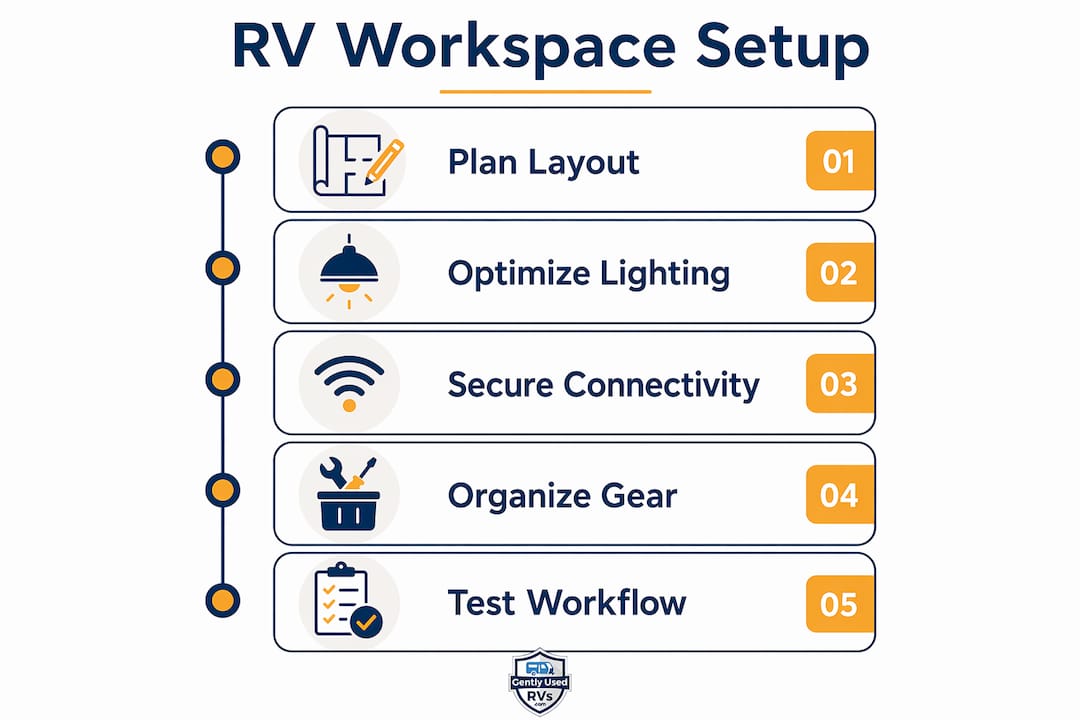
The layout of the RV determines what is possible. Slide-outs add significant floor space and make a proper desk setup far more realistic. Class B campervans are compact and force creative solutions like fold-down wall desks. Class C motorhomes and fifth wheels offer the best balance of space and maneuverability for most solo professionals or couples.
Follow these steps to build a workspace that actually works:
- Choose a fixed location. Pick one spot in the RV and commit to it as your office. Consistency trains your focus.
- Invest in an ergonomic chair. A proper chair prevents back pain that compounds over months of full-time living.
- Mount your monitor. A wall-mounted or arm-mounted monitor frees desk space and reduces neck strain.
- Manage noise. A quality headset with active noise cancellation handles road noise, campground generators, and barking dogs during calls.
- Control lighting. A small LED ring light or desk lamp improves video call quality and reduces eye fatigue during long work sessions.
- Test your power draw. Running a monitor, laptop, router, and lights simultaneously pulls significant wattage. Know your inverter and battery capacity before you need them.
A practice week parked near home, working exclusively on the RV’s internet, power, and workspace, reveals hidden problems before you are 800 miles from your nearest hardware store. Power shortfalls, poor ergonomics, and noise issues all surface within 48 hours of real work.
Pro Tip: Run a full workday simulation during your practice week. Schedule your actual meetings, open your usual apps, and push the connection hard. Problems that don’t appear during casual browsing will show up fast under real work conditions.
What are effective travel and work scheduling strategies for RV nomads?
Scheduling is where most new RV nomads fail. They treat every day as an adventure day and wonder why their productivity tanks. The fix is a clear separation between travel days and work days.
The 3-3-3 rule is the most practical scheduling framework for working RV travelers: drive no more than 300 miles per travel day, arrive at your destination by 3:00 PM, and stay at least three nights. This rule keeps driving distances manageable, gives you time to set up before dark, and ensures you have enough consecutive work days to maintain momentum.
Here is how to build a schedule that protects both your work output and your sanity:
- Designate travel days as non-work days. Driving and working simultaneously is a productivity myth. Pick one.
- Stay 1–3 weeks per location. Moving every 1 to 3 weeks reduces travel fatigue and keeps your work rhythm consistent.
- Book campgrounds in advance. Arriving without a reservation wastes hours and adds stress that bleeds into your workday.
- Block your calendar for setup time. The first afternoon at a new site goes to leveling, connecting utilities, and testing your internet. Do not schedule meetings then.
- Plan your route around connectivity. Experienced nomads prioritize signal strength over scenic views during work-heavy periods. A beautiful campsite with no cell signal is a vacation spot, not an office.
The most productive RV professionals treat their schedule like a project manager treats a sprint. Work weeks are planned in advance, travel is batched into transition days, and downtime is protected rather than squeezed out.
Which remote jobs are best suited for the RV lifestyle?
The best remote jobs for RVers are asynchronous by nature. They measure output, not hours logged on a specific schedule. Jobs that live on a laptop, including writing, web development, digital marketing, customer support, and online teaching, fit the RV lifestyle when the internet connection supports them.
Asynchronous roles give you the flexibility to work at 6:00 AM before a travel day or catch up at 8:00 PM after a long drive. Roles that require real-time presence, like live customer service shifts or synchronous team standups across multiple time zones, demand more planning but are still manageable with the right schedule.
Jobs with tight location requirements or mandatory on-site presence are the obvious mismatch. Beyond that, the main limitation is connectivity. A video editor uploading 4K files daily needs faster and more consistent internet than a copywriter sending text documents. Match your job’s bandwidth demands to the connectivity you can realistically maintain on the road.
The key to avoiding burnout is choosing an async-first career or planning logistics meticulously for real-time work. If your current role requires you to be online at specific hours, build your travel schedule around those hours rather than fighting them.
How to sustain productivity and well-being long-term
Long-term success in the RV lifestyle and productivity equation depends on treating the RV as a professional environment, not just a home on wheels. RV life requires that office logistics dictate your route and location choices, not aesthetics alone. That mindset shift separates the people who thrive for years from those who burn out in six months.
Isolation is the hidden cost of this lifestyle. Remote work already reduces face-to-face interaction. Add full-time travel and you can go weeks without meaningful human connection. The solution is intentional community building.
“The nomads who last aren’t the ones with the best rigs. They’re the ones who build routines, stay connected to a community, and treat their mental health as seriously as their Wi-Fi signal.”
Practical habits that sustain the lifestyle long-term:
- Create morning and shutdown rituals. A consistent start and end to your workday prevents work from bleeding into every waking hour.
- Join RV and digital nomad communities. Online groups and in-person meetups at popular campgrounds provide accountability and friendship.
- Maintain your RV proactively. A breakdown mid-trip is a productivity disaster. Schedule regular maintenance checks before they become emergencies.
- Build a financial buffer. Unexpected repairs, campground price spikes, and slow work periods all hit harder without savings. Three to six months of expenses in reserve is the standard recommendation.
- Upgrade your tech before you need to. A failing router or aging laptop becomes a crisis on the road. Replace equipment on your schedule, not the equipment’s.
Key takeaways
The remote work RV lifestyle succeeds when connectivity, workspace design, and travel scheduling are treated as professional infrastructure, not afterthoughts.
| Point | Details |
|---|---|
| Two-layer connectivity | Combine Starlink satellite with a cellular hotspot backup to achieve near-constant uptime. |
| Dedicated workspace | Choose a fixed spot, invest in ergonomics, and test your setup during a practice week before full-time travel. |
| The 3-3-3 rule | Drive no more than 300 miles, arrive by 3:00 PM, and stay at least three nights to protect work consistency. |
| Async-first jobs | Writing, development, marketing, and teaching fit RV life best because they measure output over fixed hours. |
| Community and routine | Daily rituals and active community engagement prevent the isolation and burnout that end most RV work experiments. |
What I’ve learned from years of watching nomads succeed and fail
The biggest mistake I see remote professionals make when starting out is treating connectivity as something they will figure out on the road. They buy the RV, plan the route, and assume the internet will work itself out. It never does. Connectivity planning has to happen before the first mile, not after the first dropped call.
The practice week concept changed how I think about preparation entirely. Parking in a local campground for five days and running your actual workload on the RV’s systems is the single most valuable thing you can do before going full-time. You will find out your inverter isn’t big enough, your chair is wrong, and your router drops signal every time someone runs the microwave. Better to learn that 20 miles from home than 2,000 miles away.
I also think people underestimate how much the job type matters. Professionals in async-first roles, writers, developers, consultants who bill by the project, adapt to this lifestyle far more smoothly than those in roles with rigid real-time demands. If you are considering a career pivot alongside the lifestyle change, lean toward output-based work. It gives you the scheduling flexibility that makes traveling while working remotely genuinely enjoyable rather than stressful.
The nomads I have seen thrive long-term share one trait: they build routines as seriously as they plan routes. Freedom without structure is just chaos with a view.
— Christopher
Finding the right RV for your remote work setup
The RV you choose shapes every part of your work setup, from desk space to power capacity to where you can park for a week-long work sprint.
Gently Used RVs makes it easy to find a rig that fits your professional needs without overpaying for a new unit. Browse the RV types guide to compare Class A, B, and C motorhomes, fifth wheels, and travel trailers side by side, with layout details that matter for workspace planning. When you are ready to buy, the dealer directory connects you with dealerships across the United States and Canada that carry work-friendly inventory. Listings on Gently Used RVs are free to browse with no account required, so you can start comparing options right now.
FAQ
What internet speed do I need to work remotely from an RV?
Video calls require 5–10 Mbps, and cloud-heavy work demands 10–25 Mbps or more. A two-layer setup combining Starlink with a cellular hotspot reliably meets both thresholds.
What is the 3-3-3 rule for RV travel?
The 3-3-3 rule means driving no more than 300 miles per travel day, arriving by 3:00 PM, and staying at least three nights. It separates travel logistics from work focus and reduces burnout.
How often should I move locations as a working RV nomad?
Moving every 1–3 weeks is the recommended rhythm. Shorter stays increase travel fatigue and disrupt work consistency; longer stays reduce the travel benefit of the lifestyle.
Which RV type works best for remote work?
Fifth wheels and Class C motorhomes offer the best balance of living space and workspace flexibility. Class B vans suit minimalists, while Class A motorhomes provide the most room but require more driving skill.
Do I need a dedicated office space inside my RV?
A dedicated, fixed workspace is strongly recommended. A consistent physical location signals work mode to your brain, keeps your equipment set up between sessions, and prevents the productivity loss that comes from working at the dining table every day.