
Fifth wheels and travel trailers are two distinct categories of towable RVs that differ primarily in their hitching mechanisms, towing stability, interior space, and vehicle compatibility. Understanding the fifth wheel vs travel trailer differences before you buy protects you from a costly mismatch between your rig and your truck. The wrong choice can mean unsafe towing, cramped living quarters, or a trailer your vehicle simply cannot handle. This guide breaks down every major factor so you can walk into your purchase with confidence.
How fifth wheel and travel trailer hitch systems differ
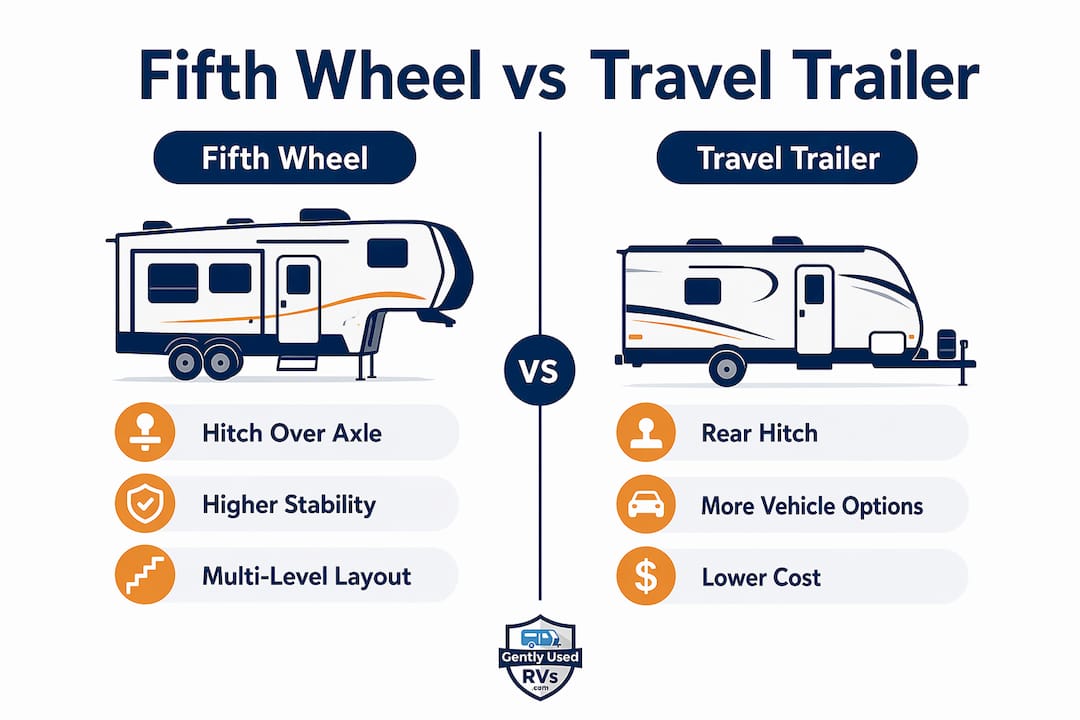
The single biggest mechanical difference between these two RV types is where and how they connect to your tow vehicle. A fifth wheel uses a kingpin coupling that mounts inside the truck bed, positioned close to or directly over the rear axle. A travel trailer uses a ball-and-coupler hitch that attaches behind the truck’s rear bumper, well behind the rear axle.
That pivot point location is everything. Because the fifth wheel pivots over the rear axle, it naturally dampens sway better than a travel trailer hitching behind the axle with a long lever arm. A travel trailer’s hitch sits further back, creating more leverage for the trailer to swing side to side in crosswinds or when passing semis. This is why experienced RVers consistently describe fifth wheel towing as calmer and more predictable on the highway.
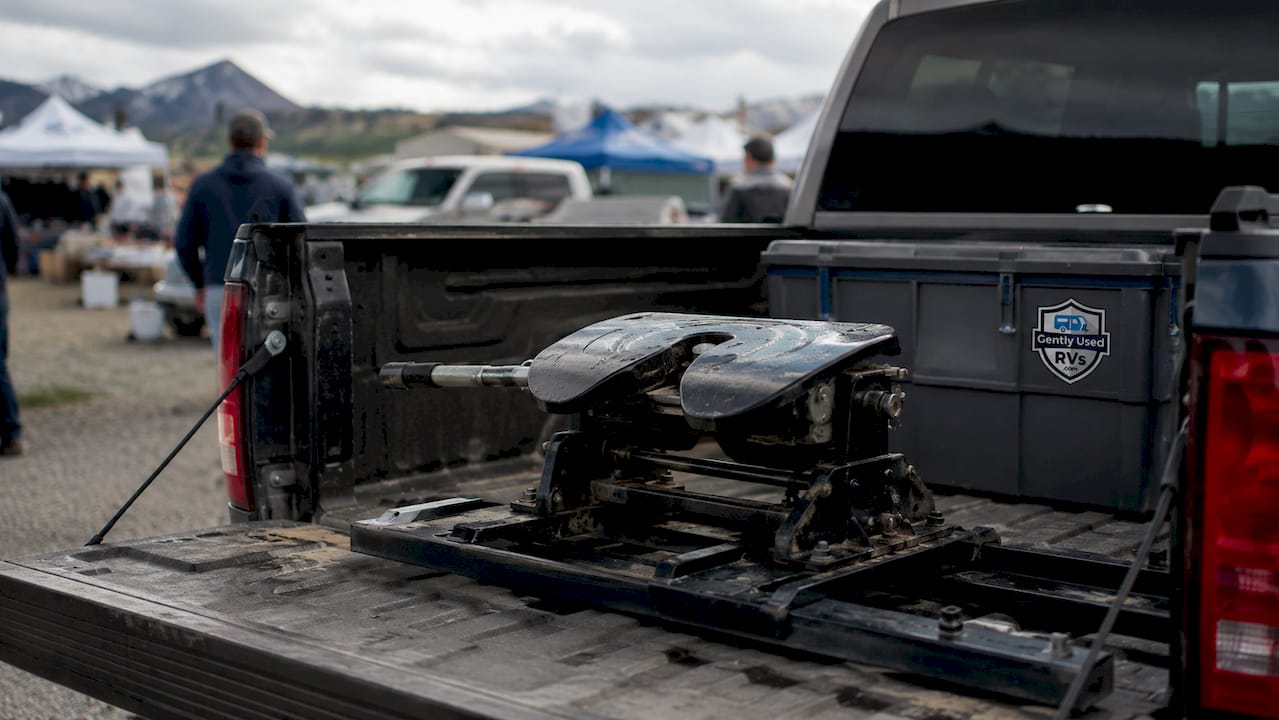
Hitch geometry and pivot placement explain more about towing feel and safety than raw trailer weights alone. Buyers focused only on tow ratings miss this entirely. A proper fifth-wheel hitch connection provides a towing experience many RVers find more stable and comfortable than travel trailers, and that stability advantage holds even when comparing similarly weighted rigs.
There is one catch for fifth wheel owners with shorter trucks. A slider hitch is often needed for short-bed trucks towing fifth wheels to prevent the trailer from contacting the truck cab during sharp turns. Slider installations typically run $700 to $1,500, adding both cost and operational complexity. If you drive a short-bed pickup, factor that into your budget before you commit.
Pro Tip: Before buying a fifth wheel, measure your truck bed length from the back of the cab to the inside of the tailgate. Beds under 6.5 feet almost always require a slider hitch.
| Feature | Fifth wheel | Travel trailer |
|---|---|---|
| Hitch location | Inside truck bed, over rear axle | Behind rear bumper, behind rear axle |
| Coupling type | Kingpin and fifth wheel plate | Ball and coupler |
| Sway tendency | Lower due to pivot placement | Higher due to lever arm effect |
| Short-bed compatibility | Requires slider hitch | No bed modification needed |
What truck specs you actually need for safe towing
Knowing your truck’s tow rating is the starting point, not the finish line. Matching your truck’s payload rating, not just tow capacity, is the factor most buyers overlook and the one most likely to cause problems.
Here is why payload matters so much. The pin weight of a fifth wheel is typically 20 to 25% of the loaded trailer weight, and that entire load counts against your truck’s payload capacity and rear axle rating. A 15,000-pound fifth wheel puts roughly 3,000 to 3,750 pounds of pin weight directly into your truck bed. Add passengers, fuel, and gear, and many half-ton trucks hit their payload limit before the trailer even moves.
Travel trailers load your truck differently. Tongue weight runs around 10 to 15% of the loaded trailer weight, hanging off the rear hitch receiver. That is a lighter load on the truck’s payload, which is one reason travel trailers pair more easily with half-ton trucks and even some SUVs. The trade-off is that tongue weight behind the axle contributes to that sway problem described above.
Scaling the actual loaded trailer weight and measuring pin or tongue weight against your truck’s payload and axle ratings is the only reliable way to confirm you are towing safely. Do not rely on the sticker tow rating alone. Pull your truck’s window sticker or door jamb label to find the actual payload number, then subtract passengers and cargo before calculating what is left for pin or tongue weight.
Pro Tip: The payload sticker on your driver’s door jamb is your real towing limit. It already accounts for your specific truck’s configuration. The advertised tow rating on the window sticker assumes an empty cab.
| Truck class | Typical payload | Suitable for |
|---|---|---|
| Half-ton (F-150, Ram 1500) | 1,500 to 2,300 lbs | Light travel trailers under 8,000 lbs GVWR |
| Three-quarter-ton (F-250, Ram 2500) | 2,500 to 3,500 lbs | Most fifth wheels and heavier travel trailers |
| One-ton (F-350, Ram 3500) | 3,500 to 6,000 lbs | Large fifth wheels and heavy-duty setups |
How interior space and living comfort compare
Step inside a fifth wheel and the first thing you notice is the ceiling. Fifth wheels generally offer more living space with multi-level interior layouts and higher ceilings compared to the typically single-level floor plans of travel trailers. The raised front section, which sits over the truck bed, creates a separate bedroom loft that feels genuinely private. That separation matters a lot for families or couples who want distinct sleeping and living zones.
Travel trailers keep everything on one level, which has its own advantages. The open floor plan feels more spacious for socializing, and there are no stairs to navigate at night. Brands like Forest River, Keystone, and Winnebago offer travel trailer floor plans that maximize the single-level layout with slide-outs, bunk beds, and rear living areas. For weekend campers who spend most of their time outside, a well-designed travel trailer floor plan is often more than enough.
Here is where fifth wheels pull ahead for longer stays:
- Basement storage: Many fifth wheels include large pass-through basement compartments under the main floor, giving you dedicated space for tools, outdoor gear, and supplies without cluttering the living area.
- Ceiling height: Fifth wheel main living areas commonly reach 7 to 8 feet of ceiling height, while travel trailers typically run 6.5 to 7 feet.
- Bedroom privacy: The raised front bedroom in a fifth wheel creates a physical separation from the main living space that no single-level travel trailer can replicate.
- Slide-out capacity: Fifth wheels tend to accommodate more and larger slide-outs due to their greater overall length and structural design.
For full-time RVers or families spending weeks at a campsite, the fifth wheel’s layout advantage is real and daily. For weekend warriors who prioritize simplicity and easy setup, a travel trailer delivers plenty of comfort at a lower price point.
Cost, flexibility, and vehicle compatibility trade-offs
Travel trailers win on flexibility, and it is not close. Fifth wheels require a pickup truck with an in-bed hitch and rails, making them incompatible with SUVs and crossovers. Travel trailers can be towed by a much wider range of vehicles, from a Ram 1500 to a Ford Expedition to a Chevy Suburban, depending on weight. That compatibility difference shapes the entire buying decision for anyone who does not already own a full-size pickup.
Cost follows a similar pattern. Travel trailers generally cost less to purchase than comparable fifth wheels, and the tow vehicle requirements are less demanding. You also avoid the expense of a fifth wheel hitch system, which runs $1,200 to $2,500 installed, plus the potential slider hitch cost for short beds. Fifth wheel owners must budget not only for the trailer but also for compatible hitch hardware, turning radius considerations, and cab clearance requirements.
On the operational side, consider these practical differences:
- Backing up: Fifth wheels back more predictably because the pivot point is closer to the truck. Travel trailers require more practice to back into tight campsites.
- Hitching and unhitching: Fifth wheel hookup is faster and more consistent once you learn the process. Travel trailer ball hitches require careful leveling and coupler alignment.
- Truck bed access: A fifth wheel hitch permanently occupies your truck bed, limiting cargo space. Travel trailers leave your bed fully usable.
- Rental availability: Travel trailers are far more widely available for rental through platforms like Outdoorsy and RVshare, making them easier to test before buying.
For casual campers who go out a few times a year, a travel trailer’s lower cost and broader vehicle compatibility make it the practical choice. For full-time RVers or frequent travelers who prioritize towing stability and living space, the fifth wheel’s advantages justify the added investment.
How to choose between a fifth wheel and a travel trailer
Start with your truck. If you drive an SUV or a crossover, the decision is already made: you need a travel trailer. If you own a three-quarter-ton or one-ton pickup, a fifth wheel becomes viable, but you still need to verify payload against the specific trailer’s pin weight.
Match the trailer type to how you actually camp, not how you imagine you will camp. If you move campsites frequently and prioritize easy towing over maximum living space, a travel trailer fits that pattern. If you park for weeks at a time and want a home-like interior, a fifth wheel delivers a noticeably better living experience. Check out the RV types guide on Gentlyusedrvs to see the full range of options across both categories.
| Decision factor | Choose a fifth wheel | Choose a travel trailer |
|---|---|---|
| Tow vehicle | Full-size pickup (3/4 or 1-ton) | Pickup, SUV, or crossover |
| Camping style | Long stays, full-time living | Frequent moves, weekend trips |
| Space priority | Multi-level layout, basement storage | Open single-level floor plan |
| Budget | Higher upfront cost | Lower purchase and setup cost |
| Towing comfort | More stable, less sway | More practice needed |
Consider your family size and how many people will sleep in the rig regularly. Fifth wheels handle larger groups more comfortably due to the separated bedroom and greater overall square footage. Also factor in where you plan to camp. Some campgrounds have length restrictions that can limit your fifth wheel options, while travel trailers in the 20 to 30-foot range fit almost anywhere.
Key takeaways
The fifth wheel vs travel trailer decision comes down to your truck’s payload capacity, your camping frequency, and how much living space you need on the road.
| Point | Details |
|---|---|
| Hitch location drives stability | Fifth wheels pivot over the rear axle, reducing sway compared to travel trailers hitching behind it. |
| Payload beats tow rating | Always check your truck’s payload sticker, not just the advertised tow rating, before selecting a trailer. |
| Fifth wheels need pickup trucks | SUVs and crossovers cannot tow fifth wheels; travel trailers work with a much wider range of vehicles. |
| Interior space favors fifth wheels | Multi-level layouts, higher ceilings, and basement storage make fifth wheels better for long-term living. |
| Travel trailers cost less overall | Lower purchase price, simpler hitch hardware, and broader vehicle compatibility reduce total ownership cost. |
What I’ve learned from years of watching buyers get this wrong
I have seen the same mistake play out hundreds of times. A buyer falls in love with a fifth wheel floor plan, buys it, then discovers their half-ton truck is 400 pounds over payload before they leave the dealer lot. Nobody told them to check the door jamb sticker. Nobody explained that the advertised 12,000-pound tow rating assumes an empty cab and a specific axle ratio they may not have.
The other pattern I see constantly is buyers underestimating how much the hitch type changes the driving experience. People who have only towed travel trailers are often genuinely surprised the first time they drive a fifth wheel on a windy highway. The stability difference is not subtle. It changes how relaxed you feel behind the wheel for hours at a stretch.
My honest advice: if you are a first-time buyer, start with a travel trailer. The lower cost, easier towing learning curve, and broader vehicle compatibility give you room to figure out what you actually want from RV life before committing to a larger investment. If you already know you want to live in your rig for extended periods and you own or plan to buy a capable pickup, a fifth wheel is worth every extra dollar. Read through the first-time buyer guide on Gentlyusedrvs before you shop. The difference between a great purchase and a regrettable one is almost always preparation.
— Christopher
Find your next fifth wheel or travel trailer on Gentlyusedrvs
Whether you have decided on a fifth wheel or a travel trailer, the next step is finding the right rig at the right price.

Gentlyusedrvs is a free online classifieds marketplace where private sellers and dealerships list used RVs across the United States, Canada, and internationally. Buyers can browse without creating an account, and listings are geotargeted so you see the closest options first. Explore the full RV types guide to compare models side by side, or browse the dealer directory to find vetted dealerships near you carrying both fifth wheels and travel trailers. No commissions, no hidden fees, and no pressure.
FAQ
What is the main difference between a fifth wheel and a travel trailer?
A fifth wheel connects to a kingpin hitch mounted inside the truck bed over the rear axle, while a travel trailer uses a ball hitch behind the bumper. This difference in hitch location makes fifth wheels more stable and reduces trailer sway on the highway.
Can an SUV tow a fifth wheel?
No. Fifth wheels require a pickup truck with an in-bed hitch and mounting rails. SUVs and crossovers lack the truck bed needed for a fifth wheel hitch, so they are limited to towing travel trailers within their rated capacity.
How do I know if my truck can safely tow a fifth wheel?
Check the payload sticker on your driver’s door jamb and subtract the weight of passengers and cargo. The remaining number must exceed the fifth wheel’s pin weight, which is typically 20 to 25% of the loaded trailer weight.
Are fifth wheels better for full-time living than travel trailers?
Fifth wheels generally suit full-time living better due to multi-level layouts, higher ceilings, basement storage, and a private bedroom loft. Travel trailers work well for part-time camping but feel more limited for extended stays.
Do travel trailers sway more than fifth wheels?
Yes. Travel trailers hitch behind the rear axle, creating a longer lever arm that amplifies side-to-side movement. Fifth wheels pivot over the rear axle, which naturally dampens sway and produces a more stable towing experience.