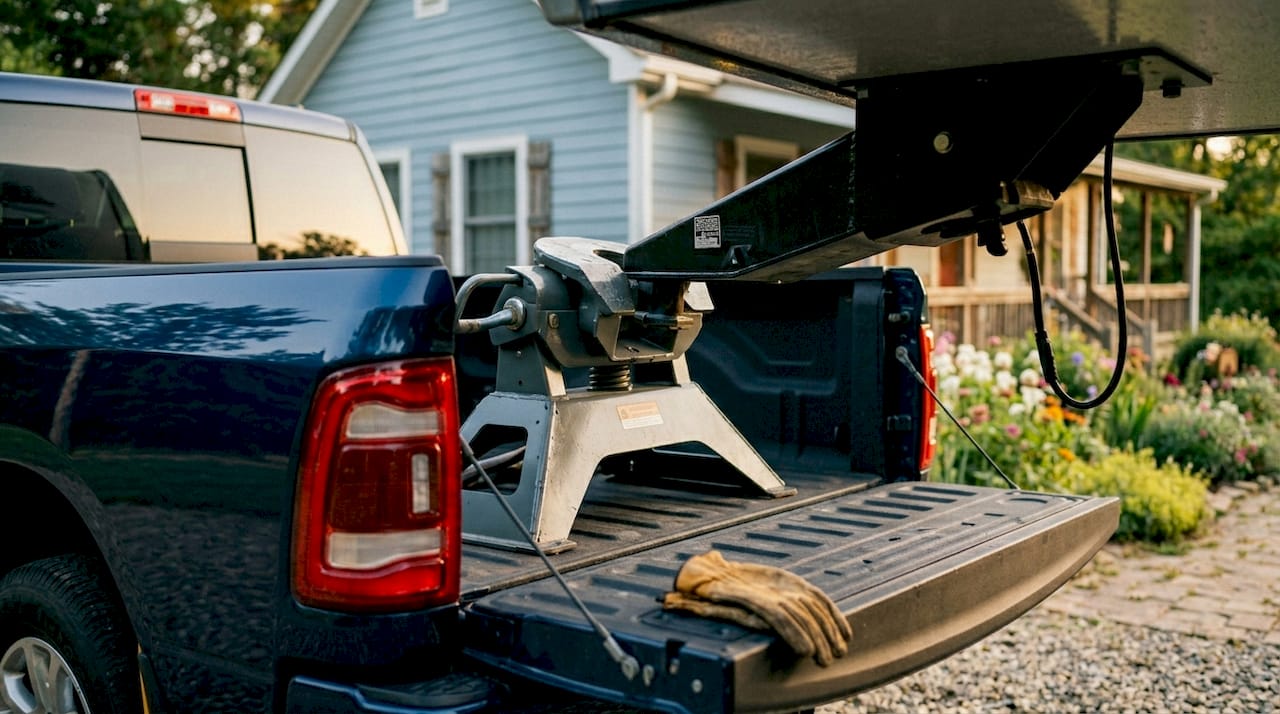
Most people assume a fifth wheel hitch is just a beefier version of a standard trailer hitch. It isn’t. Understanding what is a fifth wheel hitch means recognizing an entirely different coupling philosophy, one that moves the connection point from your bumper into the truck bed itself. That single design decision changes everything about how your rig handles on the highway. Whether you’re shopping for your first fifth wheel RV or trying to figure out if your current setup is safe, this guide covers how the hitch works, how it compares to other options, and what to look for before you buy.
Table of Contents
- Key takeaways
- What a fifth wheel hitch is and how it works
- How fifth wheel hitches compare to other hitch types
- How to hook up and use a fifth wheel hitch safely
- What to look for when buying a fifth wheel hitch
- My take on fifth wheel hitches after years in the RV world
- Ready to find your next fifth wheel RV?
- FAQ
Key takeaways
| Point | Details |
|---|---|
| Truck bed mounting changes everything | A fifth wheel hitch mounts over the rear axle, dramatically improving stability compared to bumper-pull setups. |
| The kingpin is the critical connection | The trailer’s kingpin locks into the hitch’s jaws, creating a secure pivot point that allows safe turning. |
| Capacity far exceeds standard hitches | Fifth wheel hitches typically handle between 20,000 and 30,000 pounds, making them ideal for heavy RV towing. |
| The tug test is non-negotiable | Always perform a tug test with trailer wheels chocked before driving to confirm the kingpin is fully locked. |
| Buying decisions require matching specs | Your hitch must be compatible with both your truck’s payload rating and your trailer’s pin weight. |
What a fifth wheel hitch is and how it works
At its core, a fifth wheel hitch is a heavy-duty coupling device mounted in the bed of a pickup truck, designed to connect to a matching trailer via a component called the kingpin. The name comes from the same coupling technology used on commercial semi-trucks for decades. When you see an 18-wheeler, the flat rotating plate on the tractor that the trailer locks into? That’s a fifth wheel coupling. Recreational fifth wheel hitches borrow that exact principle.
Here’s what makes up the system:
- The hitch head: A horseshoe-shaped plate and locking jaws that clamp around the trailer’s kingpin when you back the truck under the trailer. The curved shape allows the trailer to pivot during turns without the hitch contacting the truck’s cab or bed walls.
- The kingpin: A steel pin extending downward from the trailer’s front undercarriage. It slides into the hitch’s jaws and locks in place.
- The mounting rails: Steel rails bolted to the truck bed that hold the hitch head in position, typically over or slightly in front of the rear axle.
- The pivot mechanism: The hitch head tilts and rotates, allowing articulation when the truck and trailer travel over uneven terrain or through turns.
The hitch mounts over the rear axle for a specific reason. Placing the connection point there transfers the trailer’s tongue weight directly onto the truck’s strongest structural point. The result is a system where the controlled pivot reduces stress on both the truck frame and the trailer over time, which translates to less wear and a smoother ride over long distances.
Maintenance matters here. The hitch head needs regular lubrication to keep the pivot mechanism moving freely. Dry jaws create friction, which causes binding during turns and accelerates wear on both the kingpin and the locking mechanism.
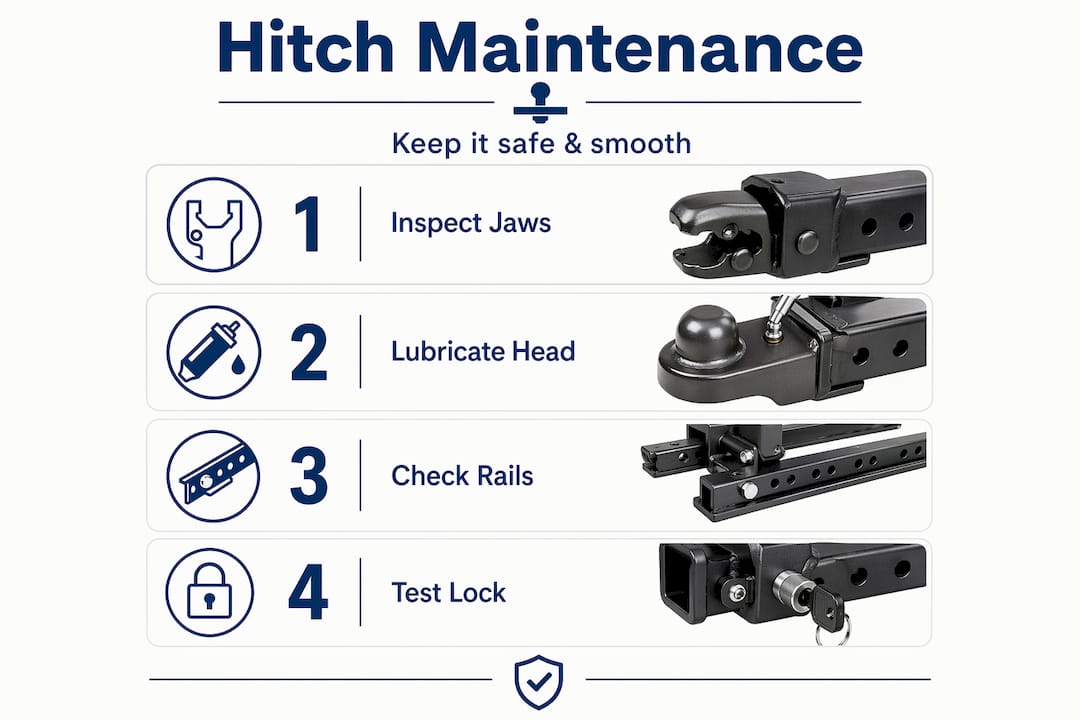
Pro Tip: Apply a dedicated fifth wheel lube plate grease to the hitch head before every major trip. Skipping this step is one of the most common causes of premature jaw wear and difficult kingpin release.
How fifth wheel hitches compare to other hitch types
If you’ve been researching towing options, you’ve likely come across gooseneck hitches and bumper-pull setups. Each has a legitimate use case, but they are not interchangeable for fifth wheel RV towing.
| Hitch type | Mounting location | Coupling method | Typical capacity | Best use case |
|---|---|---|---|---|
| Fifth wheel | Truck bed, over rear axle | Kingpin and jaw plate | 20,000 to 30,000 lbs | Fifth wheel RVs, heavy trailers |
| Gooseneck | Truck bed, ball hitch | Ball and coupler | 25,000 to 35,000 lbs | Agricultural, commercial hauling |
| Bumper pull | Rear receiver hitch | Ball and coupler | 5,000 to 18,000 lbs | Travel trailers, light loads |
The numbers tell part of the story. Fifth wheel hitch capacities typically range between 20,000 and 30,000 pounds, which is why they’re the standard choice for large recreational trailers. Bumper-pull hitches simply cannot match that range, and they introduce more trailer sway because the connection point sits behind the rear axle rather than over it.
Gooseneck hitches actually offer slightly higher raw capacity, but they’re engineered for commercial and agricultural applications. The ball-and-coupler connection used in a gooseneck setup doesn’t provide the same ride quality for RV living. Fifth wheel hitches deliver smoother ride quality and less trailer sway because the jaw-and-kingpin system creates a more controlled pivot than a ball hitch allows.
Weight distribution is the other major factor. Load placed over the rear axle improves handling and reduces the fishtailing effect that makes bumper-pull towing stressful on highways. For full-time RVers or anyone logging serious miles, that difference in ride quality becomes very noticeable very quickly.
Here’s a quick summary of what fifth wheel hitches do better than the alternatives:
- Significantly reduced trailer sway at highway speeds
- More predictable handling through curves and lane changes
- Better weight transfer to the truck’s strongest structural point
- Easier backing into campsites due to the pivot’s controlled range of motion
- Superior connection security for heavy, expensive trailers
The tradeoff is that a fifth wheel hitch occupies your truck bed, which limits cargo space. If you regularly haul both a trailer and a full truck bed of gear, that’s worth factoring into your decision.
How to hook up and use a fifth wheel hitch safely
Getting the connection right every single time is not optional. A partial latch is a genuine road hazard. Here’s how to do it correctly.
- Check your height first. Proper alignment and leveling of the truck bed and trailer pin box are critical. The trailer should be slightly higher than the hitch head so the kingpin guides smoothly into the jaws as you back up. Too low and the kingpin will miss the opening entirely.
- Back up slowly and deliberately. Use a spotter or a backup camera. Align the truck so the hitch head’s opening is directly in line with the kingpin. Rushing this step causes misalignment and jaw damage.
- Listen for the click. When the kingpin seats fully, the locking jaws close and you’ll hear an audible click or snap. That sound is your first confirmation, but it’s not your last.
- Verify the locking handle position. Check that the handle has moved to its locked position. A handle that looks locked but hasn’t fully engaged is one of the most dangerous situations in fifth wheel towing.
- Perform the tug test. With the trailer’s wheels chocked, pull the truck forward gently. The tug test confirms the kingpin is fully locked in the hitch jaws. If the trailer moves with the truck, you’re good. If there’s any separation, stop immediately and re-engage.
- Connect your safety chains and breakaway cable. These are your backup systems if the hitch ever fails. Cross the chains under the coupler and attach the breakaway cable to a solid point on the truck frame.
- Check trailer lights and brakes. Plug in your 7-pin connector and confirm brake lights, turn signals, and running lights all function before you move.
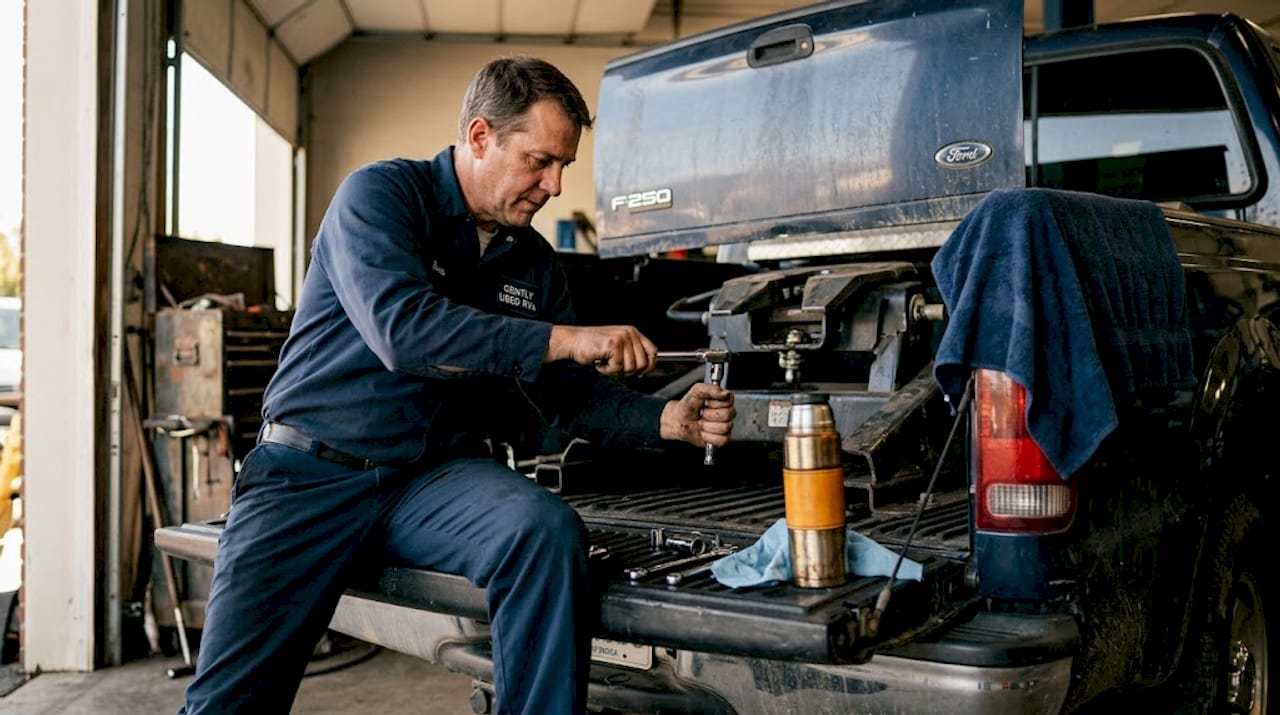
Pro Tip: If your locking jaws feel stiff or won’t release after a trip, don’t force the handle. Experienced technicians check the hitch jaw condition and kingpin wear before diagnosing the problem. Forcing a stuck jaw can damage the mechanism and make the next engagement unreliable.
What to look for when buying a fifth wheel hitch
Buying a fifth wheel hitch without matching it to your specific truck and trailer is a mistake that can cost you both money and safety. Here’s what actually matters when you’re shopping.
- Weight capacity rating. Your hitch’s gross towing capacity must exceed your trailer’s fully loaded weight. Check both the hitch’s towing capacity and its vertical load rating, which covers the pin weight your trailer places directly on the hitch. These are two separate numbers and both matter.
- Truck bed compatibility. Short-bed trucks require a sliding fifth wheel hitch to prevent the trailer from contacting the truck cab during sharp turns. Standard hitches work fine in long-bed trucks. Getting this wrong causes cab damage on tight turns.
- Head design and ride comfort. Some hitch heads offer multi-directional pivoting, which smooths out rough roads and reduces the jarring effect when crossing railroad tracks or uneven pavement. If you’re doing long trips, this feature is worth paying for.
- Installation requirements. Fifth wheel hitch installation involves bolting mounting rails to the truck bed. Some trucks require custom rail kits specific to their bed design. Factor in professional installation costs if you’re not comfortable doing it yourself. Improper installation defeats the purpose of buying a quality hitch.
- Jaw wear and maintenance schedule. Locking jaws wear out over time and lose their precision. Look for hitches with replaceable jaw components rather than designs that require full head replacement when the jaws degrade.
- Brand reputation and warranty. The hitch is the single most critical connection between your truck and a trailer worth tens of thousands of dollars. This is not where you cut corners on price.
You can explore the full range of RV types on Gentlyusedrvs to understand what size and style of fifth wheel trailer you’re targeting before finalizing your hitch purchase. Knowing your trailer’s pin weight upfront makes the buying decision much cleaner.
My take on fifth wheel hitches after years in the RV world
I’ve watched a lot of people get into fifth wheel towing and make the same preventable mistakes. The most common one isn’t buying the wrong hitch. It’s assuming that because the locking handle looks engaged, the connection is safe.
In my experience, the tug test is the single most underperformed safety step in recreational towing. People back up, hear the click, glance at the handle, and drive off. That’s not a safe procedure. The tug test provides tactile confirmation that no visual check can replicate. I’ve seen hitches where the handle looked perfectly locked but the kingpin was sitting on the jaws rather than inside them. That trailer would have separated at the first hard stop.
The other thing I’d push back on is the idea that fifth wheel towing is complicated. It isn’t. The learning curve is maybe two or three hookups before it feels natural. What it does require is discipline. Every hookup, every time, in the same order. No shortcuts because you’re in a hurry or the campground is closing soon.
Invest in a quality hitch, learn your truck’s payload rating cold, and do the tug test every single time. Those three habits will keep you and everyone else on the road safe for years.
— Christopher
Ready to find your next fifth wheel RV?
If this guide has you thinking seriously about fifth wheel towing, the natural next step is finding the right trailer to go with your setup.

Gentlyusedrvs makes that search straightforward. Browse used fifth wheels and trailers listed by private sellers and dealerships across the U.S., Canada, and internationally, all without creating an account. Listings are geotargeted, so you see the closest options first. Whether you’re narrowing down trailer styles or comparing pin weights across models, the RV types guide on Gentlyusedrvs gives you a clear breakdown of every category, including fifth wheels, travel trailers, toy haulers, and more. No pressure, no commissions, just real listings from real sellers.
FAQ
What is a fifth wheel hitch, exactly?
A fifth wheel hitch is a heavy-duty coupling device mounted in a pickup truck’s bed that connects to a trailer via a steel kingpin. It creates a stable pivot point over the rear axle, improving towing control and reducing sway compared to bumper-pull hitches.
What does a fifth wheel hitch do differently than a regular hitch?
Unlike a standard ball hitch attached to the rear bumper, a fifth wheel hitch mounts in the truck bed over the rear axle. This placement transfers the trailer’s tongue weight to the truck’s strongest structural point, dramatically reducing trailer sway and improving handling.
How much weight can a fifth wheel hitch handle?
Most fifth wheel hitches are rated between 20,000 and 30,000 pounds of gross towing capacity. Always verify that both your hitch’s towing capacity and its vertical load rating exceed your trailer’s fully loaded weight and pin weight before towing.
Do I need a special truck for a fifth wheel hitch?
Yes. Fifth wheel hitches require a pickup truck with a bed large enough to accommodate the mounting rails and hitch head. Short-bed trucks need a sliding hitch to prevent cab contact during sharp turns. The truck must also have a payload and towing capacity that matches the trailer’s weight.
Is fifth wheel hitch installation something I can do myself?
Installation involves bolting mounting rails to the truck bed and securing the hitch head, which is manageable for someone with mechanical experience. However, improper installation can compromise the entire towing system, so professional installation is recommended if you have any doubts about your truck’s specific rail kit requirements.