
Expect your RV to lose 15% to 20% of its value in year one, then settle into a slower decline of roughly 4% to 10% annually through year five. After that, the curve flattens to about 2% to 6% a year. That’s the shape of the depreciation curve you’re working with, whether you’re buying, selling, or just trying to figure out what your rig is actually worth.
- Year one: typically a substantial drop at average mileage
- Years two through five: annual losses slow down but remain moderate, compounding each year
- Year five and beyond: many units retain a majority of their original value, with the tail slowing to a small percentage loss per year
NADA Guides and depreciation calculators from sites like RV Loan Wizard back these ranges up, and both are worth bookmarking if you’re pricing a sale or sizing up a purchase.
Key Takeaways
RV depreciation follows a predictable staged curve, with the steepest loss in year one, moderate annual declines through year five, and a slower tail afterward that owners can influence through maintenance, storage, and documentation.
| Point | Details |
|---|---|
| Year-one drop is steepest | Expect a 15% to 30% loss in the first year depending on RV class, with Class A losing the most. |
| Class B holds value best | Class B units hold value better than Class A coaches or larger towables. |
| Water damage is the top hidden risk | Roof and slide-out seal failures cause the biggest unexpected value drops on trailers and fifth wheels. |
| Documentation earns a premium | Logged maintenance and service records let sellers command higher offers than undocumented units. |
| List for free to test the market | Gently Used RVs offers no-cost listings with paid upgrades available for sellers wanting broader reach. |
Table of Contents
- What Is RV Depreciation Rate, Really?
- Typical Depreciation Rates by RV Type and Year
- What Drives Your RV’s Value Down Faster (or Slower)
- How to Calculate Your RV’s Depreciation
- How to Slow or Offset Your RV’s Depreciation
- When Should You Sell or Trade In Your RV?
- Where to Find Your RV’s Current Market Value
- What Gently Used RVs Sees in the Marketplace
- Why Understanding This Curve Changes How You Buy and Sell
- Ready to List? Here’s Your Next Move
- Frequently Asked Questions
- Sources
What Is RV Depreciation Rate, Really?
RV depreciation rate measures how fast your rig’s market value drops over time, driven by age, wear, mileage, and buyer demand. It’s not the same thing as tax depreciation, and mixing the two up trips up a lot of first-time sellers.
Market depreciation is what a private buyer or dealer will actually pay you today versus what you paid new. Tax depreciation is an IRS accounting method for owners who use their RV for business, letting them write off a portion of the purchase price over several years under rules like Section 179 or MACRS schedules. This article focuses on market depreciation, since that’s what determines your resale price, your trade-in offer, and your loan equity position.
Here’s where the distinction actually bites you:
- Loan equity: if your RV depreciates faster than you pay down the loan, you’re underwater and owe more than it’s worth.
- Trade-in timing: understanding the curve tells you whether waiting another year helps or hurts your position.
- Insurance replacement value: most policies pay actual cash value, not what you paid, so knowing current depreciation protects you from being underinsured after a total loss.
Is RV depreciation tax deductible? Only in specific business-use scenarios, and that calculation runs on IRS depreciation schedules, not the market curve this guide covers. Talk to a tax professional if that applies to you.
Typical Depreciation Rates by RV Type and Year
The depreciation rates for RVs aren’t uniform across the board. A Class B campervan and a fifth wheel age very differently, and knowing which curve applies to your unit changes how you plan a sale or trade.
The general shape holds across nearly every category: the steepest drop lands in year one, the pace stays aggressive through year five, then it eases into a long, slow tail. J.D. Power’s sample data shows a three-year-old RV averaging around 26% to 27% total depreciation, climbing to roughly 35% by year five, though the exact number swings hard depending on class.
| RV class/type | Year 1 depreciation | Retained value at 5 years | Retained value at 10 years | Primary depreciation drivers |
|---|---|---|---|---|
| Class A motorhome | Significant | Moderate to strong retention | Moderate retention | Mileage, engine wear, brand pedigree |
| Class B campervan | Moderate | Higher retention | Moderate retention | Lower mileage sensitivity, strong demand |
| Class C motorhome | Moderate | Moderate retention | Moderate retention | Chassis wear, mileage, maintenance history |
| Travel trailer | Moderate to strong | Moderate retention | Lower retention | Water damage, floor plan desirability |
| Fifth wheel | Moderate to strong | Moderate retention | Lower retention | Water damage, storage conditions |
| Pop-up camper | Moderate | Moderate to strong retention | Moderate retention | Canvas condition, storage exposure |
These figures echo the broader ranges published by Progressive and industry depreciation guides like CoachGarage, which note that Class B units hold value noticeably better than Class A coaches or larger towables.
Put a dollar figure on it and the curve gets real fast. Say you buy a Class A motorhome with a substantial purchase price. A significant drop in year one could reduce its value considerably before you’ve even hit your first anniversary of ownership. By year five, if it’s tracking toward typical retained value, you’re looking at a major loss over five years on paper. That’s the math that makes buying used, rather than new, such an attractive play for a lot of shoppers, and it’s part of why used RVs outperform new purchases for most buyers who want to skip that steepest part of the curve entirely.
A quick gut check on the numbers:
- A $60,000 travel trailer at the low end of its first-year range loses about $12,000 before you’ve camped in it twice.
- A $30,000 pop-up at the high end of its range still loses less in dollar terms than almost any other class, simply because the starting price is lower.
What Drives Your RV’s Value Down Faster (or Slower)
Some depreciation factors you control. Others you don’t, and knowing which is which changes how you shop, store, and maintain your rig.
Age and mileage top the list for motorized units, since engine hours and odometer readings directly affect resale confidence the way they do with cars. Water damage and delamination are the biggest hidden killers of value, particularly on trailers and fifth wheels where roof seals and slide-out gaskets fail quietly over years. Storage matters more than most owners realize: an RV kept in a covered facility or indoor storage unit consistently commands a higher resale price than one that sat outside baking in the sun and freezing through winters. Brand pedigree plays a real role too. Names with a strong reputation for build quality hold value better than lesser-known manufacturers, even when the specs look similar on paper.
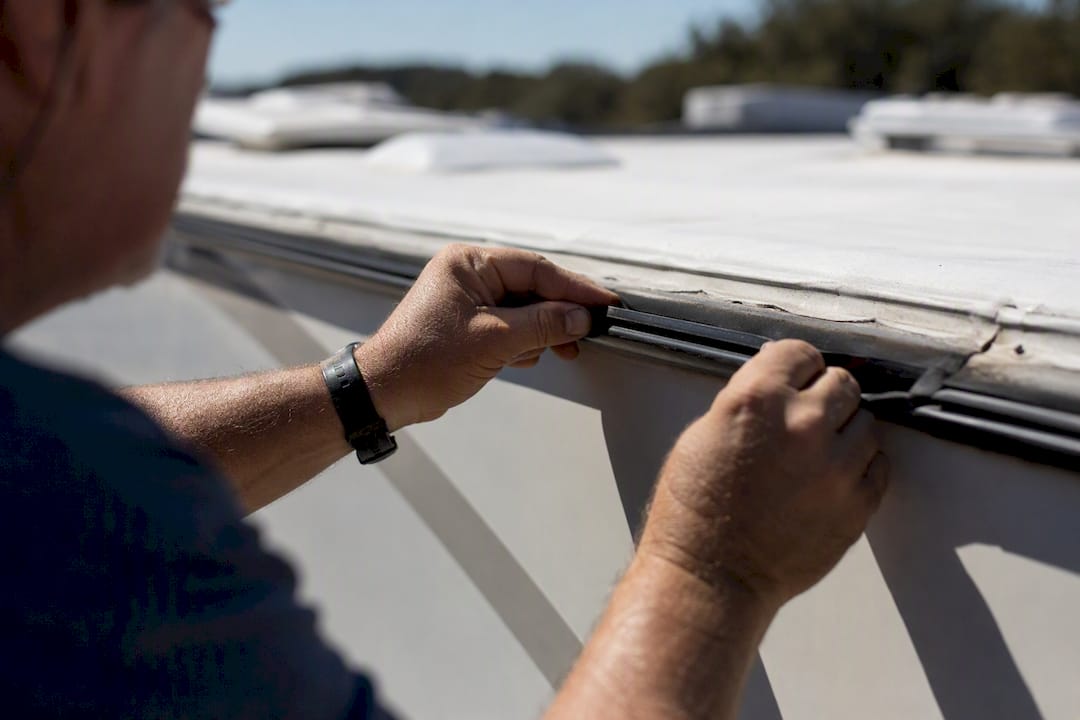
Floor plan desirability, mechanical condition, and broader market demand round out the list. A layout that’s currently popular (bunkhouses for families, for instance) sells faster and closer to asking price than an awkward or dated configuration.
Pro Tip: Before you buy a used RV, or before you list your own, check the roof, windows, and slide-out seals for soft spots, staining, or a musty smell. Water intrusion is the single most common reason a seemingly clean RV gets a lowball offer, and it’s often invisible until you know exactly where to press.
How to Calculate Your RV’s Depreciation
You’ve got two solid approaches here, and the one you pick depends on how precise you need to be.
- Staged percent-per-year method. Apply the steeper year-one rate first, then smaller annual percentages for years two through five, then an even smaller rate after that. This mirrors how RVs actually lose value and gives you the most realistic estimate.
- Straight-line method. Divide total expected depreciation by the number of years for a rough, quick estimate. It’s less accurate but useful for a fast sanity check.
Here’s a worked example using a $45,000 purchase price and a staged curve modeled on published calculator schedules from RV Loan Wizard:
Calculators give you a starting point, not gospel. Always triangulate the output against current listings in your area, and if your RV is motorized, adjust for mileage since a unit with 20,000 miles at year three will hold a noticeably higher value than an identical model with 60,000 miles.
How to Slow or Offset Your RV’s Depreciation
You can’t stop the curve, but you can absolutely bend it in your favor.
Preventative maintenance with documented records tops the list. Regular oil changes, roof resealing, and appliance servicing, all logged and kept in a folder, give a buyer confidence that translates directly into a higher offer. Covered or indoor storage, prompt leak repairs, and professional detailing before a sale round out the maintenance side. If your unit is motorized, keeping mileage reasonable protects resale value the same way it does for cars.
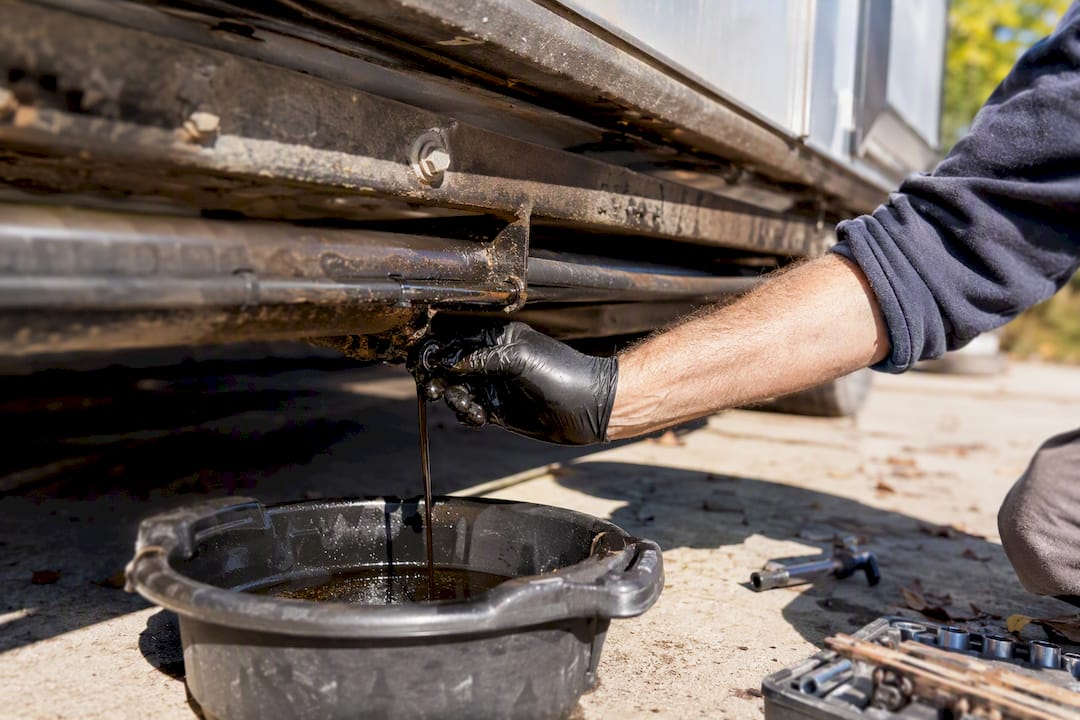
On the offset side, renting your RV through peer-to-peer platforms when you’re not using it generates income that softens the depreciation hit. Sticking with well-known, reputable brands when you buy also protects your position better than chasing a cheaper, lesser-known manufacturer. Reversible upgrades (solar panels, aftermarket awnings) tend to add more resale appeal than permanent modifications, since niche customizations rarely return their full cost when it’s time to sell.
Pro Tip: Keep every service receipt, inspection report, and upgrade invoice in one folder from day one. A documented maintenance history is one of the few things that lets a seller command a real premium over an otherwise identical unit, and running through a detailing checklist before listing adds another visible layer of care buyers notice immediately.
When Should You Sell or Trade In Your RV?
Timing your exit matters almost as much as the sale itself. Run through this before you decide:
- Sell now if your RV still holds strong value and you’re willing to put in the effort for a private-sale premium, since private buyers typically pay more than a dealer’s trade-in offer.
- Consider a trade-in if speed and convenience matter more than maximizing price. Dealers offer less, but you avoid listing, showing, and negotiating.
- Wait if you’re hitting a seasonally weak market (late fall in colder regions, for example) or if a major repair is looming that would tank your resale price anyway.
Big upcoming repairs, a change in lifestyle, or simply approaching one of those steep depreciation milestones (the three-year or five-year mark) are the usual triggers that push owners to sell sooner rather than later.
Where to Find Your RV’s Current Market Value
Pulling an accurate number takes more than one source. Cross-check a few of these:
- NADA Guides: the standard industry reference dealers use for retail and trade-in ranges.
- RVTrader: browse active listings to see what similar units are asking in your region right now.
- RVshare: peer-to-peer rental listings can hint at how much demand exists for your specific floor plan.
- Local classifieds and sold listings: the most valuable data point, since asking price and actual sold price often differ by thousands of dollars.
Sold prices matter far more than asking prices, since anyone can list a rig at an optimistic number. Look for comparable units that actually closed a sale in the last 60 to 90 days.
Pro Tip: Values shift by region and season, so a coach that sells fast in Arizona in January might sit for months in Minnesota. If you’re shopping motorized units, prioritize low-mileage examples even if the asking price runs slightly higher, since mileage protects resale value longer than almost any other factor.
What Gently Used RVs Sees in the Marketplace
Listings on Gently Used RVs consistently mirror the staged depreciation curve you’d expect from industry data.
A few patterns stand out:
- Well-documented units with service records tend to move faster, regardless of age.
- Older units (10+ years) with desirable floor plans or strong brand reputations sometimes sit closer to their depreciation floor and see less time-on-market volatility than off-brand competitors.
- Time-on-market tends to stretch for units priced above comparable sold listings, a signal that sellers overestimating value is common.
If you’re tracking your own local trends, plotting time-on-market against listing discount for similar units in your area gives a useful visual of exactly where the market is pricing your RV class right now.
Why Understanding This Curve Changes How You Buy and Sell
Depreciation isn’t just a number to accept. It’s a tool. Buyers who understand the curve know exactly when a used RV becomes the smarter purchase over new, often right around that steep year-one drop. Sellers who understand it know when to list, what records to keep, and how to price realistically instead of anchoring to what they paid three years ago.
If you’re weighing a sale, run your RV’s year and class against the ranges in this guide, then check a couple of current listings for comparable units to sanity-check the number. That fifteen minutes of homework saves most sellers from either underpricing out of fear or overpricing out of nostalgia.
Ready to List? Here’s Your Next Move
If the numbers above tell you it’s time to sell, listing costs you nothing to start. Gently Used RVs lets you post a free listing with no commissions and no hidden fees, visible to buyers within a 20-mile radius for 30 days, which is often enough to move a fairly priced RV before it slides further down the depreciation curve.

If you want more eyes on your listing, paid upgrade tiers expand your reach: statewide visibility, more photos, live buyer chat, or nationwide exposure for dealers with larger inventories. You can compare the free and paid listing tiers to figure out what fits your timeline. The market moves fast, and every month a well-maintained RV sits unlisted is another month closer to the next depreciation milestone. Head to Gently Used RVs and get your listing live today.
Frequently Asked Questions
How many years do you depreciate an RV? For resale purposes, RVs depreciate meaningfully for about 10 to 15 years before the value curve flattens to a near-negligible annual loss. For tax purposes, depreciation schedules differ entirely and depend on the IRS method used for business-use assets, typically running 5 to 7 years under standard schedules. These two numbers answer completely different questions, so make sure you know which one you’re asking about.
What is the average RV resale value after five years? Most RVs retain somewhere between 50% and 70% of their original value at the five-year mark, with Class B campervans at the high end and Class A motorhomes and larger towables at the lower end, according to patterns reported by J.D. Power.
Does mileage affect RV depreciation the same way it affects cars? Yes, for motorized RVs. Higher mileage signals more engine wear and reduces buyer confidence, which pulls resale value down faster than for a low-mileage unit of the same age. Towable RVs (travel trailers, fifth wheels, pop-ups) aren’t affected by mileage at all since they have no engine, though total years and usage frequency still matter.
Is RV depreciation tax deductible? Only in specific business-use situations, using IRS depreciation rules rather than the market curve. Consult a tax professional to confirm eligibility and the correct schedule for your situation.
Should I buy new or used to avoid the steepest depreciation? Buying used lets you skip the steepest part of the curve, since the previous owner already absorbed most of the first-year loss. That’s a core reason used RVs often make more financial sense than new ones for most budget-conscious buyers.
This article is general information, not a substitute for advice from a qualified financial advisor. Consult a qualified financial professional about your own circumstances before acting on anything here.
Sources
- RV Depreciation by Type and Age: How Fast Each RV Loses Value | RV Loan Wizard
- How Does RV Depreciation Work? | Progressive
- How Much Do Campers Depreciate? | J.D. Power
- NADA consumer vehicle values