RV Extended Warranty: What It Covers and If It’s Worth It

An RV extended warranty is a third-party vehicle service contract that pays for covered mechanical and electrical breakdowns after your factory warranty expires. Technically, the industry term is “vehicle service contract” — it is not a warranty in the legal sense — but “extended warranty” is the phrase everyone uses, so we will use both throughout. Unlike manufacturer coverage, which comes with the rig at purchase, these contracts are sold separately by third-party administrators. Unlike RV insurance, which covers accidents, theft, and liability, an extended service contract covers mechanical failure. If you travel frequently, own a complex Class A diesel pusher, or simply want predictable repair budgets, this protection is worth a serious look.
Key Takeaways
An RV extended warranty is a vehicle service contract worth buying if your rig is complex, your travel is frequent, and a single major repair would strain your budget.
| Point | Details |
|---|---|
| Definition | A third-party vehicle service contract covering mechanical/electrical breakdowns after factory warranty expires. |
| Biggest coverage gaps | Water intrusion, roof leaks, and pre-existing conditions are commonly excluded — read the exclusions list carefully. |
| Key cost drivers | RV type, model year, mileage, engine type, deductible level, and coverage tier all affect your premium. |
| Three questions to ask | Who is the insurance carrier (AM Best rating)? Is payment direct-pay or reimbursement? Can I use any licensed shop? |
| When it’s worth buying | Frequent travelers, full-timers, and Class A diesel owners with high repair exposure get the clearest financial benefit. |
Table of Contents
- What does an RV extended warranty actually cover?
- What extended warranties typically do not cover
- How warranty plans are structured: stated-component vs. exclusionary
- How pricing and eligibility work for extended coverage
- How claims, repairs, and payments typically work
- How to evaluate and pick the right RV extended warranty
- Representative U.S. providers and what they emphasize
- What a real repair scenario looks like financially
- Is an RV extended warranty worth buying?
- Sources
What does an RV extended warranty actually cover?
Coverage depends heavily on which plan tier you choose, but most contracts group components into recognizable categories. Here is what you can typically expect across the three main tiers, according to LegalClarity’s breakdown of common service contract terms:
- Powertrain/chassis (entry-level plans): Engine internals, transmission, drive axle, and differentials. Motorhome-specific components like the coach engine and drivetrain are usually the focus here. This is the floor-level coverage most providers offer.
- Coach systems (mid-tier plans): Slide-out mechanisms, leveling jacks, HVAC systems, water heaters, onboard plumbing, and built-in generators. These are the systems that make your RV livable — and the ones that tend to fail most often on used rigs.
- Electrical and appliances (mid-tier and above): Wiring harnesses, alternators, starters, sensors, refrigerator compressors, and furnace blowers. Appliance coverage is where mid-tier plans start to separate themselves from powertrain-only options.
- Exclusionary/bumper-to-bumper (top-tier plans): Everything is covered except what the contract specifically lists as excluded. This is the closest consumer equivalent to factory bumper-to-bumper coverage and removes most of the guesswork about what qualifies.
The tier you choose should match your biggest risk. A towable travel trailer owner with a relatively simple rig may find a mid-tier coach plan sufficient. A Class A diesel pusher owner with a full suite of slides, a residential refrigerator, and a generator has far more exposure and usually benefits from exclusionary coverage.
What extended warranties typically do not cover
Exclusions are where buyers get surprised, and some of them are genuinely costly gaps. Read this section before you sign anything.
Routine maintenance and consumables are almost always excluded. Filters, brake pads, tires, and batteries fall on you regardless of plan tier. That is standard across the industry and not a red flag on its own.
Water intrusion is a different story. Roof leaks, delamination, and slow water damage are commonly excluded from service contracts, yet they may also fall outside your RV insurance policy if the damage accumulated gradually rather than from a sudden event. That gap between insurance and your service contract is real, and LegalClarity notes it is one of the most common sources of buyer frustration. Separate roof-leak coverage or a dedicated maintenance routine is your best defense here.
Pre-existing conditions are another major limit. Most providers require that a failure did not exist before the contract start date. Some plans mandate a pre-purchase inspection; others rely on a waiting period (typically 30 days or a set number of miles) before claims are eligible. If you buy a used rig with a known issue and then file a claim for it, expect a denial.
Before you commit to any plan, request the full contract wording — not a brochure summary. Look for the exclusions section and search for the phrase “pre-existing condition.” If the definition is vague or the list of exclusions runs longer than the list of covered components, that plan may not protect the systems you actually care about.
Other common limits include mileage caps (often 100,000–150,000 miles for motorhomes), model-year eligibility windows, per-visit deductibles applied to every repair visit, and aggregate claim caps that limit total payouts over the contract term.
Pro Tip: Run a quick test: take the three most expensive systems on your specific rig — say, the diesel engine, the slide-out motors, and the residential refrigerator — and check whether each one appears explicitly in the covered-components list. If even one is missing or ambiguous, ask the provider in writing before you buy.
How warranty plans are structured: stated-component vs. exclusionary
Understanding the plan architecture saves you from buying the wrong product entirely.
Stated-component (listed) plans name every covered part. If a component is not on the list, it is not covered. These plans are easier to price and often cheaper upfront, but they require careful reading to confirm your highest-risk systems are included. They suit buyers who want targeted protection on specific components — say, the powertrain only — and are comfortable self-insuring everything else.
Exclusionary plans flip the logic: everything is covered except what the contract explicitly excludes. America’s RV Warranty describes this structure as the most complete coverage tier, and it is the closest thing to factory bumper-to-bumper protection available in the aftermarket. Ambiguity drops significantly because the burden of proof shifts — the provider must show a component is excluded, not that it is included.
Here is how plan type maps to common buyer scenarios:
- Powertrain-only plan: Best for a towable owner (fifth wheel, travel trailer) who has no engine to protect but wants basic drivetrain coverage on the tow vehicle separately. Note: many RV service contracts cover the coach, not the tow vehicle.
- Coach-only plan: Fits a towable owner who wants slide-out, HVAC, appliance, and plumbing protection without paying for motorhome powertrain coverage they do not need.
- Full stated-component plan: A practical middle ground for Class B or Class C motorhome owners who want broad coverage at a lower price than exclusionary.
- Exclusionary plan: The right call for a Class A diesel pusher owner or a full-timer whose rig is their primary residence and whose repair exposure is high.
Common add-ons worth evaluating: roadside assistance (towing, battery jump, lockout), tire and wheel protection, mobile mechanic allowances for repairs done at your campsite, and trip interruption or rental reimbursement if a breakdown strands you overnight.
How pricing and eligibility work for extended coverage
Cost varies enough that a single number would mislead you. THOR Industries recommends shopping multiple third-party options because pricing depends on RV type, size, age, condition, and plan length — and the spread between providers on the same rig can be significant.
These are representative ranges, not quotes. Your actual price depends on model year, mileage, engine type (gas vs. diesel), deductible choice, and the provider’s underwriting criteria.
Deductibles typically run from $0 to $500 per visit. A $0 deductible plan costs more upfront but means zero out-of-pocket per repair visit. A $200–$500 deductible lowers your premium and makes sense if you are primarily protecting against catastrophic failures rather than every minor repair.
Repair costs are the core rationale. Wholesale Warranties notes that RV repair labor and parts can average around $300 per hour, and single-component failures — a slide-out motor, a transmission, a diesel engine rebuild — routinely run into thousands of dollars. One major repair can exceed the total cost of a multi-year service contract.
Eligibility rules vary by provider. Many programs cap motorhome eligibility at 100,000–150,000 miles and 10–15 model years. Some third-party administrators extend coverage to rigs up to 15–20 model years old for certain plan types, with mileage caps adjusted accordingly. Buying while your factory warranty is still active often locks in better pricing and sidesteps pre-existing condition disputes — one industry blog notes that model-year increments can push prices up on January 1, so timing matters.
If you are shopping for a used rig and want to understand which RV categories face the steepest eligibility hurdles, the RV types guide at Gently Used RVs breaks down Class A, B, and C motorhomes alongside towable categories so you can match your rig to the right coverage tier.
How claims, repairs, and payments typically work
The claims process is where a good plan proves its value — or where a bad one reveals its flaws.
Most providers follow a similar sequence: you call the claims line or file online, a licensed shop diagnoses the failure and submits an estimate, the provider’s claims team reviews and authorizes the repair, and then the shop is paid. The key variable is who pays the shop directly.
Direct-pay plans settle with the repair facility on your behalf. You pay only the deductible. This matters enormously when you are broken down 800 miles from home and the shop wants payment before releasing your rig. A reimbursement plan, by contrast, requires you to pay the full bill upfront and then submit for repayment — a real cash-flow problem on a $4,000 transmission repair.
Mobile mechanic allowances are a related feature worth checking. Some providers authorize repairs performed at your campsite by a mobile technician, which saves the cost and hassle of a tow to a shop. Not all plans include this, and the allowance amount varies.
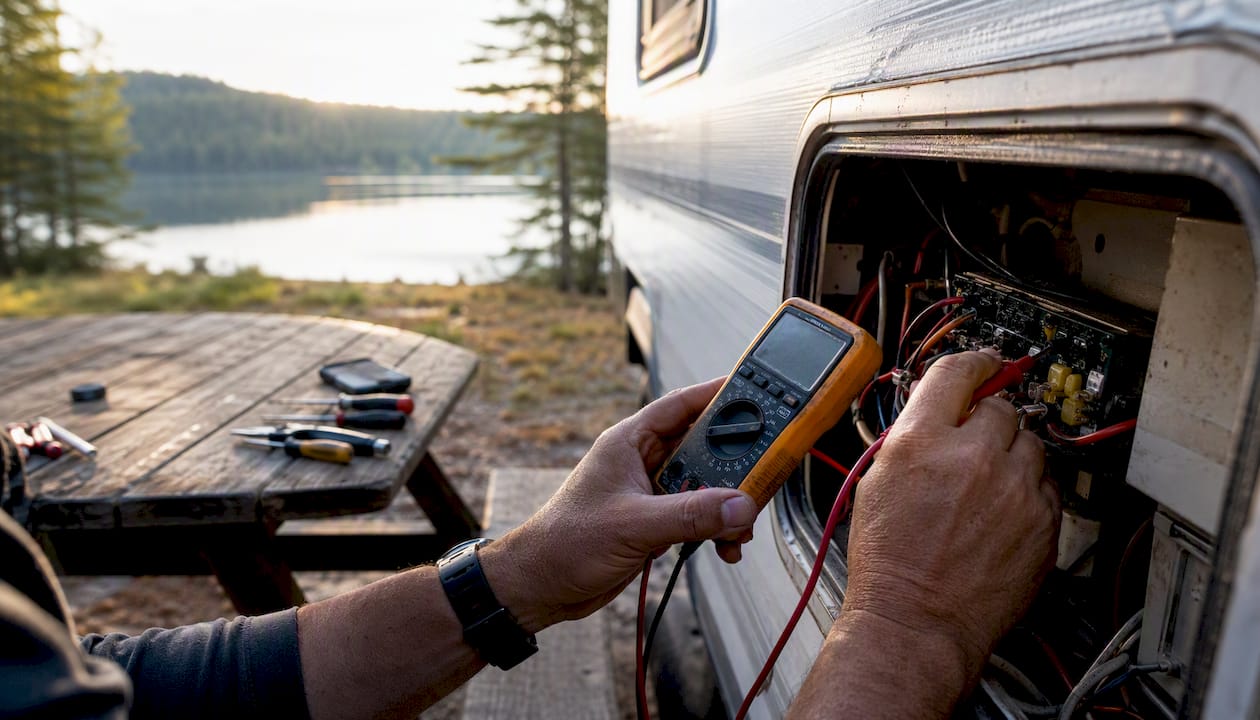
Common friction points: claims can be denied for lack of maintenance records (keep your service receipts), for using a shop the provider has not authorized, or for a failure the adjuster classifies as pre-existing. Authorization timelines vary — some providers approve within hours; others take days. Ask about average authorization time before you buy.
How to evaluate and pick the right RV extended warranty
Shopping for coverage without a checklist is how you end up with a plan that looks great in the brochure and disappoints at the repair shop. Work through this sequence:
- Confirm eligibility first. Check your rig’s model year and mileage against the provider’s limits before spending time on anything else. A plan you cannot qualify for is not a plan.
- Compare coverage lists or exclusionary terms. For stated-component plans, verify your three highest-risk systems appear explicitly. For exclusionary plans, read the exclusions list and confirm nothing critical is carved out.
- Check deductible options. Decide whether a lower premium with a $250–$500 deductible or a higher premium with $0 deductible fits your repair-frequency expectations.
- Confirm the claims process and repair network. Ask: Is this direct-pay or reimbursement? Can I use any licensed shop, or am I limited to a dealer network? What is the typical authorization timeline?
- Read cancellation and transfer terms. Reputable providers offer pro-rated refunds if you cancel mid-term and allow contract transfer to a new owner, which can add resale value to your rig. Always read the actual contract language on this — not the sales summary.
Top questions to ask any provider before signing:
- What is your pre-existing condition definition, and how is it enforced?
- Who is the underlying insurance carrier, and what is their AM Best rating?
- Do you hold BBB accreditation or memberships in FMCA, RVDA, or Escapees?
- Can I see a sample contract before I purchase?
- What is your average claim authorization time?
Red flags that should stop the sale: vague contract language that does not define covered components specifically; a broker who cannot tell you who the actual administrator is; refusal to provide the full contract before payment; and a pattern of denied-claim complaints in BBB reviews or RV forum threads. If a provider pushes urgency (“this price expires today”), walk away.
For buyers comparing dealer-sold contracts versus independent third-party plans, the dealer vs. private seller guide at Gently Used RVs covers the trade-offs in detail and is worth reading alongside your warranty research.
Representative U.S. providers and what they emphasize
These are brief, neutral summaries to help you know what to expect when you request quotes. Read the actual contract before buying from any of them.
Good Sam Extended Service Plan is one of the most recognized names in RV coverage and markets directly to the Good Sam Club membership base. The plan emphasizes direct-pay claims handling, a broad repair network that includes independent shops, and roadside assistance integration. It is commonly cited in RV forums as a starting point for comparison because of its name recognition and the volume of user reviews available.
Wholesale Warranties positions itself as a broker that shops multiple administrators on your behalf, which can be useful if you want to compare several underwriters without filling out separate applications. Their plan page highlights both stated-component and exclusionary options, mobile mechanic allowances, and direct-pay settlement. The broker model means you should confirm exactly which administrator backs your specific contract.
America’s RV Warranty (ARW) markets directly to consumers and emphasizes A-rated insurance carrier backing, industry memberships (FMCA, RVDA, Escapees), and BBB accreditation as trust signals. ARW offers plan tiers from powertrain-only to exclusionary and advertises mobile mechanic allowances and direct-pay claims. Their website publishes sample contract language, which is a transparency practice worth looking for in any provider you evaluate.
A reminder that applies to all three: provider summaries and marketing pages describe what a plan can include. The contract you sign is the only document that determines what your plan actually covers.
What a real repair scenario looks like financially
Consider a slide-out motor failure on a mid-size Class A motorhome. Slide-out motor replacements, including parts and labor at Wholesale Warranties’ cited rate of around $300 per hour for RV repair work, commonly run $1,500–$3,000 depending on the slide system and shop location. On a mid-tier stated-component plan with a $200 deductible, your out-of-pocket cost drops to $200 if the motor is a listed covered component. Without coverage, you absorb the full repair bill.
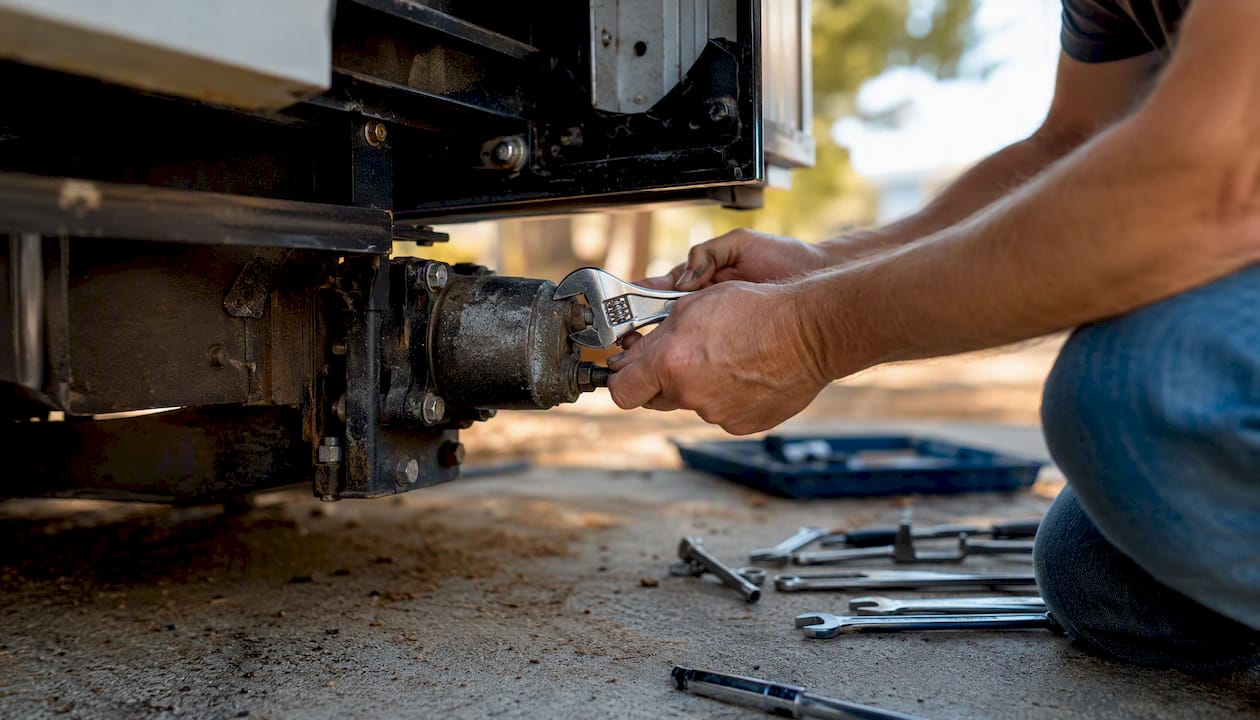
A refrigerator compressor failure on a residential-style fridge — common on newer Class A rigs — can run $800–$2,000 in parts and labor. Again, a mid-tier or exclusionary plan with appliance coverage reduces that to your deductible.
The math is straightforward: if your plan costs $2,000 per year and you file one slide-out claim and one refrigerator claim in a two-year period, you have likely recovered the contract cost before accounting for any other repairs. The uncertainty is whether those failures happen. Full-timers and frequent travelers put more miles and hours on their systems, which raises the probability of mechanical failure and strengthens the case for coverage.
Staying current on DIY RV maintenance also reduces the risk of a claim being denied for improper upkeep — providers do check maintenance records on contested claims.
Is an RV extended warranty worth buying?
Here is my honest take: the value of an extended service contract is almost entirely a function of how you use your rig and how much financial exposure you can absorb.
For a full-timer or a long-distance traveler putting 10,000-plus miles a year on a Class A diesel, the math usually favors coverage. Diesel engines, slide systems, and residential appliances are expensive to repair, and a single catastrophic failure can cost more than two years of contract premiums. The direct-pay feature alone is worth something when you are broken down in a state you have never been to.
For a weekend warrior who takes the rig out six times a year and keeps it in a climate-controlled storage unit, the calculus is different. If your rig is relatively simple and you have a repair fund that could absorb a $3,000 hit, self-insuring may be the smarter financial move. The contract cost is real money, and not every buyer will file a claim that justifies it.
What I would not do is buy coverage without reading the full contract first. Brochures describe the best-case scenario. The contract describes what actually happens when you file a claim.
Sources
These are the primary references used in this article. Each is worth consulting directly for full contract language, eligibility details, and plan comparisons.
- America’s RV Warranty | Warranty Plans & Coverage Details
- What an RV Extended Warranty Covers and What It Doesn’t - LegalClarity
- Understanding Your RV Warranty Options - THOR Industries
- RV Extended Warranty & Service Plans - Wholesale Warranties
- Best RV Extended Warranty 2026: Top 7 Companies Ranked - RV Real Talk
Before you commit to any extended service contract, download the full contract PDF and search for “exclusions,” “pre-existing,” and “maintenance.” Those three sections tell you more about a plan’s real value than any sales call will.
Ready to find the right used RV before you shop for coverage? Browse listings across every RV category at Gently Used RVs — no account required, and the closest rigs to your location show up first. When you are ready to compare dealers who may offer service contracts alongside their inventory, the Gently Used RVs dealer directory is a practical starting point.
