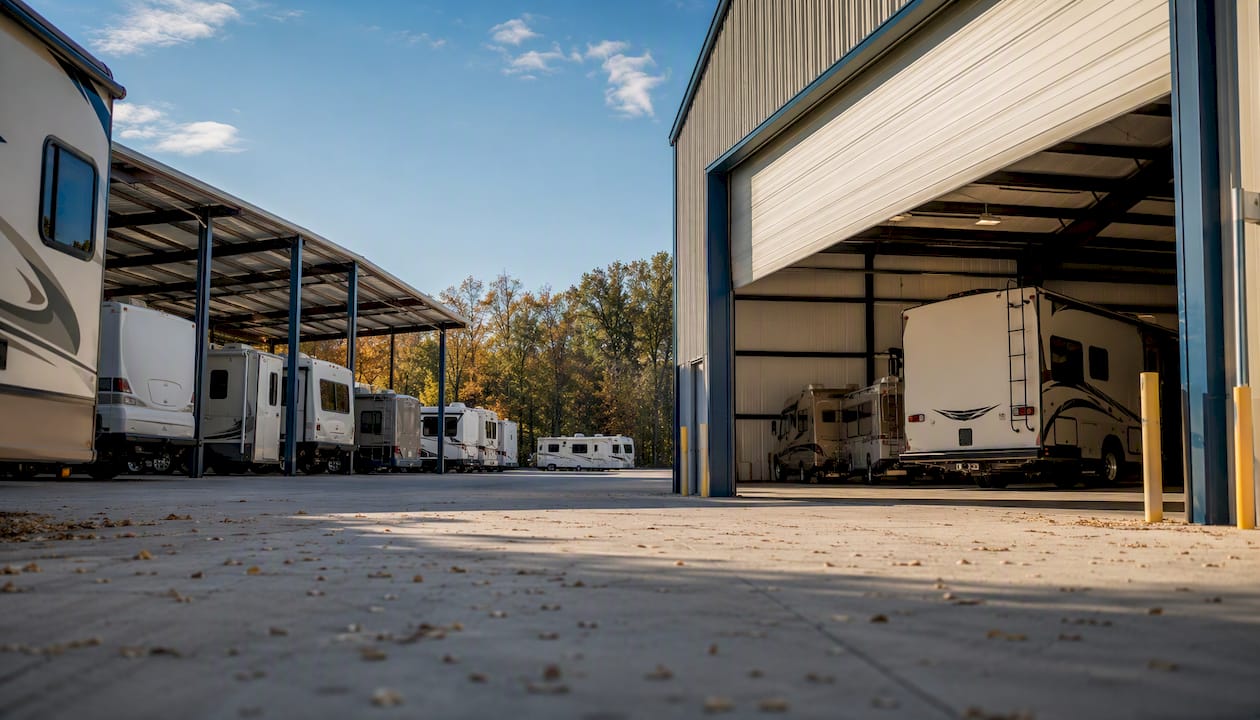
If you use your RV every other weekend, outdoor or covered storage is almost always the right call. Long-term off-season storage, high-value rigs, or anything sitting idle for six-plus months? Go indoor or climate-controlled. That single decision accounts for most of the cost-versus-protection tradeoffs in any honest RV storage options comparison.
Quick scenario guide:
- Frequent weekend user → Outdoor or covered storage keeps costs low and access easy.
- Long-term or winter storage → Enclosed indoor or climate-controlled protects your investment from UV, moisture, and pests.
- High-value or vintage RV → Climate-controlled is worth the premium; one hail claim or mold remediation often costs more than a year of upgraded storage.
- Snowbird seasonal swap → Covered or enclosed with electrical hookup so your battery stays healthy between trips.
Fast comparison:
| Outdoor | Covered | Indoor/Climate-Controlled | |
|---|---|---|---|
| Avg. monthly cost | Lowest | Mid-range | Highest |
| Protection level | Minimal | Moderate | Maximum |
| Convenience | High (drive-up) | High | Moderate (scheduled access) |
Table of Contents
- What each type of RV storage actually means
- How much does RV storage cost by type?
- Protection levels, pros and cons, and which RV fits each option
- How to choose the right storage: a decision checklist
- How to prepare your RV before putting it in storage
- Low-cost ways to maximize protection and cut your storage bill
- Key Takeaways
- The case for covered storage as your default starting point
- Useful sources for deeper research and local pricing
What each type of RV storage actually means
Not every facility uses the same terminology, so knowing exactly what you’re paying for prevents surprises on move-in day. According to storage type definitions and use-case guidance, the three primary professional categories are outdoor, covered, and indoor, with climate-controlled as a notable indoor subcategory.
- Outdoor/uncovered storage is an open paved or gravel lot. No roof, no walls. Your RV sits exposed to sun, rain, hail, and temperature swings. Most facilities offer month-to-month contracts here, and it’s the easiest type to find for oversized rigs since height limits are rarely a concern.
- Covered/canopy storage adds a metal or fabric roof over individual or shared bays. Walls are typically open or partial. This cuts UV exposure and direct precipitation but doesn’t seal out wind-driven rain, dust, or pests. Most canopy setups accommodate rigs up to 13–14 feet tall, though you should always confirm clearance for Class A motorhomes and fifth wheels.
- Enclosed/indoor storage puts your RV inside a shared warehouse bay or a private drive-in unit. Full walls and a roof block weather, pests, and most theft vectors. Height limits here are real: many standard warehouse facilities cap at 12–13 feet, which can exclude taller Class A coaches. Check the RV types guide to confirm your rig’s exact height before booking.
- Climate-controlled storage is a subcategory of enclosed indoor storage where temperature and humidity are actively managed. It’s the most protective option and typically the most expensive. Best suited for fiberglass-heavy coaches, vintage rigs, or any RV stored in a region with extreme temperature swings.
- Garage/home storage means your own driveway, backyard, or a private garage. Zero monthly cost if you own the space, but HOA rules and municipal codes frequently restrict visible home storage, and many homeowners associations prohibit RV parking outright. Before assuming your driveway works, check your CC&Rs and local ordinances.
Seasonal vs. month-to-month contracts: Outdoor and covered facilities almost universally offer month-to-month terms. Enclosed and climate-controlled units often push seasonal or annual contracts, especially in high-demand markets. Some facilities offer a small discount (typically 5–10%) for prepaying a full season.
How much does RV storage cost by type?
2026 pricing data shows clear national tiers, with regional premiums adding materially in high-demand coastal and mountain metros. Here’s what you can realistically expect to pay:
| Storage Type | 25’ Rig (est./mo.) | 35’ Rig (est./mo.) | 45’ Rig (est./mo.) |
|---|---|---|---|
| Outdoor/uncovered | $50–$100 | $75–$150 | $100–$200 |
| Covered/canopy | $100 | — | $150 |
Pricing note: These ranges reflect national averages from 2026 operator and market guidance. High-demand markets such as coastal California, the Pacific Northwest, and mountain resort areas commonly run at the upper end or beyond these bands. Rural Midwest and Southeast markets often land near the lower end.
What drives the price up or down:
- Region and market demand are the biggest variables. Location-driven premiums are real and significant in competitive metros. The 2026 market guide on RV location pricing breaks down how regional demand shifts both storage and resale values.
Protection levels, pros and cons, and which RV fits each option
Matching your rig’s value and your climate to the right storage tier is where most owners either save money wisely or pay for it later in repair bills.
| Storage Type | Weather Protection | UV/Hail | Pest Risk | Theft Risk | Best For |
|---|---|---|---|---|---|
| Outdoor | None | High exposure | Moderate | Higher | Frequent users, low-value rigs |
| Covered | Partial | Low–moderate | Moderate | Moderate | Weekend users, mild climates |
| Enclosed indoor | Full | Minimal | Low | Low | Long-term, high-value rigs |
| Climate-controlled | Full + humidity | Minimal | Very low | Very low | Vintage, fiberglass, extreme climates |
| Home/driveway | Varies | High (no cover) | Varies | Varies | Owners with permitted space |
Outdoor storage works well for owners who pull their rig out every few weeks. Exposure is real, but a quality RV cover and tire covers close most of the gap. The risk calculus changes fast if you’re storing for four months or more, especially in hail-prone states like Texas, Colorado, or Kansas.
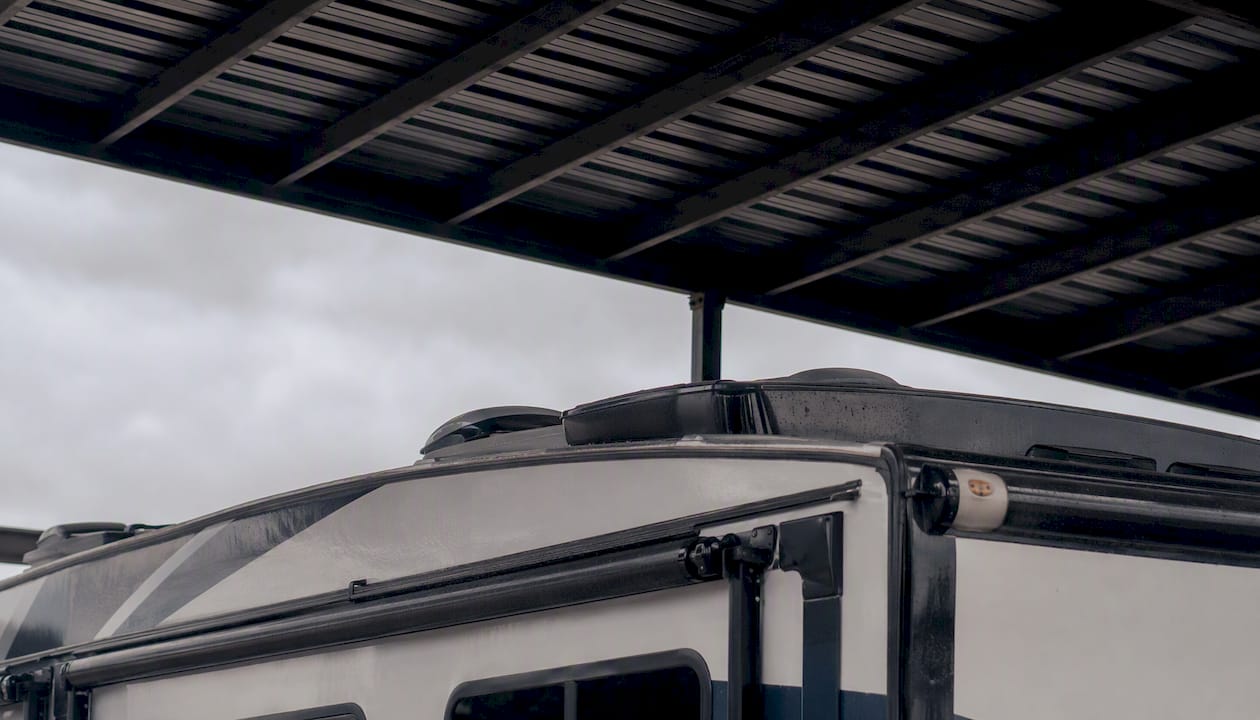
Covered/canopy storage is the practical sweet spot for most U.S. owners. It blocks direct sun and rain, keeps costs reasonable, and is widely available. One caveat: poorly ventilated canopy designs can trap condensation on your roof in humid climates, so ask about airflow before signing.
Enclosed indoor storage is the right call for any RV worth more than you’d want to replace out of pocket. Full weather sealing, dramatically lower pest exposure, and the kind of security that actually satisfies most insurance carriers. The tradeoff is access: many facilities require advance notice or have limited hours.
Climate-controlled becomes cost-effective when you’re storing a fiberglass coach in a region with freeze-thaw cycles, or a vintage rig where a single moisture event could cause thousands in damage. One mold remediation job can run $2,000–$5,000. A year of climate-controlled storage often costs less.
Pro Tip: If you own a high-value Class A or a vintage coach, get a written quote from your insurance carrier before choosing storage. Some policies require enclosed or climate-controlled storage to maintain full coverage on a stored vehicle.
Use-case matchups:
- High-value or vintage RV: Climate-controlled. The ownership cost considerations are real; protecting resale value starts with storage.
How to choose the right storage: a decision checklist
Use this checklist when you’re evaluating facilities by phone or in person. Go in order — the top items have the highest financial stakes.
- Confirm your insurance coverage — call your insurer with the facility address and storage type before signing anything.
- Measure your rig — length, height, and slide-out width. Compare against the facility’s stated size limits.
- Check the contract terms — month-to-month vs. seasonal, deposit amount, cancellation policy, and what happens if you’re late on payment.
- Inspect the surface — paved or compacted gravel? Level? Good drainage?
- Verify security features — gate type, camera coverage, lighting, fencing, staff hours.
- Confirm access hours — 24/7 or restricted? Does that match how you use your RV?
- Ask about add-on fees — move-in, electricity, wash bay, gate code replacement.
- Check the operator’s reputation — BBB profile, Google reviews, and any RV forum mentions.
Questions to ask the facility directly:
- “What is your rodent and pest control program?”
- “What is the snow-load rating on your canopy structures?”
- “What amperage are your electrical hookups, and is there a surcharge?”
- “Who is responsible if my RV is damaged on your property?”
- “Can I get a written copy of your access and liability policy?”
Red flags — walk away if you see these:
- No written access or liability policy
- Vague or evasive answers about insurance responsibility
- Unpaved, soft ground in a wet-climate market
- No working gate or perimeter fencing
- Unresolved BBB complaints about damage or access denials
If you’re also weighing whether to sell rather than store, staying safe in RV transactions follows similar due-diligence logic — verify everything in writing.
How to prepare your RV before putting it in storage
Skipping pre-storage prep is how a $200 storage bill turns into a $2,000 repair. Work through this list before you hand over the keys or park it for the season.
- Clean thoroughly inside and out. Food residue attracts pests. Moisture left on surfaces causes mold. Wash the exterior, clean the refrigerator, and wipe down all surfaces.
- Winterize if temperatures will drop below freezing. Drain the water system, blow out lines, and add RV antifreeze to traps. The RV winterization guide covers this step by step.
- Stabilize fuel if storing for more than 60 days. Add a fuel stabilizer and run the engine briefly to circulate it. Stale fuel degrades injectors and carburetors.
- Disconnect or maintain the battery. A battery left connected and unmonitored will discharge and sulfate. Either disconnect it and store it indoors, or connect a quality trickle charger (Battery Tender or NOCO Genius are widely used options).
- Cover the tires. UV breaks down sidewalls even in covered storage. Tire covers are a $30–$60 investment that extends tire life meaningfully.
- Block slides and awnings securely. Retract all slides, lock the awning, and verify latches. Wind and snow load can damage an extended awning quickly.
- Lock propane valves. Close all propane tank valves and check for leaks before storage.
- Seal entry points for pests. Steel wool in exhaust pipes and vents, rodent repellent pouches inside, and a check of any gaps in the underbelly.
- Document the condition with photos. Dated photos of the exterior, tires, roof, and interior create a baseline for any insurance claim.
While it’s stored:
- Check tire pressure every 4–6 weeks. Cold weather drops PSI. See the RV tire pressure guide for storage-specific recommendations.
- Walk the RV monthly if possible. Look for new leaks, pest activity, or damage.
- Verify the battery maintainer is functioning each visit.
Pro Tip: Dump and flush your black and gray tanks completely before storage. Residue left in tanks over months creates odors and can damage seals. The black tank dumping guide walks through the full flush process.
Low-cost ways to maximize protection and cut your storage bill
You don’t need to upgrade storage tiers to meaningfully improve protection. A few targeted investments and some negotiation tactics go a long way.
Protection upgrades that cost less than one month of indoor storage:
- A quality RV cover (ADCO, Classic Accessories, or Camco make well-regarded options) blocks UV and precipitation for outdoor or covered storage. Measure carefully — a loose cover that flaps in wind causes more abrasion than no cover at all.
- Tire covers on all wheels, even in covered storage. UV hits tires from reflected light off pavement.
- Rodent repellent pouches (Fresh Cab or Grandpa Gus’s are popular) placed inside cabinets, under the bed, and near the engine bay.
- A battery maintainer with automatic float mode. NOCO Genius and Battery Tender Plus are reliable choices available at most auto parts stores.
- Underchassis cargo bins and rooftop carriers from Lippert let you maximize onboard storage so you’re not paying for a separate unit just to store gear.
Interior organization reduces your need for offsite overflow storage. Vertical storage tactics, bin segmentation, and secure mounting free up surprising amounts of space. Winnebago’s organization guidance recommends museum putty for loose items, Velcro dividers for drawers, and Command hooks for lightweight gear — all of which keep items secure during transit and reduce clutter during storage.
Cost-saving strategies:
- Negotiate a seasonal rate. Many facilities will discount 5–15% for a prepaid 6-month commitment, especially if you’re moving in during their slow season (typically October through February in most U.S. markets).
- Month-to-month vs. annual: Month-to-month gives flexibility but costs more per month. If you know you’re storing for a full winter, lock in the seasonal rate.
- Spend on electrical hookup. The $15–$40/month for a trickle charger connection is almost always worth it. A dead or sulfated battery costs $150–$400 to replace, and that’s before labor.
- Skip the wash bay subscription unless you’re using it regularly. Pay-per-use is usually more economical for owners who wash their rig at home.
Key Takeaways
Covered storage is the practical default for most U.S. RV owners, but long-term storage, high-value rigs, and extreme climates justify the step up to enclosed indoor or climate-controlled.
| Point | Details |
|---|---|
| Match tier to use pattern | Frequent users do well with outdoor or covered; long-term or seasonal storage warrants enclosed or climate-controlled. |
| Budget beyond the base rate | Add-on fees (electrical, move-in, wash bay) can add $30–$75/month to your actual bill. |
| Verify insurance before signing | Facility coverage protects the building, not your RV; confirm your own policy covers the stored location. |
| Prep before storage | Clean, winterize, stabilize fuel, cover tires, and document condition with dated photos before parking long-term. |
| Check the operator’s reputation | Review BBB profiles and Google ratings before committing to any facility contract. |
The case for covered storage as your default starting point
Most U.S. RV owners are better served by covered storage than they realize. The instinct is to go cheap (outdoor) or go all-in (climate-controlled), but covered canopy storage sits in a genuinely useful middle ground that the comparison articles often underplay.
Here’s what gets missed: the biggest damage risks for the average stored RV aren’t catastrophic weather events. They’re slow, cumulative, and preventable. UV degradation on rubber seals and roof membranes. Tire sidewall cracking from sustained sun exposure. Minor moisture intrusion that compounds over a season. Covered storage addresses all three without the access restrictions and price premium of a full indoor unit.
The upgrade to enclosed indoor storage makes clear financial sense when your rig’s value exceeds what you’d comfortably absorb in an uninsured loss, when you’re storing for more than four months, or when your climate brings hail, heavy snow, or sustained humidity. Climate-controlled is a narrower case: it’s the right call for fiberglass coaches, vintage rigs, and any owner whose insurer requires it for full coverage.
What I’d push back on is the idea that home storage is always the free option. Between HOA restrictions, municipal codes, and the real cost of UV and weather exposure on an uncovered driveway, “free” home storage often isn’t free at all. A $100/month covered facility spot frequently costs less than the deferred maintenance it prevents.
Useful sources for deeper research and local pricing
Verifying prices in your specific market matters because national averages can miss your local reality by a wide margin. These sources give you the tools to cross-check.
- RV Storage Ideas: Smart Solutions for Every Space - StorageCafe Blog - Your Go-to Source for All Things Self Storage
- RV storage cost per month 2026 pricing guide by type — Eagle Canopy
- RV Storage Options: Costs, Types & Preparation Guide — PreciousRV
- RV Storage Options: Indoor, Covered, and Outdoor Explained | FindBoatStorage
- Creative Solutions for RV Organization - Winnebago
- RV storage lots vs home storage | PickRV Wiki
- Lippert RV cargo and storage solutions — Lippert
- Extra Space Management Inc — BBB profile

If you’re storing a rig you’re thinking about selling, listing it on Gently Used RVs costs nothing to start. A free listing reaches buyers within a 20-mile radius, and paid upgrades expand that to statewide or nationwide visibility. It’s worth knowing what your stored RV is worth before you commit to another year of storage fees.