RV Park Reviews and Experiences: 2026 Traveler’s Guide

RV park reviews and experiences are the most reliable tool travelers have for choosing campgrounds that actually match their needs. Crowdsourced feedback from real RVers cuts through marketing language and reveals what a park is like on a Tuesday in july versus a holiday weekend. Not every top-rated park fits every traveler. A Class A motorhome owner has different priorities than a couple in a teardrop trailer, and the best campground reviews reflect that gap clearly.
What top factors do RVers consider in their reviews and experiences?
The criteria that drive strong campground reviews fall into a predictable set of categories. Travelers consistently weight location, site quality, amenities, safety, and pricing above everything else. Understanding these factors helps you read reviews with sharper eyes.
Location and accessibility sit at the top of nearly every review. Proximity to national parks, beaches, or city centers drives demand and pricing. A park near Yellowstone or Sedona commands a premium because the location does the heavy lifting for your itinerary.
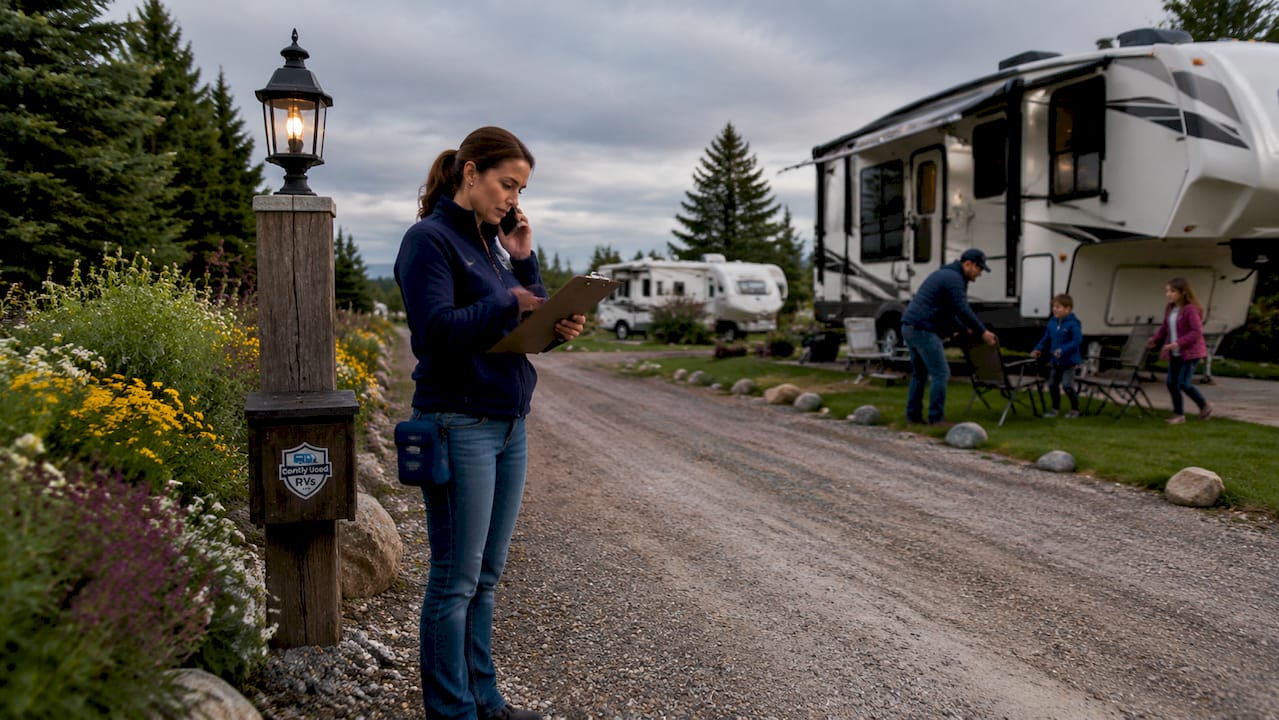
Site quality is where reviews get specific and useful. Pull-through sites matter for big rigs. Level pads, shade trees, and privacy between sites separate a comfortable stay from a frustrating one. Big-rig friendly parks carefully design site spacing, pull-through length, and road widths to minimize maneuvering challenges. That detail shows up in reviews and is critical for planning.
Key amenities travelers mention most often:
- Full hookups (water, electric, sewer) versus partial
- Bathhouse cleanliness and shower pressure
- Laundry facilities and hours
- Pool, dog park, and recreation areas
- Wi-Fi reliability and cellular signal strength
Safety and security drive repeat visits more than aesthetics. Gate security, lighting, and quiet hour enforcement are primary drivers for families and long-term stays. A park that enforces its own rules signals management that actually cares.
Pricing is increasingly dynamic. Peak season rates at high-demand parks run $80–$120+ per night depending on site and booking timing. That mirrors hotel pricing models, and it catches first-time RV campers off guard.
Pro Tip: Always check the date on reviews you read. Recent reviews within 6 months better reflect current maintenance and management, since ownership changes can shift park quality fast.
How top-rated RV parks combine features and location for standout stays
The best way to understand what makes a campground earn five stars is to look at specific parks that reviewers consistently praise. Each example below serves a different traveler type.
1. Rancho Sedona RV Park, Sedona, Arizona
Rancho Sedona earns its reputation through a combination of location, natural beauty, and meticulous upkeep. Sites sit along Oak Creek with red rock views that no amenity package can replicate. The park charges premium rates, and most reviewers agree the setting justifies every dollar. Booking 3–6 months in advance is advised during peak season (october through may) to avoid limited availability or inflated last-minute pricing. This park suits travelers who prioritize scenery and a well-maintained environment over social amenities.
2. Yellowstone Grizzly RV Park, West Yellowstone, Montana
Yellowstone Grizzly sits at the west entrance to Yellowstone National Park and caters directly to big-rig travelers. Pull-through sites are long, roads are wide, and the park fills fast. Premium pricing here reflects convenience and infrastructure near a major tourist hub, not seclusion or wilderness ambiance. Rates run $80–$120+ per night at peak season. Reviewers consistently praise the staff and the ease of access to the park entrance, making it the right choice for travelers who want zero friction on a Yellowstone trip.
3. Isle of Iberia RV Resort, New Iberia, Louisiana
Isle of Iberia markets itself as a resort, and it delivers on the social side. Pool, clubhouse, and organized activities make it a strong pick for families and travelers who want community. However, resort branding does not guarantee quality. “Resort” often means higher fees, not a commensurate upgrade in every amenity. Reviewers note that off-season visits can reduce amenity availability despite full pricing. Go in knowing what you are paying for.
4. Weary Traveler RV Park, Seymour, Indiana
Weary Traveler earns a 9.5/10 rating based on 128 reviews on an independent crowdsourced platform. That score comes from cleanliness, security, and efficiency, not luxury. This is a no-frills overnight stop on I-65 that does exactly what it promises. Travelers heading south or north through Indiana return to it repeatedly because it is predictable and safe. The lesson here is that a great review score does not require a pool or a scenic backdrop.
“The best RV park for your trip is not the one with the highest star rating on a national list. It is the one whose reviews describe your exact travel style, rig size, and priorities.”
What are common pitfalls and overlooked details in RV park reviews?
Reading reviews well is a skill. Most travelers scan the overall rating and stop there. That approach leads to booking mistakes that a closer read would have prevented.
Site variability within the same park catches travelers off guard more than almost anything else. Site quality varies significantly within parks, and verifying specific site layouts or satellite views before booking prevents surprises, especially for large rigs. A park with a 4.5-star average might have ten sites that are perfect and twenty that are cramped, shaded out, or near a dumpster.
Watch for these red flags in reviews:
- Complaints about uneven pads or unlevel sites
- Mentions of sites that are too short for rigs over 35 feet
- References to noise from highways, trains, or neighboring sites
- Comments about inconsistent enforcement of quiet hours
- Warnings about Wi-Fi that only works near the office
Seasonal and event-based variation changes a park’s character completely. A quiet lakeside park in september becomes a party scene during a nearby festival weekend. Reviews written during those events skew the overall rating in both directions.
The “resort” label deserves skepticism. Seasonality affects resort operations, and amenities may close off-season despite full pricing. A pool that is closed, a clubhouse under renovation, or a restaurant that only operates on weekends can turn a resort stay into a disappointment.
Pro Tip: Cross-reference the park’s own website with recent reviews. If the website shows a pool but three recent reviewers mention it was closed, trust the reviewers.
Pricing surprises are also common. Dynamic pricing models mean the rate you see today may not be the rate you pay next month. Book early and confirm the rate at time of reservation.
How to use online platforms and community feedback to find the best RV park
Travelers increasingly depend on crowdsourced, independent reviews to evaluate campgrounds before arrival. That shift has made review platforms the most practical tool for booking confidence.
The table below outlines how different types of review sources serve different research needs:
| Source type | Best used for | Limitation |
|---|---|---|
| Dedicated RV review platforms | Detailed site-specific feedback, rig-size filters | May have older reviews for less popular parks |
| General travel review sites | Broad sentiment and photo galleries | Less RV-specific detail |
| RV community forums | Nuanced local knowledge, seasonal tips | Harder to search, anecdotal |
| Park’s own website | Amenity lists, pricing, reservation links | Promotional, not objective |
| Social media RV groups | Real-time conditions, recent trip reports | Unstructured, hard to verify |
The most effective strategy combines at least two of these sources. Start with a dedicated RV review platform for site-specific detail, then check a community forum for recent trip reports. Resort-level ratings often correspond more to cleanliness and attentive staff than to luxury amenities. That insight helps you calibrate what a high score actually means.
Timing your booking matters as much as where you book. For popular destinations, use reviews to identify the shoulder season. A park that is packed and loud in july may be peaceful and half-priced in may or october. Reviews written during those quieter periods tell you what the park is actually like to live in, not just visit.
Ask specific questions in RV forums before booking. “Has anyone stayed at Site 42 at [park name] with a 40-foot fifth wheel?” gets you information no star rating can provide. The RV community is generous with this kind of detail. For travelers planning trips to high-demand destinations, the best RV travel destinations guide from Gently Used RVs pairs well with peer review research.
Key Takeaways
The most effective approach to choosing an RV park combines recent peer reviews, site-specific research, and early booking to match the campground to your rig size, travel style, and budget.
| Point | Details |
|---|---|
| Prioritize recent reviews | Reviews within 6 months reflect current management and maintenance more accurately than older ratings. |
| Research site-specific details | Verify individual site dimensions and layouts before booking, especially for rigs over 35 feet. |
| Book early for peak season | Secure prime sites 3–6 months in advance to avoid limited availability and peak pricing of $80–$120+ per night. |
| Question resort labels | “Resort” branding signals higher fees but does not guarantee better amenities or year-round availability. |
| Cross-reference multiple sources | Combine dedicated RV platforms, forums, and park websites for the most complete picture before booking. |
What I’ve learned from years of reading RV park reviews
Star ratings are a starting point, not a verdict. I have stayed at parks with 4.8-star averages that disappointed me and 3.9-star parks that became favorites. The difference was always in the written reviews, not the number.
The detail that most travelers skip is the reviewer’s rig type. A couple in a 19-foot travel trailer and a family in a 42-foot Class A motorhome are not evaluating the same park. When I read reviews now, I filter for people traveling with a similar setup. Their experience is the one that predicts mine.
Advance booking is non-negotiable at the parks worth staying at. I have watched travelers show up at Rancho Sedona or Yellowstone Grizzly in july expecting a walk-in site and leave disappointed. The parks that earn strong reviews fill up because word gets out. That is the system working correctly.
The small details in reviews are the most honest. A reviewer who mentions that the bathhouse smelled clean at 10 PM, that the host came by to check in on day two, or that the Wi-Fi actually worked for a video call. Those specifics are worth more than a hundred five-star ratings with no text. Read the stories, not just the scores.
For travelers still deciding on the right rig for their camping style, the RV types guide at Gently Used RVs is worth a look before you commit to a park category.
— Christopher
Planning your next trip with Gently Used RVs
Choosing the right campground starts with having the right rig. A park that works perfectly for a Class C motorhome may be a tight squeeze for a 40-foot fifth wheel, and that mismatch shows up in reviews every time.

Gently Used RVs connects travelers with used motorhomes, travel trailers, fifth wheels, and more across the United States and Canada. Browse the full used RV marketplace to find a rig that fits your camping style and budget, or check the RV dealer directory to connect with trusted dealerships near you. Whether you are planning a Sedona weekend or a cross-country run, the right vehicle makes every park review feel like it was written for you.
FAQ
What should I look for in RV park reviews?
Focus on site-specific details like pad levelness, pull-through length, and hookup quality. Reviews that mention rig size and trip timing give the most relevant information for your situation.
How far in advance should I book a popular RV park?
Book 3–6 months ahead for peak season stays at high-demand parks. Parks near major attractions like Yellowstone fill quickly, and last-minute bookings often face limited site selection and higher rates.
Are RV parks labeled “resort” actually better?
Not always. Resort branding often signals higher fees rather than a guaranteed upgrade in amenities. Verify specific amenities through recent reviews, since some resort features close during the off-season despite full pricing.
How do I find the best site within an RV park?
Check satellite views of the park layout and ask in RV community forums about specific site numbers. Site quality varies significantly within the same park, and pre-booking research prevents unpleasant surprises.
What review platforms are most useful for RV travelers?
Dedicated RV campground review platforms provide the most site-specific detail, including rig-size filters and hookup ratings. Pair these with RV community forums for recent, real-time trip reports before finalizing your booking.