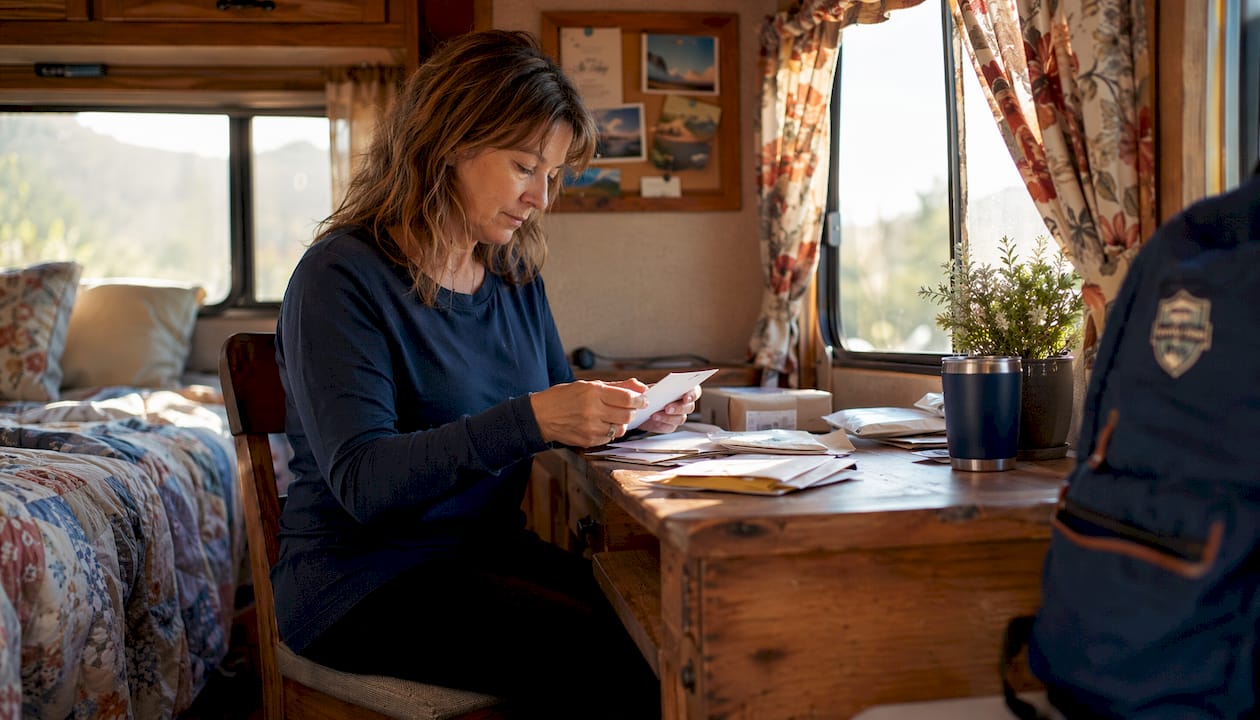
RV mail and residency options are the legal foundation every full-time RVer and digital nomad needs before hitting the road. Your domicile, the state you legally call home, determines your taxes, vehicle registration, driver’s license, and voting rights. Without a proper setup, you risk fines, tax audits, and rejected bank applications. South Dakota, Texas, and Florida lead as top domicile states because they charge no state income tax, maintain flexible residency processes, and support established mail forwarding networks. Getting this right from day one saves you serious headaches down the road.
What are the best RV mail and residency options for nomads?
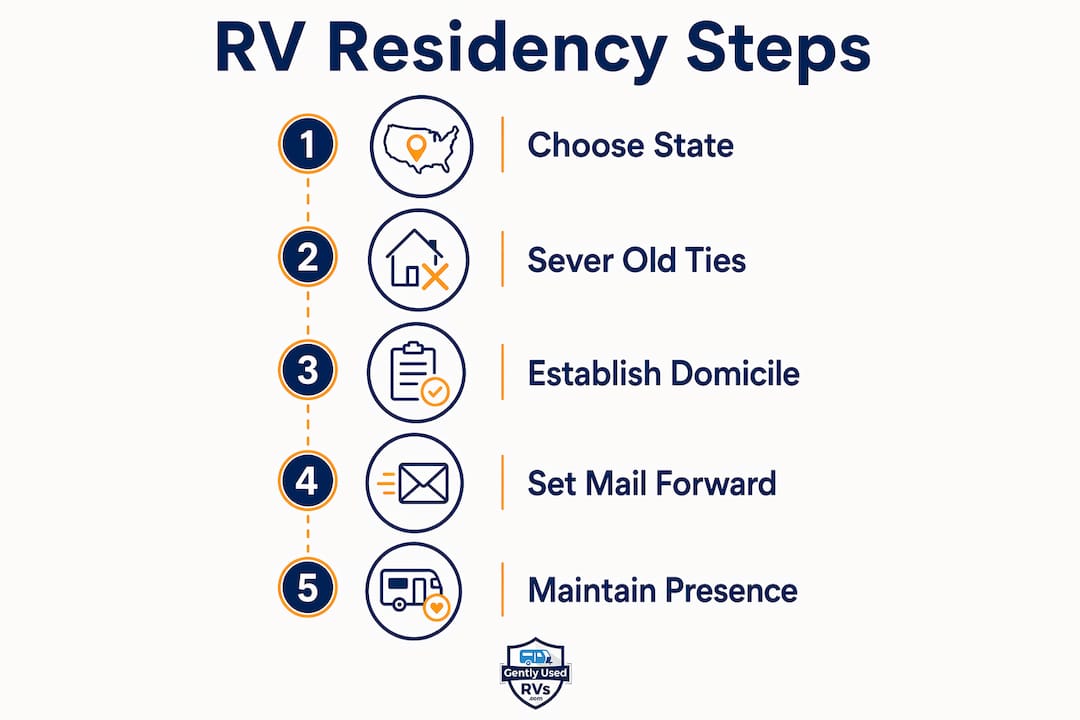
Choosing your domicile state is the single most consequential decision you make as a full-time RVer. Your domicile is your legal home, and it must have good mail services, affordable registration, and friendly DMV policies to support life on the road. A state that looks good on paper can still create friction if its DMV requires multiple in-person visits or if local mail services are slow.
South Dakota, Texas, Florida, and Nevada consistently rank as the best choices for nomads. Each charges zero state income tax, which matters enormously when you earn remotely. South Dakota is historically the easiest to establish residency in, often requiring just one overnight stay, though recent 2023–2026 policies restrict CMRA address use for voting and payroll in some jurisdictions. That shift means you need to verify current requirements before committing.
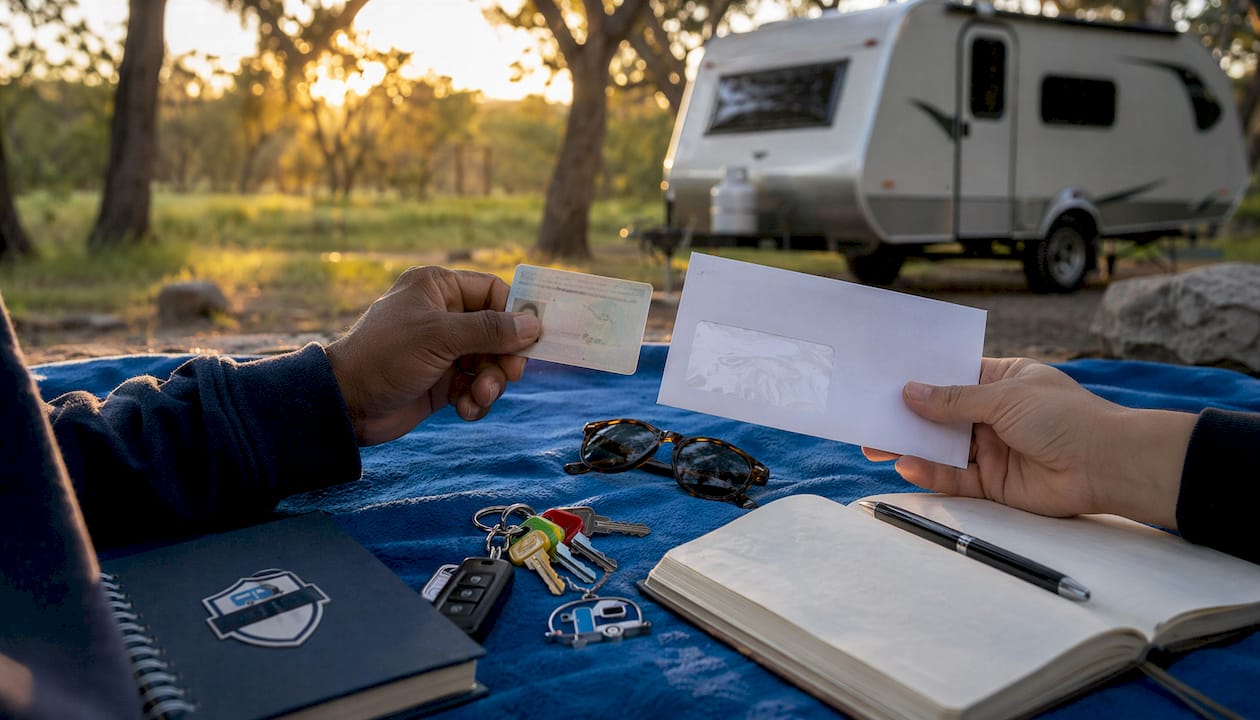
Texas requires a bit more paperwork but has a massive RV community and strong mail forwarding infrastructure. Florida is popular among retirees and snowbirds, though its residency process can take longer. Nevada offers no income tax but has fewer dedicated nomad mail services compared to South Dakota or Texas.
Key criteria to weigh when picking your domicile state:
- No state income tax: South Dakota, Texas, Florida, and Nevada all qualify.
- Minimal physical presence requirement: Some states require only one overnight stay; others require 30 days.
- DMV accessibility: Can you complete registration and licensing in a single visit or by mail?
- Mail forwarding infrastructure: Does the state have services built specifically for RVers?
- CMRA address acceptance: Will your chosen address work for voting, banking, and vehicle registration?
Pro Tip: Before you commit to a domicile state, call the local DMV and ask directly whether they accept your mail forwarding service’s address for driver’s license and registration. Policies change faster than websites update.
How do mail forwarding services work for full-time RVers?
A mail forwarding service gives you a physical street address in your domicile state. When mail arrives, the service scans it, notifies you digitally, and lets you decide whether to forward, shred, or archive each piece. Services built specifically for RVers provide faster, on-demand handling compared to traditional snowbird services that batch-process mail weekly.
The difference between service types matters more than most new nomads realize. Here is how the main options compare:
- Specialized RV mail forwarding services: Designed for frequent movers. They offer on-demand scanning, rapid forwarding, and digital dashboards. These are the best fit for full-time travelers with unpredictable schedules.
- Commercial Mail Receiving Agencies (CMRAs): Physical storefronts that accept mail on your behalf. They provide a real street address, not a P.O. Box, which most banks and government agencies require. Always verify that your chosen CMRA address is accepted before signing up.
- USPS General Delivery: A free option where USPS holds mail at a local post office for pickup. General Delivery accepts only USPS shipments and requires you to show ID in person. It works as a short-term solution but cannot serve as your legal address.
- Friends or family addresses: Simple and free, but creates legal complications. Using someone else’s address as your domicile can trigger tax issues for both parties if not handled carefully.
- Virtual mailbox services: Cloud-based platforms that scan and store your mail digitally. Some also offer check depositing and package consolidation.
Pro Tip: Choose a mail forwarding service that offers on-demand scanning rather than scheduled batch processing. When you are parked at a remote campground waiting on a vehicle registration renewal, you cannot afford to wait until Friday’s batch run.
Mail forwarding also supports critical administrative tasks. Your forwarding address ties directly to your vehicle registration, voter registration, and bank accounts. Experts recommend selecting states with established RV-specific mail forwarding networks to simplify compliance across all three.
How do you legally establish and maintain RV residency?
A mailing address alone does not make you a legal resident. The IRS and state agencies require more than a mailing address, including a driver’s license, voter registration, and demonstrated intent to maintain domicile. Skipping these steps is the most common mistake new full-time RVers make.
Establishing legal nexus in your new state requires completing these steps:
- Obtain a new driver’s license in your domicile state. This is the single strongest signal of residency intent.
- Register your vehicle in the new state. This also determines your registration fees and insurance rates.
- Register to vote at your domicile address. Some states allow mail-in ballots for full-time travelers.
- Update your bank accounts to reflect your new address. Some financial institutions flag CMRA addresses, so always verify acceptance and provide a secondary address if needed.
- Update your health insurance and any professional licenses to your new state.
Severing ties with your old state is equally important. Failure to sever old state ties risks tax scrutiny and legal complications. Cancel your old driver’s license, deregister your vehicle, and close or update any accounts still linked to your former address. Some states aggressively pursue former residents who continue to earn income without paying state taxes.
Physical presence requirements vary by state. South Dakota has historically required just one overnight stay, but verify current rules before relying on that. Texas requires you to establish a physical address and complete licensing in person. Keeping records of your overnight stays, receipts, and any state-specific documentation protects you if your domicile is ever challenged.
Managing packages and special mail while traveling
Receiving packages on the road requires planning that most people underestimate until their first missed delivery. RV parks and campgrounds vary widely in their willingness to accept packages on your behalf. Always call ahead and confirm the park’s policy before using their address for a delivery.
Practical strategies for managing packages and sensitive mail:
- Use your mail forwarding service for package consolidation. Many services accept packages from UPS, FedEx, and USPS, then reship them to your current location. This works well for non-urgent items.
- Ship to Amazon Lockers or UPS Access Points when you know your location in advance. These are available in most towns and eliminate the need for a physical recipient.
- Handle medical prescriptions through mail-order pharmacies. Services like those offered through major pharmacy chains ship 90-day supplies, reducing how often you need to coordinate a delivery.
- Store sensitive documents digitally. Scan and encrypt important papers like insurance cards, vehicle titles, and tax documents. Keep physical originals in a fireproof document bag inside your RV.
- Use your mail forwarding service’s address for software licenses and subscriptions. This keeps your billing address consistent and avoids triggering fraud alerts when you pay from different locations.
USPS General Delivery works as a backup for urgent USPS mail when you are in a town for at least a day or two. Walk into any post office, show your ID, and pick up held mail. It is not a permanent solution, but it is a reliable safety net.
Key Takeaways
Selecting a nomad-friendly domicile state with established mail forwarding services is the most effective way to maintain legal residency and manage mail as a full-time RVer.
| Point | Details |
|---|---|
| Choose the right domicile state | South Dakota, Texas, and Florida offer no income tax and strong mail forwarding networks. |
| Use a specialized mail service | RV-specific forwarding services provide on-demand scanning suited to unpredictable travel schedules. |
| Build full legal nexus | Obtain a driver’s license, register your vehicle, and update voter registration in your domicile state. |
| Sever old state ties completely | Cancel prior licenses and deregister vehicles to avoid tax scrutiny from your former state. |
| Verify CMRA address acceptance | Confirm your mail forwarding address works with banks and government agencies before committing. |
What I have learned after years of watching RVers get this wrong
The most common mistake I see is treating mail forwarding as a complete solution. Full-timers sign up for a forwarding service, get a South Dakota address, and assume they are done. They are not. Domicile is established by intent and action beyond a mailbox, including your driver’s license, voting record, and financial ties to the state. A mail address is the starting line, not the finish.
The second mistake is choosing a domicile state based on what worked for someone else three years ago. South Dakota’s recent policy changes around CMRA addresses for voting and payroll are a perfect example. The rules shift, and the RV community’s collective knowledge lags behind. Always verify current requirements directly with the state DMV and your county election office before you commit.
What actually works is building a weekly mail routine. Every Monday, I log into my forwarding service, review what arrived, forward what matters, and shred the rest. That 15-minute habit eliminates the anxiety of wondering what is piling up. Pair that with a remote work RV lifestyle that keeps your income and schedule predictable, and the administrative side of full-time RV living becomes manageable.
One more thing: do not use a friend or family member’s address as your domicile unless you have talked to a tax professional first. It feels simple, but it can create tax liability for them and legal exposure for you. The cost of a proper mail forwarding service is trivial compared to the cost of untangling a domicile dispute.
— Christopher
Finding the right RV for your full-time lifestyle
Once your mail and residency setup is locked in, the next step is finding a vehicle that fits how you actually live. The right RV changes everything, from how comfortable your home office feels to how easily you can park at the campgrounds near your domicile state.

Gently Used RVs makes it straightforward to find a rig that matches your travel style and budget. Browse Class A, B, and C motorhomes, travel trailers, fifth wheels, and more without creating an account. Search results show the closest listings first, so you can find options near your current location or your new domicile state. If you prefer working with a dealer, the RV dealer directory connects you with trusted sellers across the country. No commissions, no hidden fees, just a clean marketplace built for the RV community.
FAQ
What states are best for full-time RV residency?
South Dakota, Texas, and Florida are the top choices for full-time RVers because they charge no state income tax and maintain strong mail forwarding networks. Each state also offers relatively accessible residency processes compared to other states.
Does a mail forwarding address count as legal residency?
A mail forwarding address alone does not establish legal domicile. You must also obtain a driver’s license, register your vehicle, and update your voter registration in the state to demonstrate genuine residency intent.
Can I use USPS General Delivery as my permanent address?
No. USPS General Delivery is a temporary pickup option limited to USPS shipments and requires in-person ID verification. It cannot serve as a legal address for licensing, banking, or voter registration.
Will banks accept a CMRA address for account setup?
Some banks flag commercial mailbox addresses and may require a secondary physical address. Always confirm your mail forwarding service’s address is accepted by your bank before completing account setup.
How do I receive packages when traveling full-time?
Use your mail forwarding service for package consolidation and reshipping, or ship directly to Amazon Lockers and UPS Access Points in towns along your route. For prescriptions, mail-order pharmacy services that ship 90-day supplies are the most reliable option.