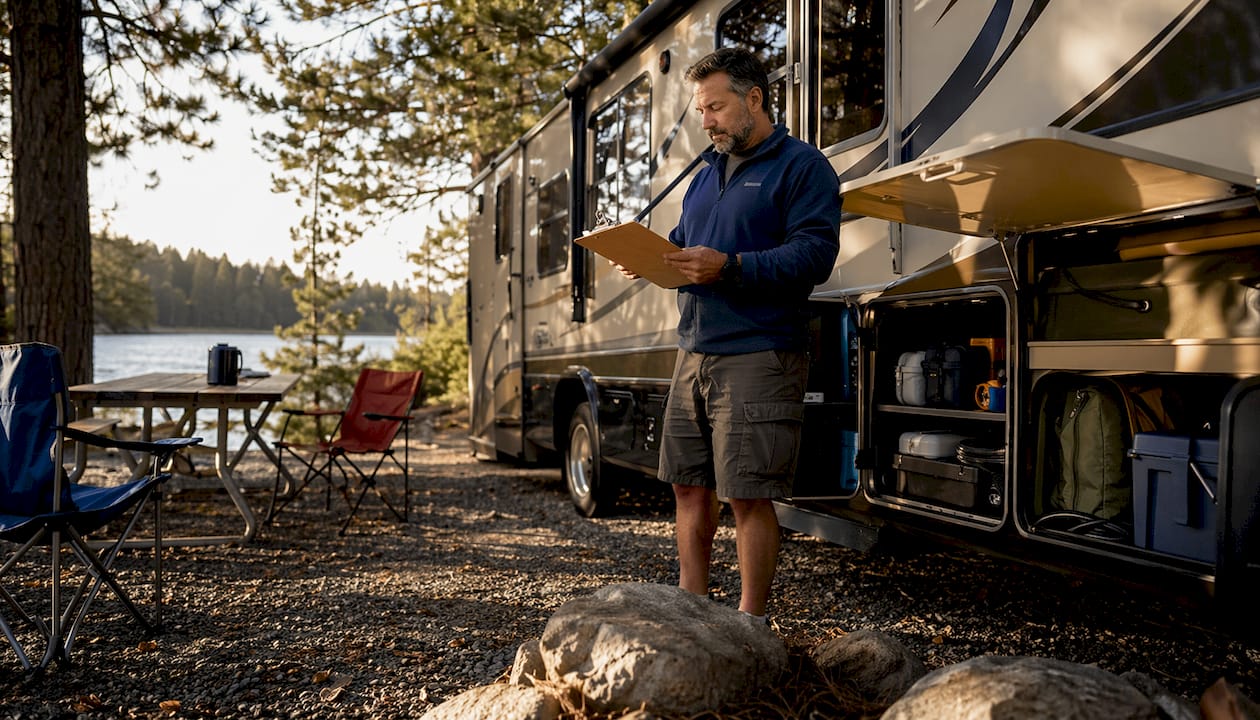
The most common RV lifestyle mistakes new owners make
New RVers tend to hit the same walls, and most of them are completely avoidable. The biggest RV lifestyle mistakes to avoid fall into a few clear categories: skipping essential gear, mismanaging tanks, ignoring weight limits, poor trip pacing, and neglecting basic maintenance. Each one carries real consequences, from a blown tire on the interstate to a flooded floor behind your cabinets.
Here is a quick look at the mistakes that catch first-timers most often:
- Insufficient gear: Missing a surge protector, water pressure regulator, or sewer hose kit on day one
- Tank mismanagement: Leaving black tank valves open or dumping too early
- Improper leveling: Using stabilizer jacks to level instead of leveling blocks
- Ignoring weight limits: Overloading beyond the GVWR and causing tire blowouts or sway
- Poor trip planning: Driving too far, arriving after dark, and booking campgrounds last minute
- Skipping maintenance: Letting roof seals, tires, and plumbing go unchecked
- Campground errors: Violating quiet hours, misusing awnings, and ignoring etiquette
The good news? Every single one of these is preventable. The sections below break each one down with the specifics you need before you ever pull out of the driveway.
1. Preparing your RV and essential gear before your first trip
Walking into your first campsite without the right gear is a fast track to frustration. A surge protector, leveling blocks, a white drinking-water hose, a brass water pressure regulator, and a complete sewer hose kit are non-negotiable from day one. Add a working fire extinguisher, carbon monoxide detector, and smoke detector to that list, and you have the safety baseline every rig needs.
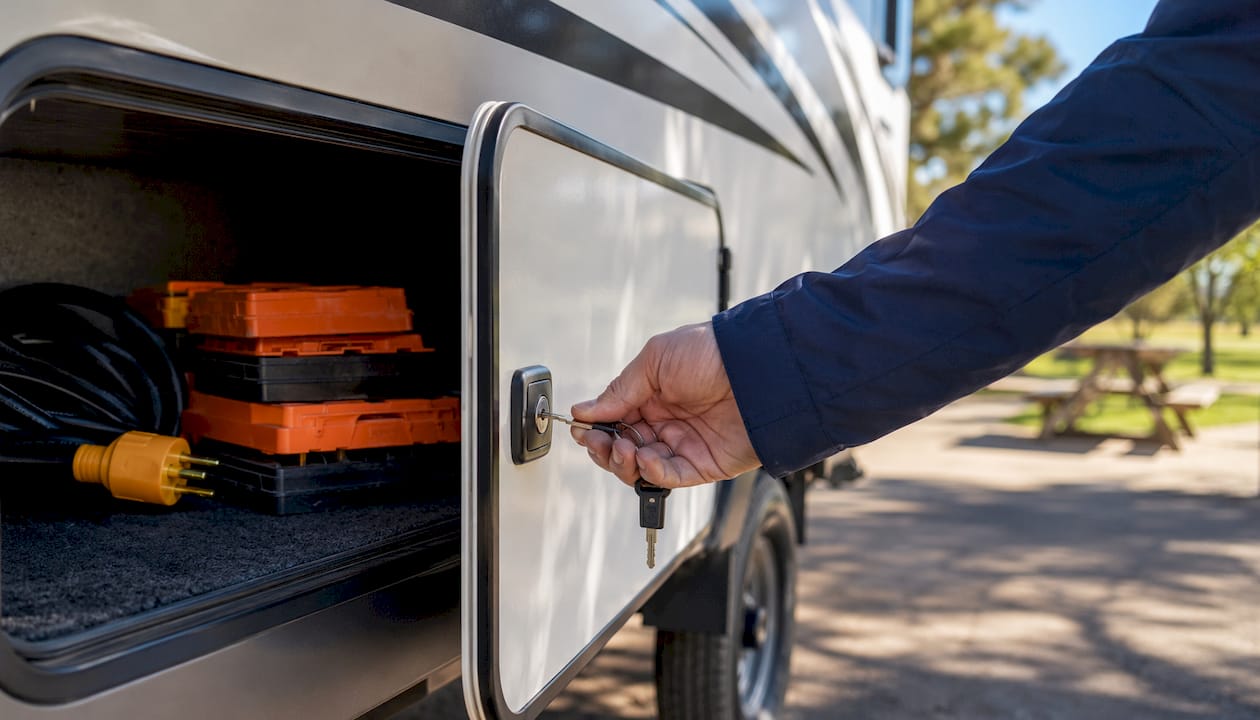
Storage bays deserve attention before every departure. Exterior compartments left unlocked can swing open at highway speed, losing gear and creating a road hazard. Slides must be retracted, the awning latched, steps pulled in, and the antenna lowered before you move an inch.
Pro Tip: Start with the minimum gear you actually need, not everything the RV forums say you might need someday. Live in the rig for one trip first. Your real needs will reveal themselves fast, and you will avoid hauling 200 pounds of stuff you never touch.
Essential pre-departure checklist:
- Surge protector (30-amp or 50-amp, matched to your rig)
- Leveling blocks and wheel chocks
- White drinking-water hose plus adjustable brass pressure regulator
- Sewer hose kit with locking connections
- Fire extinguisher, CO detector, and smoke detector (tested)
- All exterior compartments locked and latched
- Slides retracted, awning rolled in, steps up
2. Vehicle safety and maintenance checks that protect your rig
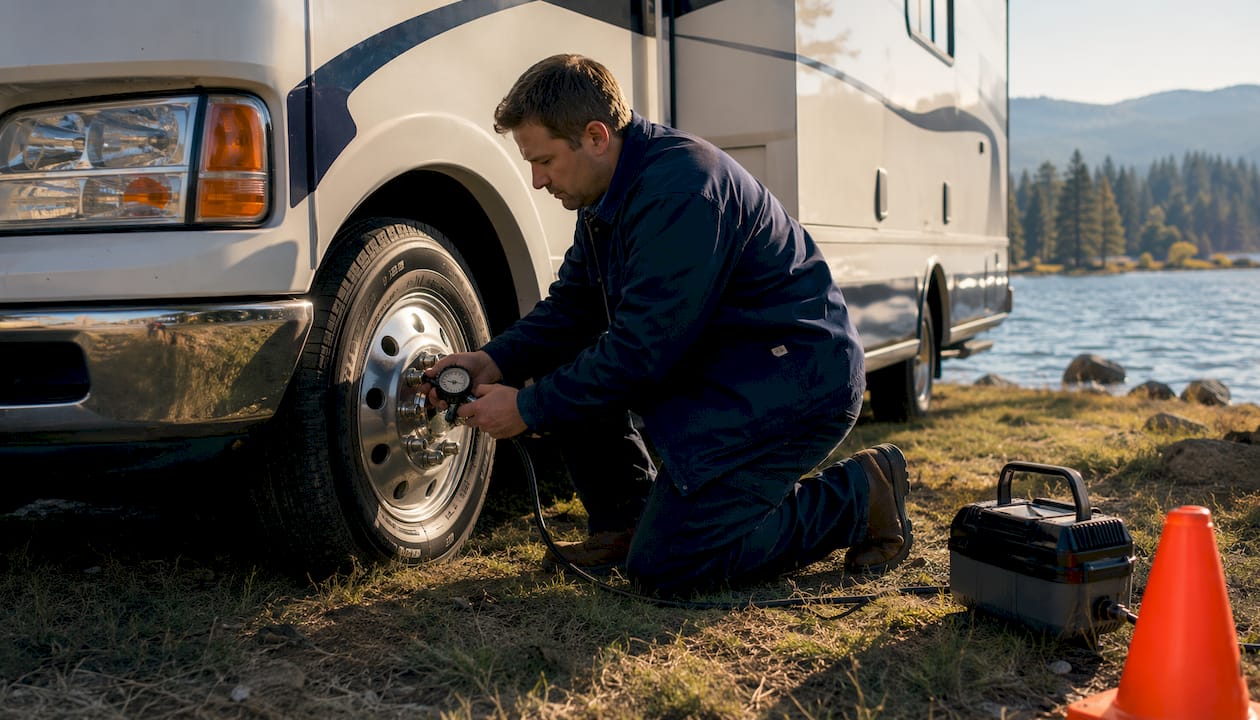
Low tire pressure is the leading cause of RV tire blowouts, and a blowout at highway speed can rip through your floor, destroy plumbing lines, and cause a crash. Check tire pressure before every single trip, inflate to the manufacturer’s specification, and replace tires every several years regardless of how much tread remains. Age degrades rubber even when the tread looks fine.
Leveling jacks are for stability, not leveling. Cranking scissor jacks or rear electric stabilizers down to lift a low side will bend the arms, warp your chassis frame, and cause doors and cabinets to bind. Use leveling blocks under your tires to achieve a level plane first, then drop stabilizers until they make snug contact with the ground.
Plugging shore power into a live pedestal while your air conditioner or electric fireplace is running causes arcing and can fry your control boards. Always turn off high-draw appliances before connecting, and inspect the pedestal for corrosion or damage before you plug in. A dedicated surge protector or Electrical Management System adds a critical layer of protection.
Key safety checks before every trip:
- Tire pressure verified and inflated to spec
- Hitch coupler latch physically tested after coupling
- Electronic brake controller gain calibrated for current load
- Roof lap sealant inspected every 90 days for cracks
- 12V water pump switched off before driving
- Full walk-around completed before pulling out
3. Trip planning and travel pacing to prevent burnout
The 3-3-3 rule is the most widely used pacing guideline among experienced RVers: drive a moderate distance per day, stop in the afternoon, and stay multiple nights at each location. A more relaxed version, the 2-2-2 rule, caps daily driving at 200 miles and targets a 2 PM arrival with a minimum two-night stay. Both rules exist because setup, grocery runs, and exploring a new area all take longer than they do at home.
Booking reality check: National Park campgrounds require reservations 4–6 months in advance for peak season, and some popular spots book out up to 12 months ahead. Standard RV parks typically need a few weeks of lead time. Book your anchor campgrounds first, then fill in connecting nights.
Experienced RVers consistently warn against over-planning and trying to replicate home routines on the road. Grocery runs take longer. Setup takes longer. Expecting home-speed efficiency in an RV environment leads to frustration and rushed driving decisions.
Pacing principles worth following:
- Cap daily miles at 200–300 to keep travel enjoyable
- Always arrive in daylight, targeting 2–4 PM at the latest
- Book National Park sites 4–6 months out, sometimes a full year for peak dates
- Focus on 1–3 regions deeply rather than rushing coast to coast
- Build in at least one rest day for every three travel days
- Stay flexible; rigid itineraries crack fast on the road
4. Campground etiquette and lifestyle considerations
Campground rules exist for everyone’s comfort, and breaking them makes you the neighbor nobody wants. Quiet hours are typically 10 PM to 7 AM; running a generator or playing loud music outside those windows is a fast way to get a knock on your door. Walk around campsite perimeters, not through them. Cutting between rigs is considered rude in virtually every campground community.
Pull-through sites are strongly recommended for beginners. You drive straight in and straight out, which removes the stress of backing a large rig into a tight space on your first few trips. As your skills build, back-in sites become less intimidating.
Awnings deserve special attention. Never leave yours extended while you are away from the site or sleeping. A sudden wind gust can tear an awning off the rig entirely, and the repair bill is painful. Retract it any time you step away for more than a few minutes.
Waste disposal etiquette matters beyond your own rig. Use designated dump stations, never dump gray water on the ground, and always rinse the dump station hose connection after use. Introduce yourself to neighbors. The RV community is genuinely welcoming, and local meetups through groups like Escapees or XROADS are worth attending.
5. Managing grey and black water tanks properly
Leaving your black tank valve open at a full-hookup site is one of the most common and costly beginner mistakes. It feels logical to let waste drain continuously, but solid waste dries out and builds up into what RVers call a “pyramid plug,” a blockage that can require professional removal. Keep both valves closed and only dump the black tank when it reaches about two-thirds capacity. That volume creates enough hydraulic force to flush the tank clean.
Always dump the black tank first, then open the gray tank to rinse the sewer hose with relatively cleaner water. Verify that your sewer hose connections are locked tight with all four tabs engaged and that the hose runs downhill without loops. An uphill loop traps waste and causes leaks. Use plenty of water when flushing, and consider a tank wand for periodic deep cleaning.
6. Winterizing and weather precautions
Freezing temperatures and an unwinterized RV are a bad combination. Water left in lines, tanks, and the water heater will expand when it freezes, cracking PEX lines and fittings that are hidden behind walls and floors. Winterizing means draining all water systems, blowing lines with compressed air or adding non-toxic RV antifreeze, and bypassing the water heater before adding antifreeze to the system.
Weather affects more than just freezing. High winds are a serious hazard when you are driving a 40-foot box down an open highway. Check forecasts before every departure, not just at your destination but along the entire route. Campgrounds near the coast or in open plains can see wind gusts that make driving dangerous and awnings destructive. Full-hookup sites with electric heat are worth the extra cost when temperatures drop unexpectedly.
7. Using the right toilet paper in your RV
Standard household toilet paper does not break down fast enough in an RV black tank. It clumps, contributes to blockages, and makes tank sensors read inaccurately. RV-specific or septic-safe toilet paper dissolves much more quickly in water, which keeps your tank sensors accurate and your plumbing clear.
A simple test: drop a few sheets into a jar of water, put the lid on, and shake it for 20 seconds. RV-safe paper will dissolve into a loose slurry. Regular household paper will stay mostly intact. Use only paper that passes that test, and you will avoid a surprisingly common source of tank problems.
8. Choosing the right tow vehicle
Mismatching a tow vehicle to a trailer is a safety issue, not just an inconvenience. Every trailer has a Gross Vehicle Weight Rating (GVWR), and your tow vehicle must have a tow capacity that exceeds that number with a real margin, not just on paper. Factor in the weight of passengers, gear, and a full fresh water tank when calculating your actual loaded weight. Weigh your rig at a CAT scale fully loaded to know exactly where you stand.
Tongue weight matters too. The trailer’s tongue weight should fall between 10% and 15% of the total trailer weight. Too little tongue weight causes the trailer to sway; too much overloads the rear axle of the tow vehicle. A weight distribution hitch and sway control system are worth adding if you are towing anything over 5,000 pounds. Check your tow vehicle’s owner manual for its specific ratings, not just the sticker on the door jamb.
9. Route planning that actually works for your rig
Google Maps will give you the fastest route. It will not give you the safest route for your specific rig. It does not know your height, your weight, or whether you are carrying propane through a tunnel that bans it. Most major tunnels in the United States prohibit propane, including the I-70 Eisenhower Tunnel in Colorado and the Baltimore Harbor Tunnel. Turn off propane at the tank valve before any tunnel crossing.
Bridge clearance signs often reflect the original posted height, but repaving can lower actual clearance by several inches. Subtract at least 6 inches from any posted clearance as a conservative buffer. Know your rig’s exact height including the air conditioner, antennas, and any rooftop solar panels, and write it on a dashboard sticker so you never have to guess. Use an RV-specific GPS app or route planner that filters for height restrictions, weight limits, and propane tunnels. Your rig’s dimensions should be entered into that tool before your first trip.
10. Checking the weather before every trip
Weather is not just a comfort issue for RVers. It is a safety issue. High winds make large rigs difficult to control and can push a Class A motorhome across lane lines. Freezing rain turns campground access roads into hazards. Flash flood warnings in canyon country can trap you at a campsite for days.
Check the forecast for your entire route, not just your destination, at least 24 hours before departure. Apps like Weather Underground or the National Weather Service provide hour-by-hour forecasts that are more granular than standard weather apps. If severe weather is forecast along your route, delay the trip. A flexible itinerary makes that decision easy; a rigid one makes it stressful.
11. Maintaining your RV systems on a regular schedule
Deferred maintenance is where small problems become expensive ones. A cracked roof seal ignored for one season can allow water to penetrate the roof membrane, rot the decking, and delaminate the walls, turning a $30 tube of lap sealant into a $5,000 repair. Inspect every inch of roof sealant every 90 days and touch up any section that shows cracking or weathering.
Industry experts recommend keeping a dedicated maintenance fund and learning your rig’s systems early, before something breaks. Monthly walk-throughs should cover roof seals, battery charge levels, brake function, plumbing connections, and any soft spots in the floor or walls. Soft spots mean water intrusion. Treat them as urgent, not cosmetic. For ideas on compact RV kitchen gear that fits your maintenance-first mindset, stackable cookware sets designed for RV use keep weight and storage space in check.
12. Understanding weight limits and avoiding overloading
Every RV has a Gross Vehicle Weight Rating (GVWR), a Gross Axle Weight Rating (GAWR), and a Cargo Carrying Capacity (CCC). The CCC is the number that tells you how much you can actually add to a fully equipped rig, including passengers, gear, food, and water. Water weighs 8.3 pounds per gallon, which adds up fast when you are carrying a full 40-gallon fresh tank.
Overloading causes tire blowouts, trailer sway, poor braking performance, and suspension damage. Weigh your rig at a CAT scale fully loaded before your first long trip. Distribute weight evenly, keep heavy items low and centered over the axles, and travel with less fresh water when hookups are available. If you are over your GVWR, something has to come out of the rig, not just get rearranged.
13. Proper driving techniques for large vehicles
Driving an RV is a different skill set from driving a car, and assuming it will feel natural is a mistake that catches first-timers off guard. Turning radius is wider than you expect. Stopping distance is much longer. Lane changes require more mirror work and more time. Practice in an empty parking lot with cones before your first campground arrival.
Maintain a top speed of 60–65 mph on the highway, and drop lower in crosswinds or on mountain grades. Tailgating is dangerous in a heavy rig because stopping distance increases dramatically with weight. On downgrades, use engine braking rather than riding the service brakes, which can overheat and fade. If you are towing a trailer, recalibrate your electronic brake controller any time you significantly change the load inside the trailer.
14. Insurance requirements and coverage for the RV lifestyle
Standard auto insurance does not cover an RV the way RV-specific policies do. Full-time RVers, meaning those who live in their rig more than six months per year, typically need a full-timer policy that includes personal liability, total loss replacement, and coverage for personal belongings inside the rig. Part-time RVers can often get by with a recreational vehicle policy, but the coverage limits and exclusions vary widely between carriers.
Check whether your policy covers roadside assistance, emergency expenses if the rig is disabled far from home, and campsite liability. Some policies exclude coverage if the RV is used as a primary residence without a full-timer endorsement. Read the policy carefully before you assume you are covered. If you are financing the rig, your lender will require comprehensive and collision coverage at minimum.
15. Handling unexpected breakdowns and emergency preparedness
Breakdowns happen, and being unprepared for one turns a manageable situation into a crisis. A dedicated emergency fund of $2,000–$5,000 is the baseline recommendation from experienced RVers for covering surprise repairs without derailing your lifestyle. Keep that fund separate from your travel budget and treat it as untouchable except for genuine mechanical emergencies.
Carry a basic tool kit, extra fuses, a tire repair kit, duct tape, and zip ties. Know how to locate your rig’s main water shutoff, electrical breaker panel, and propane shutoff valve before you need them in an emergency. Roadside assistance through a provider that covers RVs specifically, not just standard auto policies, is worth the annual cost. Cell service disappears exactly when you most need it, so download offline maps before every trip.
16. Budgeting and managing expenses for RV living
Fuel is the biggest variable cost in RV travel, and it surprises most first-timers. A tow vehicle that normally gets 22 MPG can drop to 14 MPG while pulling a loaded trailer. Map your total mileage realistically before committing to a route, and factor in that fuel cost before you book anything. Track fuel from day one so you can adjust your route or pace if costs run high.
Beyond fuel, budget for campground fees, propane, maintenance, and the emergency fund mentioned above. Cooking most meals in the rig instead of eating out makes a real difference over weeks on the road. Free camping on Bureau of Land Management land or through programs like Harvest Hosts can dramatically reduce nightly costs once you are comfortable with the basics. Use a budget tracking app like Trail Wallet to keep daily spending visible. For ideas on organizing small living spaces efficiently, the same principles that apply to apartment living translate directly to RV life.
Ready to find the right RV for your lifestyle?
Starting with the right rig makes every mistake on this list easier to avoid. Gently Used RVs is a free online marketplace where private sellers and dealerships list used motorhomes, travel trailers, fifth wheels, toy haulers, and more across the United States and beyond.

Buyers can browse the full range of RV types without creating an account, with search results geotargeted to show the closest listings first. No commissions, no hidden fees, and no pressure. Whether you are looking for a Class B van for solo travel or a Class A motorhome for full-time living, Gently Used RVs connects you directly with sellers who have already done the ownership miles. Start browsing used RVs for sale today and find the rig that fits your actual lifestyle, not just your wishlist.
Key Takeaways
First-time RV owners who follow established pacing rules, maintain their rig consistently, and prepare the right gear before departure avoid the most common and costly mistakes in the RV lifestyle.
| Point | Details |
|---|---|
| Follow the 3-3-3 rule | Drive no more than 300 miles per day, arrive by 3 PM, and stay at least 3 nights per stop. The alternative 2-2-2 rule sets a 200 mile limit, 2 PM arrival, and two-night minimum. |
| Keep black tank closed | Only dump when the tank reaches two-thirds capacity to prevent solid waste buildup and blockages. |
| Check tires every trip | Low tire pressure is the leading cause of blowouts; replace tires every 5–7 years regardless of tread. |
| Budget for emergencies | Keep a dedicated repair fund of $2,000–$5,000 separate from your travel budget. |
| Gently Used RVs | Browse geotargeted used RV listings for free, with no account required, to find the right rig before your first trip. |
What experienced RVers actually wish they had known first
The conventional wisdom in most beginner RV content focuses on gear lists and campground apps. What it consistently underestimates is the psychological adjustment of slowing down. Experienced RVers do not just follow the 3-3-3 rule because it protects their tires or their refrigerator. They follow it because the RV lifestyle fundamentally rewards presence over pace, and most people need a few hundred miles of hard lessons before that clicks.
The mistake I see repeated most often is not a mechanical one. It is the assumption that the road will feel like home, just with a better view. It does not. Grocery runs take twice as long. Setup takes longer than you planned. The rig that seemed spacious at the dealership feels different after three weeks. None of that is a problem unless you have built a schedule that leaves no room for it.
The RVers who stick with this lifestyle long-term are the ones who treat the first year as a learning season, not a performance. They keep a maintenance fund, learn their rig’s systems before something breaks, and resist the urge to see everything at once. Exploring one or two regions deeply beats a frantic cross-country sprint every time, both for enjoyment and for building the kind of community connections that make the lifestyle sustainable.
Buy the right rig for where you actually are in life, not where you hope to be. A used Class C or travel trailer under 30 feet is where most successful long-term RVers started. The upgrade comes naturally once you know what you actually need.