
Full-time RV living costs an average of $2,750 per month, with monthly budgets ranging from $1,600 for frugal, slow-moving travelers to over $5,000 for those favoring luxury resorts and frequent relocation. This RV cost of living breakdown covers the four primary expense categories: campground fees, fuel, maintenance, and insurance. Understanding each category before you commit is the difference between a sustainable lifestyle and a financial surprise that sends you back to a lease. Whether you’re planning a full-time move or testing the waters, these numbers give you a realistic foundation.
How do campground fees and travel pace shape your RV budget breakdown?
Campground fees are the single largest and most variable line item in any RV living budget. Costs range from free boondocking on public land to over $1,200 per month at upscale RV resorts. National and state parks typically average $600–$900 per month. That spread alone can define whether your lifestyle is affordable or expensive.
Travel pace directly controls how much you pay for lodging. Staying in one place for a week or a month unlocks significantly lower nightly rates. Moving every two or three days forces you into transient pricing, which can push campground costs above $1,500 per month. Slow travel is not just a lifestyle preference. It is a financial strategy.
| Camping style | Typical monthly cost | Notes |
|---|---|---|
| Full boondocking | $0–$100 | Requires solar, water management |
| National/state parks | $600–$900 | Reservations often needed weeks ahead |
| Private campgrounds, long stay | $500–$800 | Weekly or monthly rates available |
| Luxury RV resorts | $900–$1,200+ | Amenities included; transient rates higher |
The type of RV you own also affects where you can camp. A large Class A motorhome cannot fit many state park sites, which pushes you toward private parks with higher fees. A compact travel trailer or Class B van opens up more free and low-cost options. If you want to understand how rig size affects your camping choices, the RV types guide at Gently Used RVs is a practical starting point.
- Commit to weekly or monthly rates whenever possible to cut nightly costs by 30–50%.
- Combine free boondocking nights with paid parks to balance comfort and budget.
- Use apps that map public land and dispersed camping to find legal, free sites.
Pro Tip: Book monthly rates at campgrounds in advance, especially in popular winter destinations like Arizona or Florida. Spots fill fast, and last-minute transient rates can double your lodging cost.
What are the typical fuel and maintenance expenses in full-time RV living?
Fuel costs depend almost entirely on how often you move. Slow travelers spend as little as $150–$200 per month on fuel, while those moving every few days can spend $500–$800. Most RVs get 6–12 miles per gallon depending on size, weight, and engine type. Regional gas and diesel prices add another layer of unpredictability.
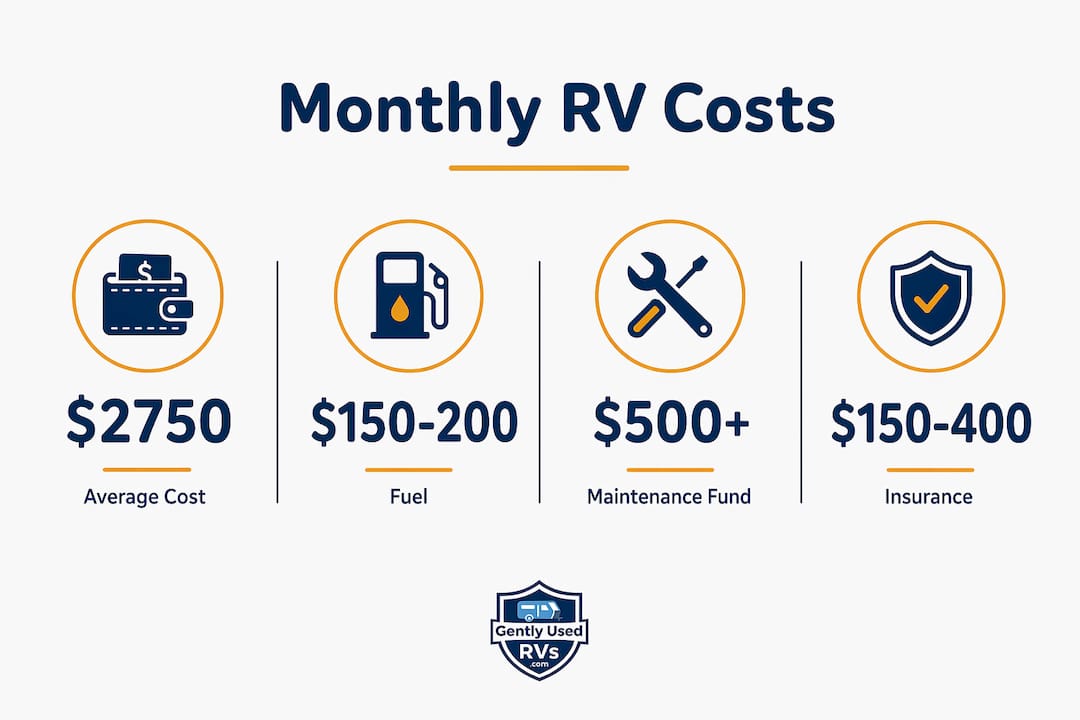
Maintenance is the expense that catches most new full-timers off guard. Budget 1–2% of your rig’s value annually for routine maintenance, which translates to roughly $200–$500 per month for a mid-range rig. Labor rates at RV service centers typically run $120–$140 per hour. A single tire replacement set costs $1,500–$3,000, and that is before you factor in slide-out repairs or appliance failures.
Here is what experienced full-timers budget for in the maintenance category:
- Routine oil changes, filter replacements, and fluid checks
- Tire inspections and eventual full replacement sets
- Roof seals, slide-out maintenance, and weatherproofing
- Appliance repairs including refrigerators, water heaters, and air conditioners
- Generator servicing if you rely on one for power
Experienced RVers maintain a dedicated emergency repair fund averaging $500 or more per month. That money sits untouched until a major repair hits. Without it, a blown tire or failed water pump can derail your travel plans entirely.
Pro Tip: Set up a separate savings account labeled “RV Emergency Fund” and automate a fixed monthly transfer into it. Treat it like a bill, not an option. When the repair comes, and it will, you will be glad you did.
How do insurance and health coverage affect your overall RV living budget?
RV insurance is a non-negotiable fixed cost, and it has gotten more expensive. Premiums have risen over 22% since 2024, with full-time coverage now averaging $150–$400 per month depending on your rig, domicile state, and coverage level. Full-time RV policies differ from standard recreational policies. Standard policies often exclude coverage when the RV is your primary residence, so getting the right classification matters.
Health insurance is often the biggest fixed expense for full-time RVers without employer benefits. Couples without employer plans typically pay $400–$1,500 per month for health coverage. That range reflects age, plan tier, and whether you qualify for marketplace subsidies. Many full-timers choose high-deductible plans paired with a Health Savings Account to manage costs.
Key insurance considerations for full-time RVers:
- Domicile state matters. Insurance rates vary significantly by state. South Dakota, Texas, and Florida are popular domicile choices partly because of favorable insurance and registration costs.
- Regional risk factors increase premiums. Traveling through hurricane-prone or hail-heavy regions can push rates higher.
- Full-timer endorsements are required. Standard RV policies do not cover full-time habitation. Confirm your policy includes this before you hit the road.
- Vehicle registration and annual fees vary by domicile state and add a smaller but real annual cost to your budget.
Health insurance planning deserves as much attention as your campground strategy. Many full-timers spend months researching coverage options before making the lifestyle switch. If you are new to the full-time concept, the beginner’s overview at Gently Used RVs covers the lifestyle basics alongside cost expectations.
What are the smaller but important recurring costs in RV living?
Beyond the big four expenses, a realistic RV budget breakdown includes several smaller but consistent costs that add up fast. Propane is seasonal. You will burn through it quickly in cold climates for heating and cooking, with typical monthly costs running $30–$100. In mild weather, propane use drops significantly.
Internet connectivity is a top fixed cost for anyone working remotely. The Starlink Roam plan costs $120–$175 per month and delivers reliable coverage in remote areas where cellular signals fail. Most remote workers add a cellular backup plan on top of Starlink, which pushes connectivity costs toward the higher end of that range. Reliable internet is not optional if your income depends on it.
Other recurring costs to build into your monthly RV expenses:
- Groceries and dining out. Food costs range from $400 to $1,000+ per month depending on how often you cook versus eat out.
- Mail forwarding services. Services like Escapees or America’s Mailbox charge $15–$30 per month to manage your physical mail.
- Streaming and subscription services. Budget $50–$100 per month for entertainment subscriptions.
- Campsite supplies and gear. Hoses, adapters, leveling blocks, and sewer equipment wear out and need replacement.
- Emergency hotel stays. Unexpected repairs can require hotel stays at $150 or more per night while your rig is in the shop.
Budgeting flexibility is critical because these smaller costs fluctuate monthly based on location, season, and travel pace. Build a 10–15% buffer into your monthly budget to absorb the variation without stress.
How do travel style and lifestyle choices directly impact your full-time RV budget?
Travel pace is the single most controllable cost lever in full-time RV living. Slower travel reduces fuel and campground expenses by up to 50% compared to frequent moving. A traveler who stays in one region for a month pays monthly campground rates, burns minimal fuel, and gives their rig a rest from road stress. A traveler who moves every three days pays nightly rates, fills the tank constantly, and accelerates wear on tires and chassis components.
Boondocking on Bureau of Land Management land or national forests eliminates lodging costs entirely. The trade-off is investment in solar panels, lithium batteries, and water storage. That upfront cost pays off quickly if you boondock regularly. Most experienced RVers recommend combining boondocking with occasional paid parks to balance cost savings with access to showers, laundry, and hookups.
| Lifestyle type | Estimated monthly cost | Key cost drivers |
|---|---|---|
| Frugal, slow traveler | $1,600–$2,000 | Boondocking, minimal fuel, basic coverage |
| Moderate, mixed camping | $2,500–$3,500 | Mix of paid and free sites, average fuel |
| Frequent mover, paid parks | $4,000–$5,000+ | High fuel, nightly rates, premium coverage |
Comparing RV living to a stationary housing budget reveals a real advantage for moderate travelers. A $2,500 monthly RV budget covers housing, transportation, and utilities in one number. A comparable apartment in many U.S. cities costs $1,800–$2,500 in rent alone, before adding car payments, utilities, and insurance. The math works in your favor if you travel at a moderate pace and avoid luxury campgrounds.
Pro Tip: Reassess your budget every three months. Your first three months on the road will reveal spending patterns you never anticipated. Adjust your travel pace and camping mix based on real data, not your pre-trip estimates.
Key Takeaways
Full-time RV living costs average $2,750 per month, with travel pace, campground choices, and insurance coverage as the three most controllable variables in your monthly budget.
| Point | Details |
|---|---|
| Monthly cost range | Full-time RV expenses run $1,600–$5,000+ depending on travel pace and camping style. |
| Campground fees vary widely | Free boondocking to $1,200+ monthly; slow travel unlocks lower long-stay rates. |
| Maintenance requires a reserve | Budget 1–2% of rig value annually and keep a $500/month emergency repair fund. |
| Insurance is a major fixed cost | RV insurance runs $150–$400/month; health insurance adds $400–$1,500 for couples. |
| Travel pace controls your budget | Slower travel cuts fuel and lodging costs by up to 50% compared to frequent moving. |
What I’ve learned after years of watching RVers get the budget wrong
The most common mistake I see is underestimating maintenance. People plan for fuel and campgrounds, then get blindsided by a $2,800 tire replacement or a $1,500 slide-out repair in month four. The rig does not care about your budget. It breaks on its own schedule.
The second mistake is ignoring health insurance until the last minute. It is the one expense that can genuinely wreck your finances if you choose wrong. A high-deductible plan sounds great until you need surgery in a state where your network does not reach. Research your options before you leave, not after.
Social media RV content shows the highlight reel. Stunning sunsets, perfect campsites, and zero mention of the $900 repair bill that kept someone parked for two weeks. Build your budget on real numbers, not Instagram aesthetics. The lifestyle is genuinely worth it for the right person. Just go in with clear eyes and a funded emergency account.
— Christopher
Your next step: find the right RV for your budget
Choosing the right rig is where your budget strategy becomes real. A Class A diesel pusher carries a very different cost profile than a lightweight travel trailer or a Class B camper van. The RV types guide at Gently Used RVs breaks down every category so you can match your lifestyle and monthly budget to the right vehicle before you buy.

Buying used is one of the most effective ways to reduce your starting costs and keep monthly expenses manageable. Gently Used RVs connects buyers with private sellers and dealerships across the United States and Canada, with no account required to browse listings. You can also search the dealer directory to find trusted dealerships near you. The right rig at the right price makes every other budget decision easier.
FAQ
What is the average monthly cost of full-time RV living?
Full-time RV living costs an average of $2,750 per month, with frugal travelers managing around $1,600 and luxury or frequent movers spending $5,000 or more.
How much should I budget for RV maintenance each month?
Budget $200–$500 per month for routine maintenance, plus a dedicated emergency fund of at least $500 per month to cover unexpected repairs like tire replacements or appliance failures.
Is full-time RV living cheaper than renting an apartment?
For moderate travelers who mix boondocking with paid campgrounds, RV living can cost less than renting in most U.S. cities, since one monthly budget covers housing, transportation, and utilities together.
How much does RV insurance cost for full-timers?
Full-time RV insurance averages $150–$400 per month after rising over 22% since 2024. Your domicile state, rig type, and coverage level all affect your premium significantly.
What is the cheapest way to live full-time in an RV?
The most affordable approach combines consistent boondocking on public land, slow travel to minimize fuel costs, and a used RV purchased below market value to reduce insurance and maintenance expenses.