Warranty Transferability in a Used RV Sale: Buyer’s Guide
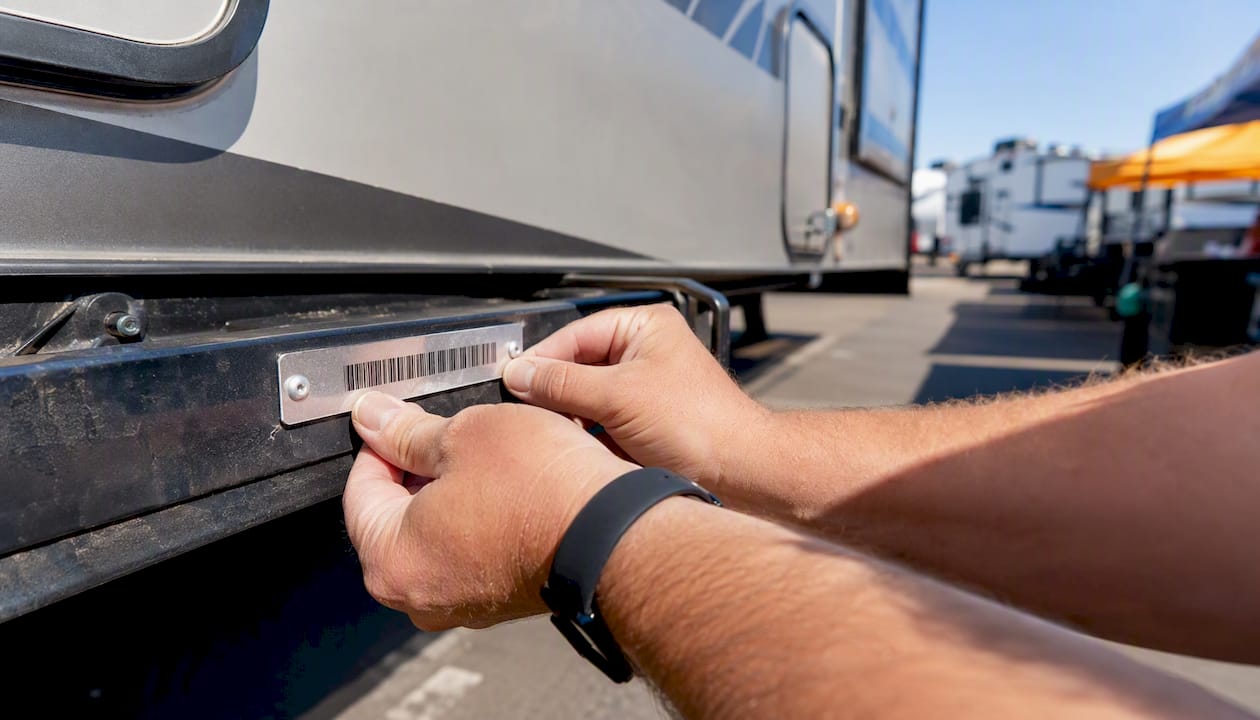
Some RV warranties do transfer to a new buyer — but whether yours will depends on the warranty type, the manufacturer’s registration rules, and how quickly you act after closing. The role of warranty transferability in an RV sale is bigger than most buyers realize: a transferable warranty reduces your financial exposure on a significant purchase, and it can be a genuine negotiating lever when the seller hasn’t thought to mention it.
Three things to know right now. First, most manufacturer warranties require registration within 30 days of the original delivery date, and that clock does not reset when ownership changes. Second, Grand Design’s warranty materials confirm that assignment to a new owner does not extend the warranty period — coverage still expires on the original schedule. Third, extended service plans behave differently from manufacturer warranties, and some transfer automatically while others require forms and fees.
Before you make an offer, demand the owner information package, the original warranty registration, and the VIN. Those three documents tell you almost everything.
Key Takeaways
Warranty transferability in a used RV sale depends on the warranty type, the original registration date, and how quickly you act — verify the VIN, confirm the registration window was met, and complete any transfer forms before closing.
| Point | Details |
|---|---|
| Transfer doesn’t extend coverage | The warranty period runs from the original purchase date regardless of how many owners the RV has had. |
| 30-day registration window | Most manufacturer warranties require prompt registration shortly after purchase of original delivery — that deadline affects transfer eligibility. |
| Component warranties are separate | Appliance and system warranties (Dometic, Lippert) require independent registration and transfer; the coach warranty doesn’t cover them. |
| Non-transferable? Negotiate | A missing warranty justifies a lower price, a repair escrow, or a new extended service plan financed at closing. |
| Gently Used RVs | Browse dealer and private listings with direct messaging to request warranty documents before you visit or make an offer. |
Table of Contents
- What should you ask the seller before buying a used RV?
- How does warranty transfer generally work, and what rules apply?
- How do you verify and complete a warranty transfer step by step?
- How does a transferable warranty change your negotiating position?
- What are your options when the warranty won’t transfer?
- What are your responsibilities after a warranty transfer?
- Documents to collect from the seller at closing
- Why warranty transferability matters more than most buyers expect
- Find documented used RVs on Gently Used RVs
- Sources
What should you ask the seller before buying a used RV?
Start this conversation before you ever drive to see the unit. Sellers who can’t produce basic warranty paperwork at listing contact are a yellow flag — not necessarily a scam, but a sign you’ll be doing extra legwork.
Documents to request:
- Owner information package (the full manual set, not just a quick-start card)
- Original warranty registration confirmation from the manufacturer
- VIN and model/serial numbers for the coach and major components (axles, refrigerator, A/C, generator)
- Service records with dates, mileage, and the shop that performed the work
- Any extended service plan contract, including the policy number and administrator contact
Live verification steps:
- Call the manufacturer’s customer service line with the VIN and ask whether the warranty is still active, when it expires, and whether it’s eligible for transfer
- Ask the dealer or manufacturer whether the original registration was completed within the required window (often 30 days of delivery)
- Confirm whether a transfer form is required and what the fee is
Verifying transferability before purchase is the single most practical step buyers skip — and the one most likely to save them money.
Pro Tip: If the seller is uncertain about the transfer status, offer a conditional deposit held in escrow until you receive written confirmation from the manufacturer that the transfer is complete. Most motivated sellers will agree.
How does warranty transfer generally work, and what rules apply?
Warranty transfer in the RV world isn’t one process — it’s several, depending on which warranty you’re dealing with.
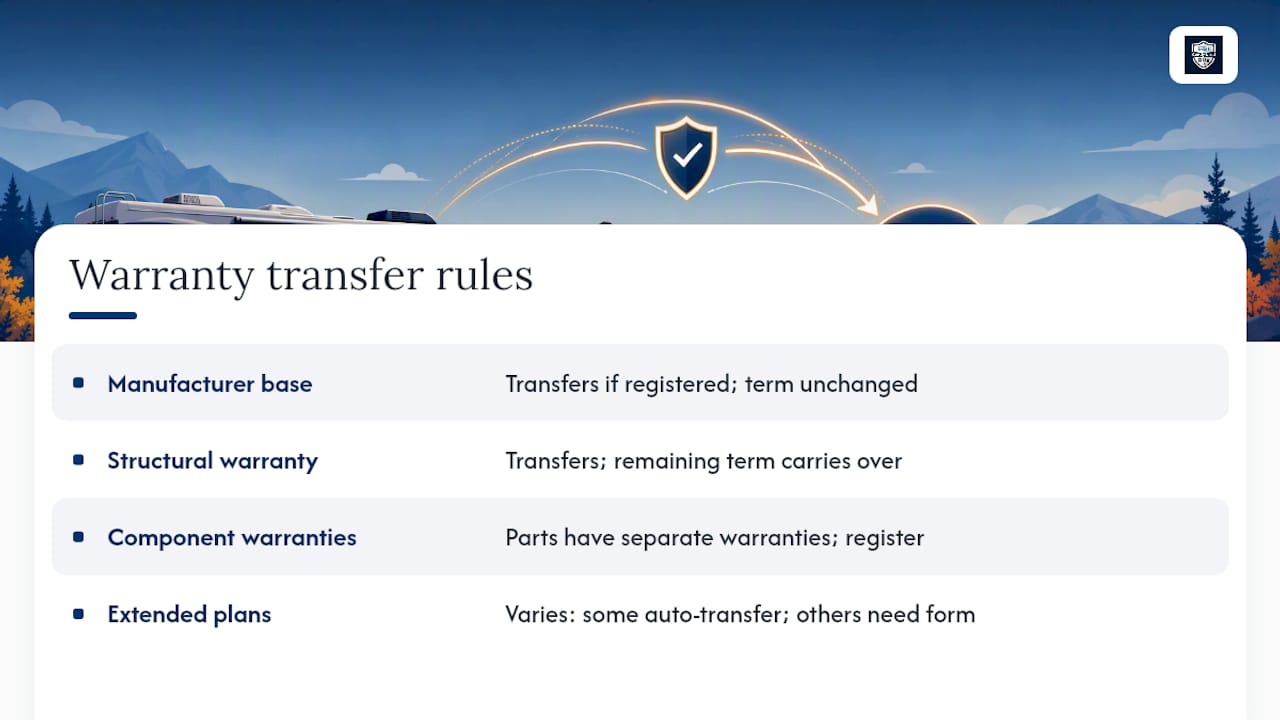
Manufacturer base warranty. This covers defects in materials and workmanship on parts the manufacturer built. Grand Design’s warranty guide limits coverage to the original retail purchaser and their assignee, provided the assignment is registered within the warranty period. The warranty term runs from the original purchase date — full stop.
Structural warranty. Keystone’s 2026 Warranty Guide allows transfer of both the limited base warranty and the structural warranty to a subsequent retail purchaser, but the coverage period does not extend. A structural warranty with two years remaining transfers with two years remaining — not a fresh term.
Component warranties. Appliances, tires, and systems like the Dometic refrigerator or the Lippert slide mechanism often carry their own manufacturer warranties, registered separately. Grand Design’s warranty language explicitly limits the coach warranty to parts the company manufactured, which means a failed A/C unit may fall under a Dometic warranty the previous owner never transferred to their name.
Extended service plans. These vary the most. Good Sam’s Extended Service Plan transfers to a new owner and, for some plans, the transfer happens automatically at no cost to the seller. Other administrators require a form and a fee.
How do you verify and complete a warranty transfer step by step?
Follow this sequence before you sign anything at closing.
-
Get the VIN, original purchase date, and owner information package from the seller. The VIN is your key to every manufacturer lookup. The original purchase date tells you how much coverage remains.
-
Contact the manufacturer or an authorized dealer. Give them the VIN and ask: Is the warranty active? Is it registered? Is it eligible for transfer? What’s the transfer fee and deadline? Keystone accepts transfer registration via the My Keystone app, by phone, or by email — so there’s no excuse for a seller to say it can’t be done quickly.
-
Complete the transfer form and pay any required fee before closing. Wholesale Warranties explains that the standard extended-plan process involves contacting the policy administrator, submitting a transfer form, and paying a transfer fee. Get written confirmation — an email or a letter from the administrator — that the transfer is registered.
-
Confirm the receipt of registered transfer. Don’t accept a verbal “it’s done.” Ask for the confirmation number or document and attach it to your closing paperwork.
What counts as valid proof:
- A confirmation email from the manufacturer or plan administrator showing your name, the VIN, and the new registration date
- An updated warranty registration card in your name
- A dealer-stamped transfer form with a date
How does a transferable warranty change your negotiating position?
A transferable warranty is buyer protection you can price. When a used RV still carries active manufacturer coverage, your downside on a major repair in year one drops significantly. Extended plans with transferability — some covering up to seven years with low deductibles — can be included in financing when purchased at the time of sale, which gives sellers a concrete selling point and buyers a clear value anchor.
Practically, this plays out in a few ways:
- Price premium: An RV with transferable manufacturer warranty remaining is worth more than an identical unit with no coverage. Use the remaining coverage period as a line item in your offer.
- Seller-paid transfer fees: Ask the seller to cover the transfer fee as a condition of sale. Most fees are modest, and a motivated seller will agree.
- Escrow holdback: If the transfer isn’t confirmed before closing, negotiate a holdback — a portion of the purchase price held in escrow until the manufacturer confirms the transfer.
Pro Tip: When you’re ready to sell your own RV later, highlight the remaining warranty months and your full service history in the listing. Documented coverage is one of the fastest ways to increase your RV’s resale value and attract serious buyers.
What are your options when the warranty won’t transfer?
Don’t walk away automatically. A non-transferable warranty changes your negotiating position, not your ability to protect yourself.
- Negotiate a lower price. The absence of transferable coverage is a real cost — price it in. If a comparable unit with active warranty coverage is listed for $X, the non-warranty unit should be priced lower to reflect your added risk.
- Request a seller-funded repair escrow. Ask the seller to set aside a fixed amount at closing to cover any defects discovered within 30–60 days. This is especially reasonable on older units.
- Buy a new extended service plan. Plans like those offered through Lazydays can cover up to seven years and are often financeable. Buying at the time of purchase locks in the best rates.
- Get a thorough pre-purchase inspection. Hire a certified RV inspector — look for NRVIA-certified inspectors — before closing. Require documented corrective work on any defects found before you sign.
What are your responsibilities after a warranty transfer?
Receiving a transferred warranty isn’t the end of the process. You now own the obligations that came with it.
- Keep up with manufacturer-recommended maintenance intervals. Skipping an annual roof inspection or failing to winterize properly can void coverage.
- Use authorized repair locations. Most manufacturer warranties require repairs to be performed by an authorized dealer or service center. A shade-tree mechanic fix, however competent, may disqualify a future claim.
- File claims promptly. Grand Design’s warranty language requires notification within 20 days of discovering a defect. Missing that window can forfeit your right to a repair under warranty.
- Register component warranties separately. If the previous owner never transferred the Dometic or Lippert warranty to their name, contact those manufacturers directly with the component serial numbers.
Pro Tip: Keep a dedicated folder — physical or digital — with every service receipt, the transfer confirmation, and the warranty documents. Following basic RV maintenance practices and documenting each one is the fastest way to protect your claim rights if a dispute arises.
Documents to collect from the seller at closing
Every item below has a job. Don’t leave without it.
- Owner information package — contains the warranty booklet, appliance manuals, and component serial numbers
- Original warranty registration confirmation — proves the warranty was registered within the required window (often 30 days of delivery)
- VIN and component serial numbers — needed to call manufacturers and verify active coverage
- Service records — dated receipts showing authorized maintenance; gaps in the record can affect claim eligibility
- Extended service plan contract — includes the policy number, administrator contact, and transfer instructions
- Bill of sale — establishes the transfer date for any registration deadlines
| Document | Why it matters |
|---|---|
| Owner information package | Contains warranty booklet and all component serial numbers |
| Original warranty registration | Confirms the 30-day registration window was met |
| Service records | Demonstrates required maintenance was performed |
| Extended plan contract | Identifies administrator and transfer process |
| Bill of sale | Establishes your ownership date for transfer deadlines |
Keep copies in escrow or attached to your closing paperwork until you receive written transfer confirmation from the manufacturer or plan administrator.
Why warranty transferability matters more than most buyers expect
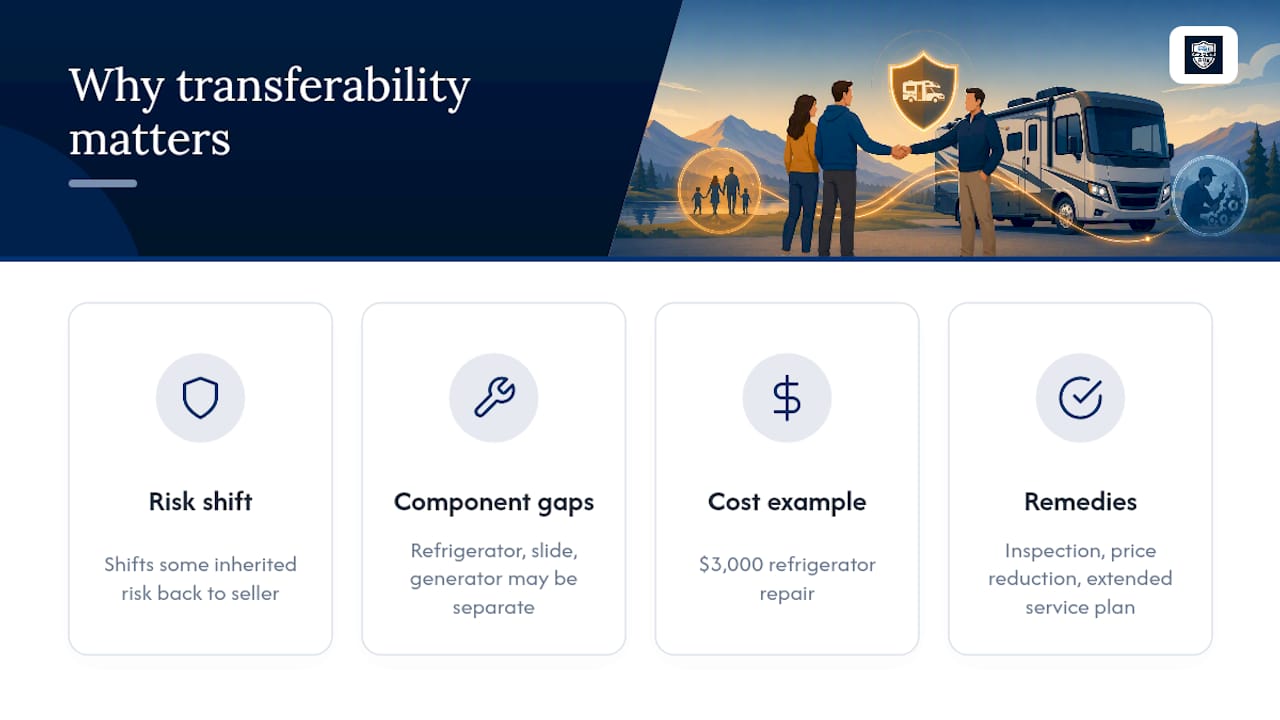
Buyers often treat warranty transferability as a bonus — a nice detail if it works out. That’s the wrong frame. When you’re buying a used RV, you’re inheriting the mechanical history of a vehicle that may have spent years on rough roads, in harsh weather, and under inconsistent maintenance. Transferable coverage is one of the few tools that shifts some of that inherited risk back toward the seller’s original transaction.
What I find underappreciated is the component warranty problem. Most buyers focus on the coach warranty and overlook the fact that the refrigerator, slide system, or generator may carry a separate manufacturer warranty that was never transferred — or was never registered in the first place. That’s where the real money gets lost. A $3,000 refrigerator repair on a unit you thought was “under warranty” stings differently when you discover the Dometic warranty lapsed because the previous owner never registered it.
The good news: even when nothing transfers cleanly, you have real options. A pre-purchase inspection, a negotiated price reduction, and a new extended service plan can collectively give you protection that rivals what a transferred warranty would have provided. The buyers who get hurt are the ones who assume coverage exists without verifying it.
Find documented used RVs on Gently Used RVs
Tracking down warranty paperwork from a private seller can feel like pulling teeth. Gently Used RVs makes it easier. The marketplace lets you filter by dealer or private seller, message sellers directly to request documentation before you visit, and browse listings from dealers who routinely include warranty and service records with their inventory.

Dealers listed in the Gently Used RVs dealer directory are often the fastest path to a unit with verifiable warranty documentation — they have the systems to pull registration records and complete transfer paperwork at closing. If you’re browsing private listings, the platform’s messaging tools let you ask for the owner information package and VIN before you ever make the drive. Search used RVs for sale across the country and filter by type, location, and price to find your next unit with the documentation already in hand.
Sources
- Warranty & Service Guide (Grand Design RV) — Rev. 05.2026
- WARRANTY (Keystone) — 2026 Warranty Guide
- How RV Warranty Transfers Work When Selling Your RV | Wholesale Warranties
- RV protection plans (Lazydays / Root)
- RV Extended Warranty | Good Sam Extended Service Plan
- Are RV Warranties Transferable? What RV Buyers Need to Know (HiddenSO)