Pop-Up Camper Pros and Cons: 2026 Buyer’s Guide
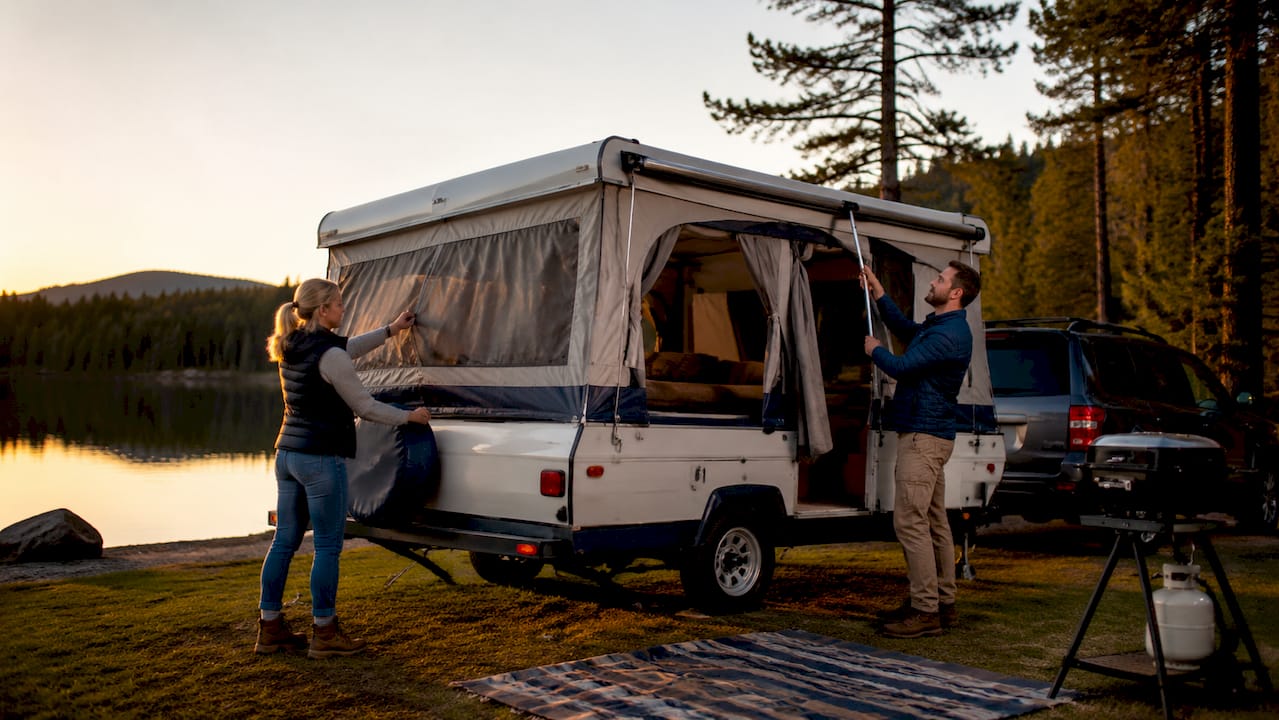
A pop-up camper is a foldable camping trailer with canvas sides that collapses to a compact unit for towing and storage. Also called a tent trailer or fold-down camper, these rigs sit at the intersection of tent camping and full RV ownership. They appeal to buyers who want more comfort than a tent but less cost and complexity than a travel trailer. If you are weighing the pop-up camper pros cons for your next outdoor adventure, this guide covers everything you need to make a confident decision.

1. What are the key advantages of pop-up campers?
Pop-up campers offer a strong set of benefits that make them the right call for many campers, especially first-timers and budget-focused buyers.
- Low purchase price. New pop-up campers range from $8,000 to $20,000, with entry models starting around $6,000 and used units available for as little as $1,500 to $2,000. That price gap compared to hard-sided travel trailers is significant for buyers on a tight budget.
- Easy towing. Pop-up campers weigh between 900 and 3,000 pounds loaded and fold to just 4–5 feet tall. That weight range puts them within reach of compact SUVs, minivans, and even some sedans, which most travel trailers cannot match.
- Better fuel efficiency. Pop-up campers burn less fuel when towing than larger RVs, thanks to their low profile and light weight. Over a season of weekend trips, that difference adds up.
- Garage storage. Pop-ups collapse small enough to fit in a standard residential garage, eliminating monthly off-site storage fees. For most campers, that saves hundreds of dollars per year.
- Close-to-nature feel. Canvas walls let in sounds, breezes, and ambient light in a way that hard-sided RVs simply do not. Pop-up campers deliver an outdoor experience similar to tent camping while keeping you off the ground with a real mattress and basic utilities.
- Lower insurance and maintenance costs. Simpler construction and lower replacement values translate directly to cheaper premiums and repair bills compared to Class A or Class C motorhomes.
- Modern amenities in newer models. Many current pop-up campers include wet baths, propane kitchens, and furnace heating. You are not roughing it as much as the canvas walls might suggest.
Pro Tip: If you plan to camp in spring or fall, look for models with a furnace and insulated sleeping decks. The canvas walls will still let cold air in, but a furnace keeps the interior livable well below freezing.
2. What are the main disadvantages of pop-up campers?
Every pop-up camper advantage comes with a trade-off. Knowing the drawbacks upfront prevents buyer’s remorse.
- Minimal insulation. Canvas sides provide very little insulation, making pop-ups poorly suited for extreme cold, heavy rain, or high winds. Temperature control is a constant challenge in shoulder seasons.
- Setup time. Experienced users need 10 to 30 minutes to set up, including leveling, raising the roof, and securing the canvas sides. That is longer than simply parking a hard-sided trailer and walking inside.
- Canvas durability risks. Canvas tears, zipper failures, and UV degradation are real concerns over time. Repairs are manageable but require attention and occasional professional help.
- Water damage risk. Storing a pop-up wet causes mildew within 24 to 48 hours, which can permanently ruin the canvas. One careless storage session can cost you thousands in repairs or replacement.
- Limited privacy and security. Canvas walls do not lock. Anyone with a knife can enter. That reality matters for campgrounds with high foot traffic or when camping solo.
- Noise transmission. Rain, wind, and campground noise pass through canvas walls with almost no reduction. Light sleepers find this a serious problem.
- Limited headroom and interior space. Most pop-ups feel cramped when standing. Compared to even a small travel trailer, the usable interior space is noticeably smaller.
- Shorter lifespan. Canvas and mechanical lift systems wear out faster than the fiberglass and aluminum construction of hard-sided trailers. A well-maintained pop-up lasts 15 to 20 years; a travel trailer can last 30 or more.
Pro Tip: Never pack up a pop-up if the canvas is still damp. If you break camp in the rain, plan to set it back up at home and let it dry completely before closing it for storage.
3. How does a pop-up camper compare to a travel trailer?
The pop-up camper vs travel trailer decision comes down to your priorities. Here is how they stack up across the factors that matter most.
Compared to travel trailers, pop-up campers have longer setup times and lower insulation but cost less and store more easily. That summary captures the core trade-off, but the details matter when you are spending real money.
| Feature | Pop-up camper | Travel trailer |
|---|---|---|
| Purchase price | $1,500–$35,000+ | $10,000–$80,000+ |
| Tow vehicle needed | Compact SUV or sedan | Full-size truck or SUV |
| Setup time | 10–30 minutes | 5–15 minutes |
| Insulation | Low (canvas walls) | High (fiberglass/aluminum) |
| Storage | Fits in a garage | Requires off-site storage |
| Interior space | Limited | Spacious |
| Fuel efficiency | Better | Worse |
| Lifespan | 15–20 years | 25–30+ years |
Travel trailers win on comfort, weather protection, and long-term durability. Pop-up campers win on cost, storage, and towing flexibility. For weekend trips and fair-weather camping, a pop-up is hard to beat. For extended stays, full-time living, or cold-weather camping, a travel trailer size that fits your needs will serve you better.
4. What practical tips should buyers know before purchasing?
Buying a pop-up camper is straightforward, but a few preparation steps separate a smart purchase from a costly mistake.
- Inspect used units for water damage. Water leaks cause hidden wood rot near corners and wheel wells. Press firmly on the floor and sleeping deck edges. Any soft spots are a red flag. Walk away or negotiate a steep discount.
- Test the lift system. Crank the roof up and down at least twice before buying. Cables fray, cranks seize, and lift mechanisms fail. Repairs are not cheap.
- Check every zipper. Canvas zippers are the first thing to fail on older units. Replacement is possible but time-consuming. Factor zipper condition into your offer price.
- Bring leveling tools. Setup requires leveling blocks and a bubble level in addition to raising the roof. A camper that is not level puts stress on the lift system and makes sleeping uncomfortable.
- Match the camper to your tow vehicle. Confirm your vehicle’s tow rating before you buy. A 3,000-pound loaded pop-up near the edge of a vehicle’s tow capacity creates a safety risk on hills and in crosswinds.
- Budget for canvas maintenance. Plan to treat the canvas with a waterproofing spray every one to two seasons. That small investment prevents the mold and leak problems that kill resale value.
- Set realistic space expectations. A pop-up camper is not a hotel room. If your family needs separate sleeping areas or a full bathroom, look at hard-sided options or accept that you will use campground facilities.
Pro Tip: Ask the seller to set up the camper fully before you inspect it. A seller who refuses that request is hiding something.
Key takeaways
Pop-up campers are the most affordable and portable entry point into RV camping, but canvas construction limits their weather protection, privacy, and long-term durability compared to hard-sided trailers.
| Point | Details |
|---|---|
| Affordable entry point | New pop-ups start around $6,000; used units can be found for $1,500 to $2,000. |
| Easy towing and storage | Weights of 900–3,000 lbs and garage-sized footprint suit most tow vehicles and homes. |
| Canvas is the weak link | Insulation, privacy, noise, and mold risk all trace back to canvas construction. |
| Setup takes real effort | Expect 10–30 minutes and bring leveling blocks, a bubble level, and patience. |
| Inspect before you buy | Check for soft spots, zipper condition, and lift system function on any used unit. |
My honest take after years of watching buyers choose wrong
Pop-up campers get oversold to the wrong buyers and undersold to the right ones. The campers who love them most are weekend warriors who camp in mild weather, store their rig at home, and value the outdoor feel over creature comforts. The campers who regret them are the ones who bought on price alone and then discovered they hate setting up in the rain or sleeping through a thunderstorm with canvas an inch from their face.
The canvas wall issue is not just about insulation. It changes the entire psychological experience of camping. Some people find it magical. Others find it stressful. You need to know which type you are before you spend money.
What I find underappreciated is the gateway value. Pop-up campers serve as a genuine stepping stone to full RV ownership. They teach you how to level, hook up utilities, manage a water system, and live in a small space. Buyers who start with a pop-up and move up to a travel trailer or Class C motorhome almost always make better decisions the second time around. That education is worth real money.
In 2026, newer pop-up models from brands like Jayco and Forest River have closed the amenity gap with better insulation packages, hard-top options, and improved canvas materials. If you are shopping used, units from 2018 onward tend to have better canvas quality and more durable lift systems than older models. Do not let a 2005 pop-up shape your opinion of the category.
The bottom line: if you camp in good weather, have a garage, and want to spend under $15,000, a pop-up camper is a genuinely smart choice. If you camp year-round, need privacy, or hate manual setup, look at the full range of RV types before committing.
— Christopher
Find your next pop-up camper on Gently Used RVs
Whether you are ready to buy or still comparing options, Gently Used RVs is a free marketplace where private sellers and dealerships list pop-up campers, travel trailers, motorhomes, and more across the United States, Canada, and internationally.

Buyers can search listings without creating an account, and results are geotargeted so you see the closest available units first. From entry-level pop-ups under $5,000 to fully equipped hard-sided trailers, the full RV inventory covers every budget and camping style. If you want to compare pop-up campers against other trailer types before deciding, the RV types guide breaks down every category with clear descriptions. No pressure, no commissions, and no account required to browse.
FAQ
How much does a pop-up camper cost?
New pop-up campers typically range from $8,000 to $20,000, with entry models starting around $6,000. Used units can be found for as little as $1,500 to $2,000 depending on age and condition.
Can any vehicle tow a pop-up camper?
Most pop-up campers weigh between 900 and 3,000 pounds loaded, which puts them within the tow rating of many compact SUVs and some sedans. Always verify your specific vehicle’s tow capacity before purchasing.
How long does it take to set up a pop-up camper?
Experienced users set up a pop-up camper in 10 to 30 minutes. The process includes leveling the trailer, raising the roof, securing the canvas sides, and connecting utilities.
Are pop-up campers good for cold weather camping?
Pop-up campers are not well-suited for extreme cold because canvas walls provide minimal insulation. Some newer models include furnaces and insulated sleeping decks, which extend the usable season into cooler temperatures.
What is the biggest risk when buying a used pop-up camper?
Water damage is the top risk. Leaks cause hidden wood rot near corners and wheel wells, and wet storage causes mildew that can permanently damage the canvas. Always inspect for soft spots and test the lift system before buying.