
Downsizing to RV living is the deliberate process of reducing your possessions, selling or donating what no longer fits a mobile lifestyle, and adapting your daily habits to thrive in a compact, road-ready home. Nearly 1 million Americans live full-time in RVs as of 2026, drawn by lower housing costs, geographic freedom, and a simpler way of life. The transition demands more than packing light. It requires a clear strategy, a realistic budget, and honest emotional preparation. This guide covers every stage, from sorting your belongings to managing monthly costs on the road.
What does downsizing to RV living actually look like?
Effective downsizing is a structured process, not a weekend purge. Experts recommend starting 3–6 months before your planned departure date. That timeline gives you space to make thoughtful decisions rather than reactive ones.
The most reliable framework is the 80/20 rule. You likely use 20% of your possessions 80% of the time. The rest is clutter that costs you money to store, move, and maintain. Apply this filter to every category: kitchen tools, clothing, furniture, hobby gear, and sentimental items.
Sort everything into four buckets:
- Keep: Items you use regularly and that fit RV dimensions and weight limits
- Sell: Furniture, electronics, and valuables that fund your RV purchase or travel budget
- Donate: Usable items that don’t sell quickly enough to justify holding
- Store: A small, time-limited category for genuinely irreplaceable items
Digitizing all paperwork, photos, and media eliminates entire boxes of physical storage. Cloud services and scanning apps consolidate years of documents into a single folder on your phone. This step alone frees up more space than most people expect.
Pro Tip: Once you move in, adopt the one-in, one-out rule. Every new item you bring into the RV means one existing item leaves. This single habit prevents clutter from creeping back.
The emotional side of this process is real. Letting go of a grandmother’s china or a college trophy feels like erasing part of your story. Give yourself permission to grieve those items. Take photos of meaningful objects before donating them. The memory survives even when the object doesn’t.
How do you choose what to keep and which RV fits your life?
Choosing what to bring starts with understanding your RV’s physical limits. Storage compartments, closet depth, tank capacities, and payload ratings all define what’s possible. Packing beyond your RV’s gross vehicle weight rating is both dangerous and illegal.
Prioritize items that serve multiple purposes. A cast iron skillet replaces a skillet, a griddle, and an oven dish. A folding table doubles as a desk and a dining surface. Foldable, stackable, and wall-mounted solutions earn their space. Bulky single-use gadgets, formal dress clothes, and large decorative items do not.
RV floorplan choice depends more on how you travel than on which features look appealing in a showroom. Frequent movers prioritize ease of setup and driving convenience. Those who stay in one spot for weeks at a time prioritize living space and storage depth.
| Travel style | Best RV category | Key advantage |
|---|---|---|
| Frequent mover | Class B or Class C motorhome | Quick setup, no tow vehicle needed |
| Moderate traveler | Class A motorhome or travel trailer | Balance of space and mobility |
| Stationary home base | Fifth wheel or park model | Maximum living space and storage |
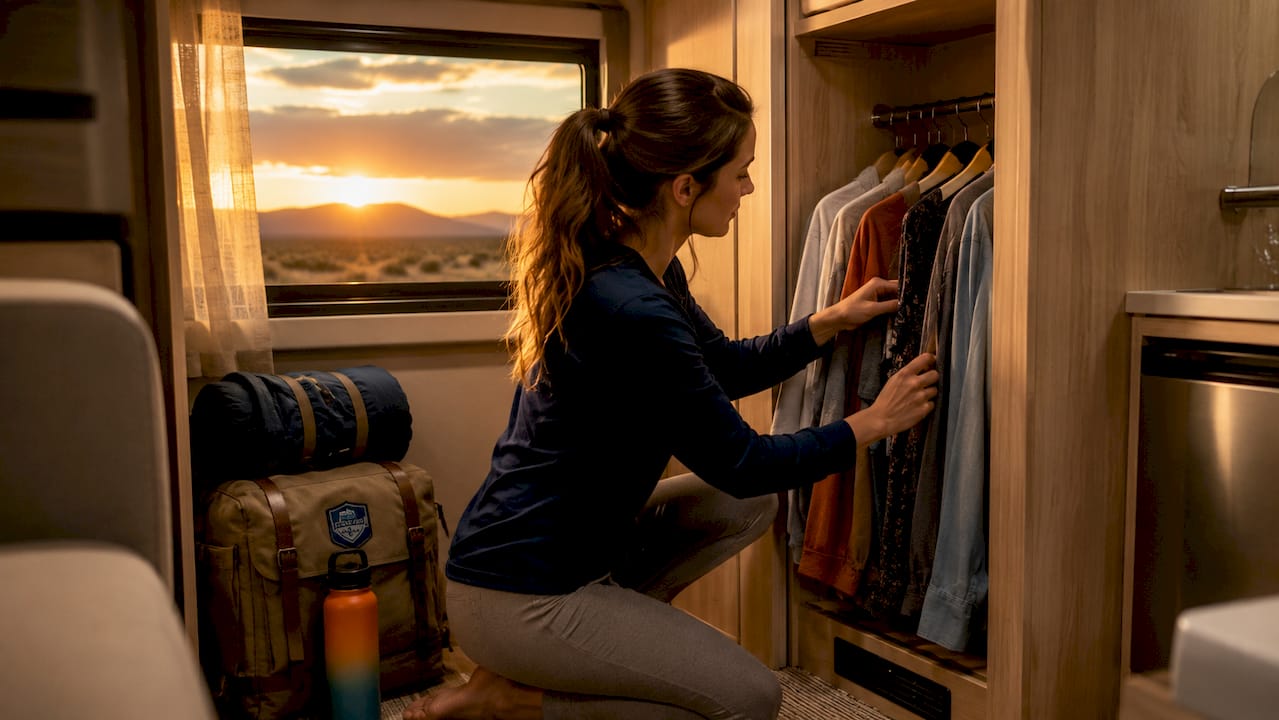
Closet space is the most underestimated constraint in RV living. A standard RV closet holds roughly 10–15 hanging items. Plan your wardrobe around a capsule system: neutral colors, layerable pieces, and fabrics that resist wrinkles. You can browse the full range of RV types and layouts to match your travel style before you commit to a purchase.
What are the realistic costs of full-time RV living?
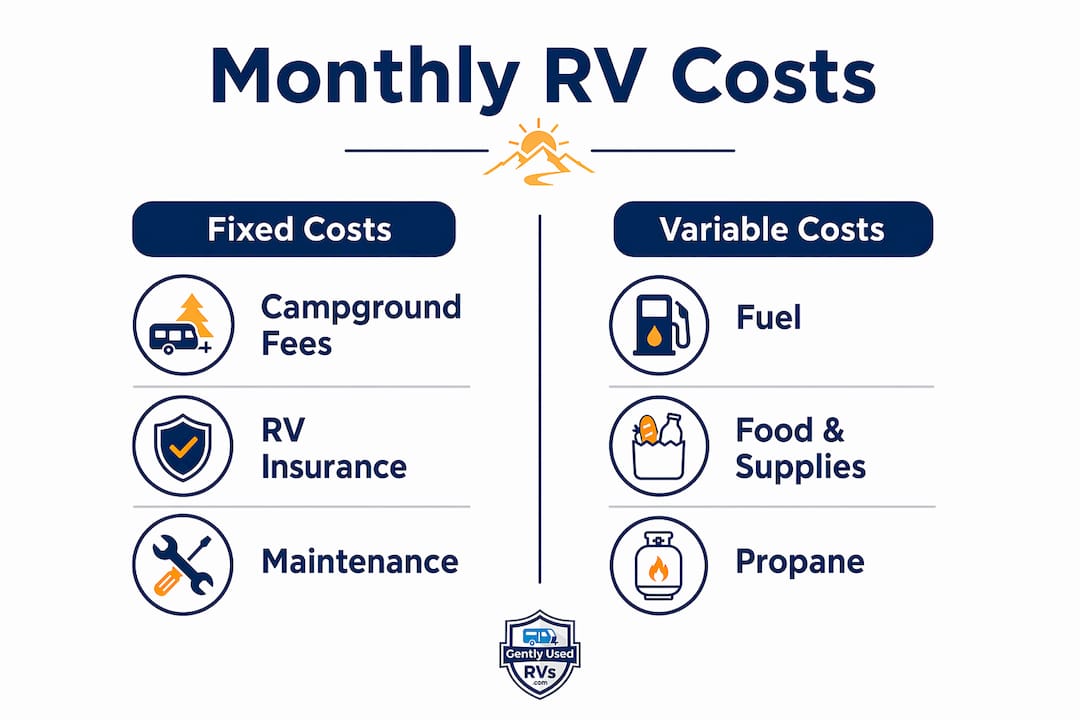
Full-time RV living is not automatically cheaper than renting an apartment. It reallocates expenses from property taxes and mortgage payments to fuel, campground fees, and maintenance. The total monthly cost depends almost entirely on how much you move.
Monthly costs range from $1,600 to $5,000 depending on travel frequency and campground choices. Stationary living runs $1,200–$2,000 per month. Frequent travelers spend $2,500–$4,000 or more. A middle-tier budget lands around $2,500–$3,500 monthly.
Here is a realistic monthly cost breakdown for a solo full-timer traveling moderately:
| Expense category | Estimated monthly cost |
|---|---|
| Campground fees | $400–$900 |
| Fuel | $200–$600 |
| RV insurance | $100–$200 |
| Groceries | $300–$500 |
| Internet and phone | $100–$200 |
| Maintenance reserve | $150–$400 |
| Miscellaneous | $100–$300 |
Maintenance is the budget line most new full-timers underestimate. Travel vibrations cause plumbing leaks, electrical faults, and structural wear that a stationary home never experiences. Set aside 10–20% of your annual budget as a contingency fund. Treat that reserve like rent. It is not optional.
Pro Tip: Boondocking, which means camping on public land without hookups, costs nothing. Combining slow travel with boondocking on Bureau of Land Management or National Forest land can cut your campground budget by more than half.
The benefits of RV ownership extend beyond cost savings. You gain location flexibility, the ability to follow good weather, and freedom from long-term lease commitments. Those intangible benefits carry real financial value when you factor in what you would otherwise spend on vacations.
How do you emotionally prepare for the transition to RV life?
The emotional weight of downsizing surprises most people. Possessions carry identity. A bookshelf full of novels represents who you were in your twenties. A garage full of tools represents the home projects you planned to finish. Letting go of these items triggers genuine grief, and a rushed timeline makes that grief harder to process.
A 3–6 month decluttering period is not just logistically practical. It gives your mind time to separate your identity from your stuff. Work through one room per week. Revisit difficult decisions after a few days rather than forcing them in the moment.
“The most effective preparation for RV life is not learning to pack light. It is learning to live light. The physical downsizing follows naturally once the mental shift happens.”
The “soft launch” strategy is the most underused tool in this transition. Renting out your home or taking extended leave while doing a 30–60 day RV trial run lets you test the lifestyle before burning your bridges. You discover quickly whether you can sleep well in a moving vehicle, share 300 square feet with a partner, and work remotely from a campsite.
Practical habits that protect relationships in tight spaces:
- Establish personal time and solo routines, even in a small rig
- Agree on shared responsibilities for driving, setup, and cooking before you leave
- Build in regular “town days” for errands, social contact, and mental reset
- Accept that conflict will happen and plan how you will handle it constructively
What habits sustain minimalist RV living over the long term?
Long-term RV living requires systems, not just willpower. The one-in, one-out rule prevents clutter from rebuilding itself over months of travel. Every item you add must displace something already on board. This rule sounds simple. It requires real discipline at every truck stop gift shop and hardware store.
Internet connectivity is a non-negotiable for remote workers. Nearly 1 million full-time RVers rely on cellular data as their primary connection, with video calls requiring a stable 5–10 Mbps signal. A redundant system works best: a primary cellular router from one carrier plus a backup hotspot on a second carrier or satellite service. Dead zones are real, and a single-point failure costs you a workday. For a deeper look at connectivity options, the remote work RV lifestyle guide covers hardware and carrier strategies in detail.
Mail management is another overlooked system. A virtual mailbox service scans your physical mail and delivers it digitally. Services like this eliminate the need for a permanent address while keeping you legally compliant for vehicle registration, banking, and voting.
Travel rhythm matters more than most people admit. Slow travel, meaning staying in one location for two weeks or longer, dramatically reduces fuel costs and setup fatigue. Frequent moves feel exciting at first. After three months, the constant packing and unpacking wears on most people. Build a rhythm that matches your energy, not just your itinerary.
Key Takeaways
Successful downsizing to RV living combines the 80/20 rule for possessions, a realistic monthly budget of $1,600–$5,000, and a 3–6 month emotional preparation period to make the transition sustainable.
| Point | Details |
|---|---|
| Start early | Begin decluttering 3–6 months before departure to avoid rushed, regretted decisions. |
| Apply the 80/20 rule | Keep only the 20% of possessions you use 80% of the time and sell or donate the rest. |
| Match RV to travel style | Frequent movers need motorhomes; stationary dwellers benefit from fifth wheels or travel trailers. |
| Budget for maintenance | Reserve 10–20% of your annual budget for repairs caused by travel wear and tear. |
| Use a soft launch | Test RV living for 30–60 days before selling your home to confirm the lifestyle fits. |
What I’ve learned about downsizing that most guides won’t tell you
Most downsizing guides treat the process as a logistics problem. Sort, sell, pack, go. What they miss is the identity crisis that hits around week three of decluttering, when you are standing in a half-empty living room wondering who you are without your stuff.
I have watched people stall their entire RV transition because they could not let go of a dining room table that “might be useful someday.” The table was never about utility. It was about the version of themselves that hosted dinner parties. Once they named that, they could let it go.
The other thing guides understate is how much the right RV purchase changes everything. Buying the wrong floorplan for your travel style creates daily friction that erodes the joy of the lifestyle fast. A couple who wants to stay put for months at a time in a Class B van will feel cramped and resentful within weeks. A solo traveler in a 40-foot Class A will dread every campsite with tight turns.
My honest advice: do the trial run before you sell the house. Rent an RV for three weeks. Drive it, cook in it, sleep in it through a rainstorm. You will learn more in those three weeks than in three months of research. And if you love it, you will commit with confidence rather than anxiety.
The freedom on the other side of downsizing is real. But it belongs to people who prepared for it, not just people who wanted it.
— Christopher
Find your next RV on Gently Used RVs
Ready to find the right rig for your downsized lifestyle? Gently Used RVs is a free classifieds marketplace where private sellers and dealerships list used motorhomes, travel trailers, fifth wheels, and more across the United States, Canada, and internationally. Buyers can search without creating an account, and listings are geotargeted so you see the closest options first.

Browse the full RV types guide to compare Class A, B, and C motorhomes alongside travel trailers and fifth wheels before you commit. If you already know what you want, search used RV listings by location, type, and price range to find a rig that fits your new minimalist life and your budget.
FAQ
How long does downsizing for RV living take?
Most people need 3–6 months to sort, sell, and donate belongings before moving into an RV full-time. Rushing the process leads to regret and poor decisions about what to keep.
What is the average monthly cost of full-time RV living?
Monthly costs range from $1,600 to $5,000 depending on travel frequency. Stationary living runs $1,200–$2,000 per month, while frequent travelers typically spend $2,500–$4,000 or more.
What type of RV is best for downsizing?
The best RV depends on your travel style. Frequent movers do best in Class B or Class C motorhomes, while those who stay in one spot longer benefit from a fifth wheel or travel trailer with more living space.
Do I need to sell my house before trying RV living?
No. A soft launch approach, where you rent out your home or take extended leave while doing a trial RV period, is the safest way to test the lifestyle before making a permanent commitment.
How do full-time RVers handle internet for remote work?
Most full-timers use a primary cellular router plus a backup hotspot on a second carrier or satellite service. A stable 5–10 Mbps connection handles video calls reliably in most locations.