What Roof Condition Really Does to Your RV’s Resale Value
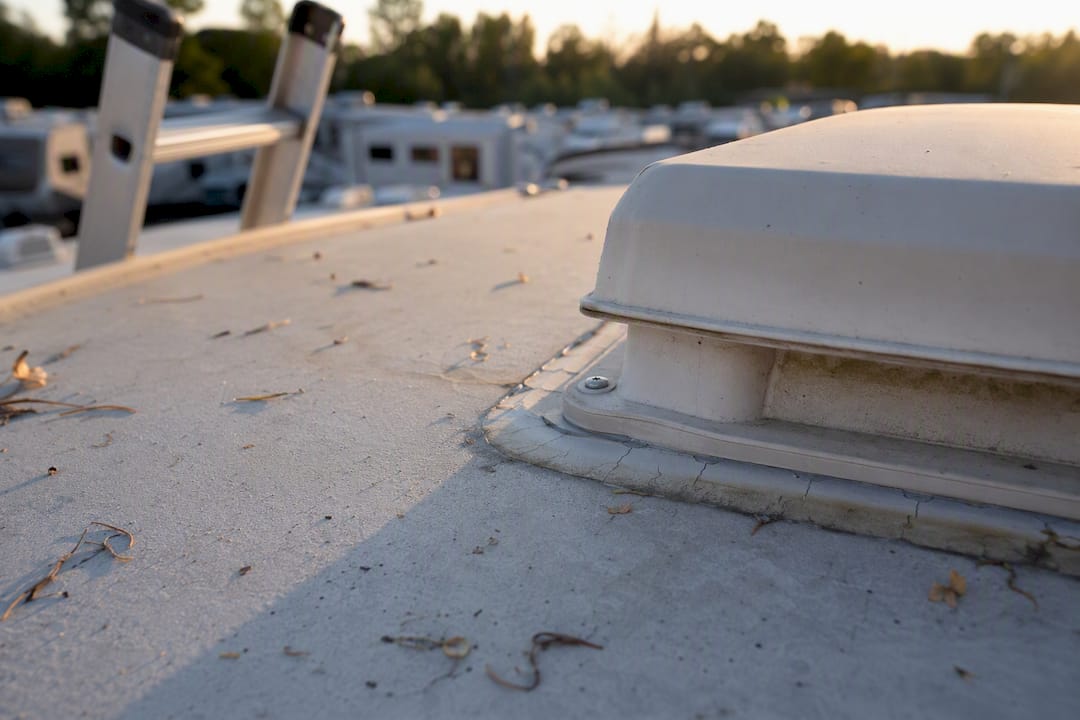
A cracked or stained RV roof doesn’t just cost you a repair bill. It shrinks your asking price, makes buyers second-guess everything else in the listing, and keeps your rig sitting in the marketplace for weeks longer than it should. Roof condition is often the single factor that decides whether a buyer sends an offer or scrolls past.
Three signals do most of the damage: visible cracking or staining, a missing maintenance history, and any hint of an active leak. Buyers read these fast, and so should you.
- See visible damage? Get a repair quote before you list.
- No paperwork? Pull together receipts and photos now.
- Suspect a leak? Order a moisture check before pricing.
Key Takeaways
Roof condition directly shapes asking price, buyer trust, and time on market, and documentation consistently outperforms cosmetic fixes at protecting all three.
| Point | Details |
|---|---|
| Price bands vary by severity | Minor cosmetic wear costs little; confirmed water intrusion causes the steepest asking-price cuts. |
| Documentation is a trust multiplier | Receipts and timestamped photos often reassure buyers more than a fresh but unverified repair. |
| Sloppy patches backfire | A rough reseal job raises more suspicion than an honestly disclosed, unrepaired issue. |
| Run the repair math first | Compare repair cost against realistic price uplift before investing in structural roof work. |
| Gently Used RVs supports documentation-first selling | Attach maintenance records and inspection PDFs free, and use paid tiers like Gold for wider buyer reach. |
Table of Contents
- How Much Value Does Roof Condition Typically Remove?
- How Roof Condition Affects Buyer Psychology and Time on Market
- Documenting Your Roof to Protect Price and Buyer Trust
- Should You Repair the Roof or Sell As-Is?
- Inspection Options That Speed Up Negotiations
- Quick Pre-Listing Checklist for a Faster Sale
- What Happens When You Ignore Roof Problems for Years
- A Marketplace Perspective on Roof Mistakes and Fixes That Work
- How Gently Used RVs Helps You Sell Past a Roof Concern
- Sources
How Much Value Does Roof Condition Typically Remove?
Roof condition doesn’t shave off value at a flat rate. It moves in bands depending on what a buyer or inspector actually finds.
Minor cosmetic wear, hairline sealant cracking, faded coating, a little chalking, usually costs sellers the least. Buyers expect some weathering on a used rig and will often negotiate a modest discount rather than walk. Suspected but unconfirmed leaks are a different animal: staining on ceiling panels or soft spots near a vent trigger far bigger price cuts because buyers assume the worst until proven otherwise. Confirmed water intrusion is the deal-killer. Once rot, delamination, or damaged insulation shows up in an inspection, buyers either demand a steep discount or leave the negotiation entirely.
Water intrusion is consistently the biggest inspection finding that kills deals, with moisture meter readings above roughly 20% in areas that should be dry treated as a hard red flag by inspectors and dealers alike.
Here’s a worked example. Say a reseal and minor repair runs $600 to $900. A seller who completes that work before listing, then documents it with photos and a receipt, can often defend an asking price that’s $2,000 to $4,000 higher than a comparable rig with unresolved staining, according to resale-value research from RV Guide USA. The repair cost is small next to the price protection it buys.
- Minor cosmetic wear: modest discount, often negotiable
- Suspected leak signs: larger discount, buyer hesitation
- Confirmed water intrusion: steepest cuts or lost sale
How Roof Condition Affects Buyer Psychology and Time on Market
Buyers don’t evaluate a roof in isolation. They use it as a proxy for how the whole RV was cared for, and that reaction shows up fast.
A patched sealant job that looks sloppy raises more suspicion than no repair at all. Inspectors flag rough resealing work as a reason to dig deeper, not a reason to relax, because a bad patch job suggests the seller cut corners rather than fixed the problem right. Ceiling staining reads as “what else is wrong in here,” even when the actual damage is minor. Formal inspection flags carry the most weight of all, since they hand the buyer specific language to justify a lowball offer or a walkaway.
A rig with a clean, documented roof tends to move through the marketplace noticeably faster than one with visible staining or vague seller answers, since buyers spend less time second-guessing and more time deciding.
To neutralize this before a showing:
- Photograph and caption any prior repair so it reads as proactive, not defensive.
- Have a one-line answer ready for “when was the roof last resealed?”
- Never let a buyer discover staining you didn’t mention first.
Documenting Your Roof to Protect Price and Buyer Trust
Documentation does more work than a spotless roof ever will. A buyer who sees a maintenance history relaxes; a buyer who sees a shiny roof with no paper trail still wonders what’s hiding underneath.

Start with photos: a wide shot of the entire roof, close-ups of every vent, skylight, and antenna penetration, and at least one interior ceiling shot per room. Timestamp them. Ten to fifteen photos in the listing is a reasonable target, enough to cover every seam without burying the buyer in redundant angles.
Build a simple maintenance binder, physical or digital, with reseal receipts, any professional inspection reports, and dated photos from past work. Summarize it in two sentences in your listing description: what was done, when, and by whom. Time-stamped photos and receipts consistently turn a roof from an unknown risk into a verified asset in the buyer’s mind, which is exactly the reframe you want before negotiations start.
Disclosure language matters here too. A line like “roof resealed in [month/year], receipts available on request” does more to close a sale than silence ever will.
Pro Tip: Attach your maintenance binder as PDF photos directly to your listing rather than making buyers ask for it. The ones who never ask are often the ones who assumed the worst and moved on.
Should You Repair the Roof or Sell As-Is?
Run the math before you touch a caulk gun. Start with a repair estimate, then estimate the realistic price uplift that repair buys you, and compare the two.
Say a reseal costs $700 and typically supports a $2,500 higher asking price on a comparable listing. That’s an easy yes. But if an inspector finds delamination requiring a partial roof replacement at $3,500 to $6,000, run the same comparison against what buyers are actually paying for rigs with disclosed structural roof work. Sometimes selling as-is with a clear price adjustment and full disclosure nets you more than sinking money into a repair buyers will still discount.
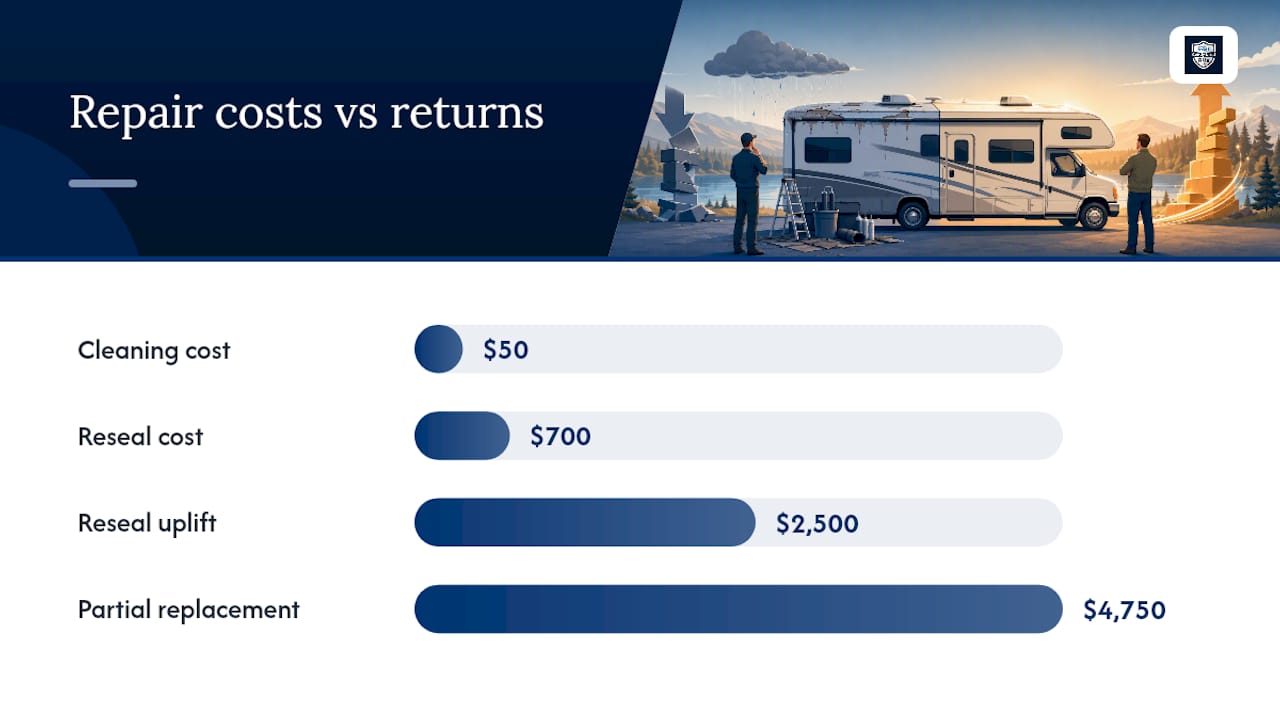
A rough threshold rule: small cosmetic reseals almost always pay for themselves. Structural repairs, sub-flooring, delamination, insulation replacement, rarely return their full cost at resale, so price the discount instead of chasing a repair you won’t recoup.
Pro Tip: A thorough roof cleaning and fresh UV protectant coating can improve perceived condition for under $50 in materials. Skip anything that looks like a cosmetic patch over a real problem. Buyers who spot a sloppy quick fix often assume you’re hiding something bigger, and that suspicion costs more than the repair would have.
- Small reseal, clear payoff: do it before listing
- Structural repair, unclear payoff: disclose and price accordingly
- Cosmetic-only patch: skip it if it looks rushed
Inspection Options That Speed Up Negotiations
A visual inspection catches obvious cracking and staining but misses hidden moisture. A moisture meter check goes further, testing suspect areas for trapped water before it becomes visible damage. A certified technician report combines both and gives you a document buyers can trust without your input.
A specific, itemized inspection report lets sellers negotiate on exact line items instead of absorbing a broad, open-ended price cut. Attach the PDF report alongside your photo set and reference it directly in buyer messages.
A pre-sale inspection is worth the cost whenever the alternative is a buyer’s own inspector finding something first, since that scenario almost always costs more than the inspection itself.
- Visual inspection: catches obvious surface issues
- Moisture meter check: confirms or rules out hidden water
- Certified report: gives buyers a document they can trust
Quick Pre-Listing Checklist for a Faster Sale
Do these before you post:
- Clean the roof and photograph it in full daylight.
- Gather receipts and reseal dates into one file.
- Disclose any known issue in the listing text, not just in person.
- Order a targeted moisture check if staining exists anywhere inside.
- Consider a pricing upgrade for extra visibility if your roof history needs more buyer explanation time.
Keep your messaging consistent between listing text and buyer chat. Surprises at inspection cost far more trust than an upfront disclosure ever does.
What Happens When You Ignore Roof Problems for Years
Neglect compounds. A roof issue that would have cost a few hundred dollars to reseal in year one can become a multi-thousand-dollar delamination or structural repair by year four, and that timeline shift changes the entire resale conversation.
Roof health connects directly to resale value because water intrusion from a failed roof membrane doesn’t stay contained. It travels into wall cavities, subfloors, and insulation, turning a single-point fix into a systemic repair. By the time a buyer’s inspector finds rot or soft flooring traced back to roof failure, the asking price conversation isn’t about a reseal anymore. It’s about a partial rebuild, and buyers price that risk aggressively.
Long-neglected roofs also take longer to sell, not just for less money. Buyers who spot visible sagging, extensive staining, or a roof membrane that’s clearly past its service life often walk rather than negotiate, assuming there’s more wrong than what’s visible. That leaves sellers cycling through price drops, relisting, and longer stretches on the marketplace. A roof maintained on a normal schedule, resealed every few years and inspected before major trips, almost never reaches this point. The gap between “minor annual upkeep” and “walked away from inspection” is usually a few hundred dollars and a couple of years of deferred maintenance.
A Marketplace Perspective on Roof Mistakes and Fixes That Work
Documentation beats last-minute cosmetic effort almost every time. Sellers who spend a weekend cleaning and re-caulking a roof right before listing often make less impact than sellers who simply attach an old reseal receipt from two years ago. Buyers trust a paper trail over a fresh coat of sealant they can’t verify.
The listing changes that consistently shorten time on market: clear, well-lit roof photos, an attached inspection PDF when one exists, and paid visibility upgrades that put the listing in front of more serious buyers faster. None of these require fixing the roof itself.
The cautionary pattern worth remembering: a sale stalls hardest when a buyer discovers roof history the seller never mentioned. Price adjustments are negotiable. Trust, once broken mid-negotiation, usually isn’t.
How Gently Used RVs Helps You Sell Past a Roof Concern
A less-than-perfect roof doesn’t have to mean a lowball offer or a stalled listing; following DIY RV Maintenance Tips for Beginners can help you address common issues and build buyer confidence. Gently Used RVs lets you attach your maintenance binder, receipts, and inspection PDFs directly to your listing at no cost, so buyers see your documentation before they ever ask a question.

If your roof history needs more room to make its case, Gently Used RVs’ paid tiers give you the tools to do it. The Gold plan adds nationwide visibility, live buyer chat, and appointment scheduling, useful when you’re selling a rig with a documented repair history to a wider, more patient buyer pool who wants to review your paperwork before committing. The AI-powered autofill tool also speeds up the listing process itself, pulling year, make, model, specs, and photos straight from another URL so you can spend your time on roof photos and documentation instead of retyping specs.
Start by reviewing the listing pricing tiers to see which visibility level fits your roof’s story, then post your RV with your documentation attached from day one.
Sources
- RV Pre-Purchase Inspection: Hidden Damage That Kills Deals | The RV Smith
- How to Maximize Your RV’s Resale Value – RV Guide USA
- How to Inspect a Used RV Before You Buy - Bob Hurley RV
- The Connection Between RV Roof Health and Resale Value – Young Farts RV Parts