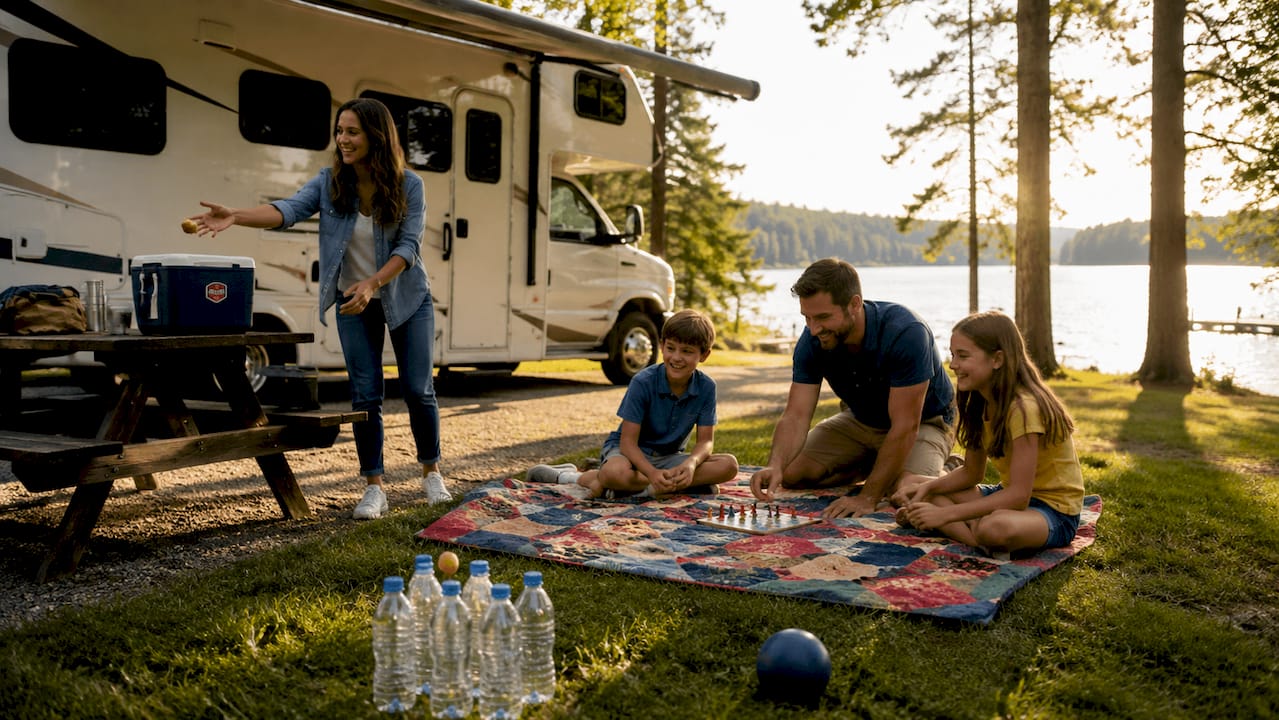
RV family travel tips are the difference between a trip your kids beg to repeat and one everyone wants to forget. Traveling in an RV with children means managing safety, space, schedules, and sanity all at once. The good news is that families who plan ahead, pace themselves wisely, and build kid-friendly routines consistently report better trips. This guide covers the core strategies that experienced RV families rely on, from the 3-3-3 rule for daily driving to child safety seat requirements and campground booking timelines that actually work.
What are the best RV family travel tips for planning your route?
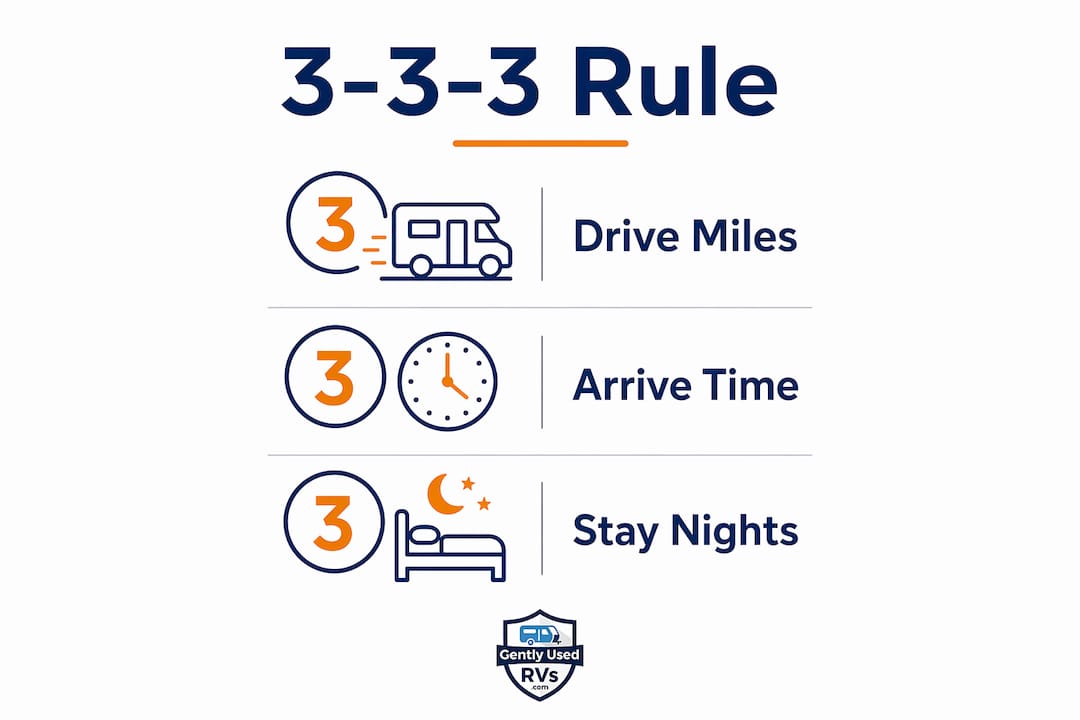
Smart RV road trip planning starts with one rule that experienced families swear by: the 3-3-3 rule. Drive no more than 300 miles per day, arrive at your campsite by 3 PM, and stay at least 3 nights in each location. That structure sounds simple, but it changes everything about how a family trip feels.

Arriving by 3 PM matters because most campgrounds open check-in at 2 or 3 PM. Getting there on time means you set up camp in daylight, kids can explore before dinner, and nobody is cranky from sitting in a parking lot. Staying 3 nights in one spot gives children time to settle in, make friends at the campground, and actually enjoy where they are instead of just passing through.
Experienced RVers recommend keeping daily mileage between 200 and 300 miles on multi-week trips. Pushing 500 miles a day is physically possible but mentally exhausting for everyone in the vehicle. Fatigue compounds over days, and a tired driver with restless kids is a recipe for a miserable trip.
Here is a practical approach to building your itinerary:
- Choose a region, not a cross-country route. Focusing on one region, like the Pacific Northwest or the American Southwest, lets you go deeper instead of just covering ground.
- Book anchor campgrounds first. Secure your most important stops, especially national parks, then fill in connecting nights at more flexible sites.
- Build in rest days. Plan at least one full day per week with no driving. Use it for laundry, hiking, or just hanging out.
- Reserve national parks 6 months out. Popular campsites book out within hours of opening their reservation windows. Set a calendar reminder and be ready.
- Verify site length limits. National parks enforce strict RV length limits at many campgrounds. Always confirm your rig fits before you book.
Pro Tip: Before your first big trip, do a short 2-night test run close to home. A trial weekend reveals how your family handles the small space, what you forgot to pack, and whether your daily routine needs adjusting.
How should you pack and organize an RV for family travel?
Packing for an RV trip is not the same as packing for a hotel vacation. Space is limited, and clutter in a moving vehicle creates stress fast. The golden rule is simple: every item needs a home, and that home needs to make sense for how often you use the item.
Daily-use items like snacks, sunscreen, and a first aid kit belong within easy reach. Seasonal gear, backup clothing, and rarely used equipment go in exterior storage bays or under-bed compartments. Kids’ entertainment, including books, small games, and art supplies, should live in a dedicated bin that children can access themselves without asking you to pull over.
Here is what experienced RV families keep on their packing list:
- Clothing: Pack 5–7 days of clothes per person and plan laundry stops. Overpacking clothes is the number one space mistake.
- Food and kitchen: Stock shelf-stable staples and restock fresh produce every few days. A well-stocked RV kitchen cuts daily costs significantly compared to eating out.
- Entertainment: Audiobooks, travel-sized board games, coloring books, and card games work better than screens for long stretches. Screens are fine, but they drain batteries and create dependency.
- Safety gear: Keep a fire extinguisher, carbon monoxide detector, and a basic first aid kit accessible at all times.
- Multipurpose items: A collapsible colander doubles as a strainer and a toy bin. Lightweight camping chairs serve at the site and on hikes.
Pro Tip: Use a standard GPS app designed for RVs, not a regular car navigation app. RV-specific routing accounts for bridge heights, weight limits, and steep grades that standard apps ignore entirely.
How do you keep children safe and comfortable in an RV?
Child safety in an RV is one area where families cannot afford to guess. Properly installed child safety seats reduce injury risk by 45% in crashes. That number alone should settle any debate about whether car seats matter in a motorhome.
RV seat belt configurations differ from passenger vehicles. Many RV dinette seats and couch areas do not have proper lap and shoulder belt systems. Children must ride in designated, belted seating positions only. Never let kids ride in the back while the vehicle is moving, even for short distances.
Key safety and comfort practices for families:
- Install car seats correctly. Follow the manufacturer’s guidelines and the vehicle’s owner manual. When in doubt, visit a certified child passenger safety technician.
- Assign sleeping spots before you leave. Kids sleep better in consistent spots. Designate bunks or sleeping areas on day one and stick to them.
- Maintain sleep schedules. Consistent nap and bedtime routines reduce crankiness on the road. An overtired child in a moving vehicle is hard on everyone.
- Keep snacks and water accessible. Hunger and dehydration amplify every small frustration. Stock a cooler or cabinet that kids can reach themselves.
- Do a safety walkthrough at every new campsite. Check for fire pits, uneven ground, and nearby traffic before letting younger children run free.
Planning based on travel style prevents the kind of mental exhaustion that leads to poor decisions on the road. A family that knows its limits and respects them travels safer and happier.
How do you keep kids entertained on a long RV trip?
Bored kids make long drives feel twice as long. The families who handle this best treat entertainment as part of the trip plan, not an afterthought. Build activity time into every day, both in the vehicle and at each stop.
Screen-free activities work better than most parents expect. Audiobooks are a family favorite because everyone listens together. Series like the Magic Tree House books or the How to Train Your Dragon audiobooks hold attention for hours. Travel bingo, license plate games, and storytelling rounds keep younger kids engaged without any devices at all.
At campgrounds, the outdoors does most of the work. Hiking, fishing, swimming, and bike riding give kids physical outlets that make them genuinely tired by bedtime. That is not a small thing. A child who has run around outside all afternoon is a child who sleeps well in the RV.
Involve kids in the trip itself. Let them pick one activity per stop. Give older children a simple map and ask them to track your route. Assign a child to be the “campsite inspector” who checks that everything is set up correctly. When kids feel ownership over the trip, they complain less and engage more.
Encourage daily reflection, too. A travel journal where each child draws or writes one thing they saw that day builds a habit of noticing the world around them. At the end of the trip, those journals become the best souvenir anyone brings home.
Key Takeaways
Successful RV travel with children depends on pacing, preparation, and keeping safety non-negotiable from the first mile to the last.
| Point | Details |
|---|---|
| Follow the 3-3-3 rule | Drive no more than 300 miles per day, arrive by 3 PM, and stay 3 nights minimum per stop. |
| Book campgrounds early | National park sites sell out within hours of opening; reserve 6 months in advance. |
| Prioritize child safety seats | Properly installed seats reduce crash injury risk by 45%; only use belted seating positions. |
| Pack with purpose | Assign every item a fixed storage spot and limit clothing to 5–7 days per person. |
| Keep kids engaged | Audiobooks, outdoor activities, and giving children a role in the trip reduce boredom and complaints. |
What I have learned after years of watching families hit the road
The families who struggle most on RV trips are not the ones with the smallest rigs or the tightest budgets. They are the ones who planned the trip like a highlight reel instead of a real experience. They booked too many stops, drove too many miles, and left no room for the unexpected.
The 3-3-3 rule sounds conservative until you are on day 10 of a two-week trip and your kids are still excited to wake up every morning. Pace is not laziness. It is the thing that keeps a family trip from turning into a survival exercise.
One thing that surprises most first-time RV families is how much the campground community adds to the trip. Neighbors share firewood, swap trail recommendations, and watch each other’s kids for a few minutes while someone runs to the bathhouse. That informal network is one of the best parts of RV travel, and you only access it when you slow down enough to be present.
My honest advice: treat your first trip as a learning trip, not a perfect trip. Something will go wrong. A hose will leak, a reservation will be wrong, or a child will announce they hate camping on day two. The families who laugh at those moments and adapt are the ones who come back next summer with a longer itinerary and better stories.
— Christopher
Finding the right RV makes all the difference for families
The tips in this article work best when your RV actually fits your family’s needs. A Class C motorhome with bunk beds handles a family of five very differently than a travel trailer with a single sleeping area. Choosing the right layout before you buy or rent saves you from discovering the mismatch at mile 200.

Gently Used RVs makes it straightforward to find family-friendly options without the dealership pressure. Browse the full RV types guide to compare Class A, B, and C motorhomes, travel trailers, fifth wheels, and more, all with clear descriptions of what works for families. When you are ready to shop, the dealer directory connects you with dealerships across the United States and Canada. Listings are free to browse, no account required, and the search results show you the closest options first.
FAQ
What is the 3-3-3 rule for RV travel?
The 3-3-3 rule means driving no more than 300 miles per day, arriving at your campsite by 3 PM, and staying at least 3 nights in each location. It keeps families rested and gives children time to enjoy each destination.
How far in advance should I book campgrounds for a family RV trip?
Popular national park campgrounds open reservations on a rolling 6-month window and often sell out within hours. Book anchor campgrounds as early as possible and fill in flexible stops closer to your travel dates.
Do children need car seats in an RV?
Yes. Children must ride in properly installed safety seats in designated, belted seating positions. Correctly installed seats reduce crash injury risk by 45%, and RV couch or dinette areas without proper seat belts are not safe for children while the vehicle is moving.
What is the best RV type for a family road trip?
Class C motorhomes and travel trailers with bunk bed floor plans are the most practical choices for families. The right RV type depends on your family size, budget, and whether you prefer a drivable motorhome or a towable trailer.
How do I keep kids entertained during long RV drives?
Audiobooks, travel games, license plate bingo, and storytelling rounds work well for screen-free entertainment. Giving children a role in the trip, like tracking the route on a map or journaling daily highlights, keeps them engaged and reduces complaints.