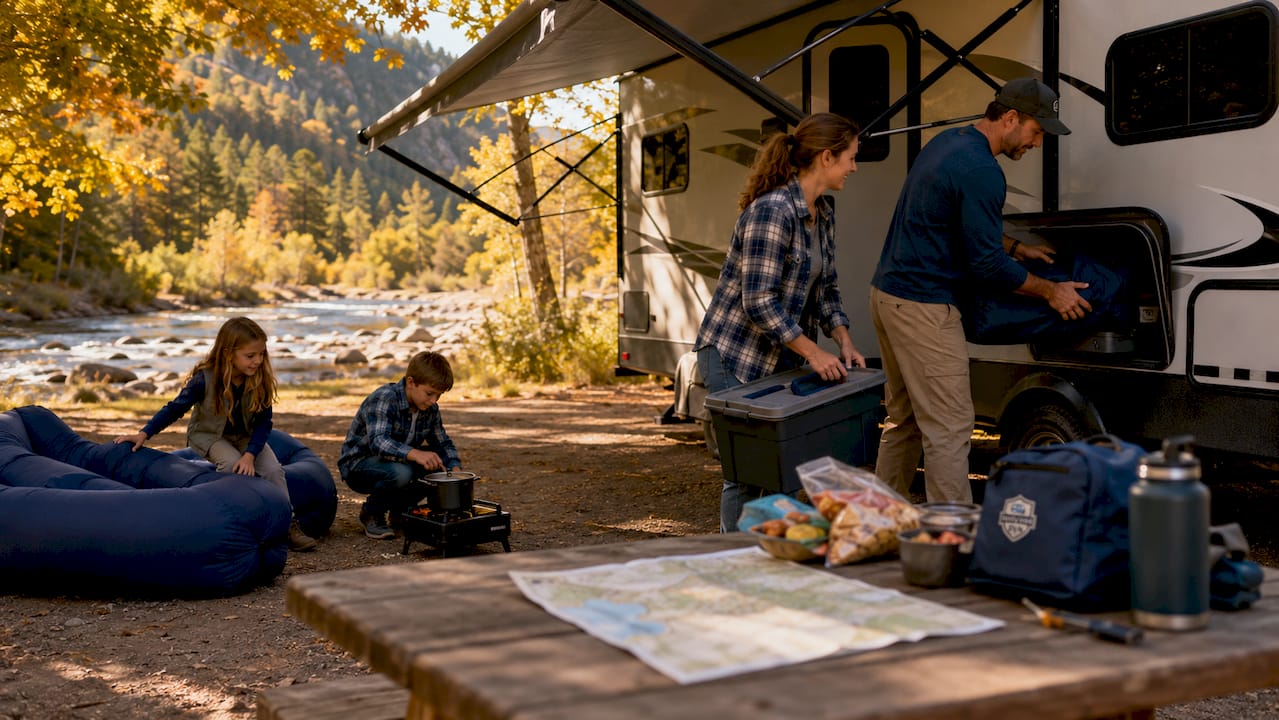
The best RVs for weekend camping are defined by fast setup, lightweight towing, and practical features that maximize leisure time on short trips. Unlike full-time rigs built for months on the road, weekend-focused recreational vehicles prioritize quick utility connections, minimal slide-outs, and simple leveling systems. The industry term for this category is “weekend-use RV,” and it covers everything from compact Class B motorhomes to lightweight travel trailers and pop-up campers. If you want more time around the fire and less time wrestling with hookups, choosing the right rig from the start makes all the difference.
1. Best RVs for weekend camping: lightweight travel trailers
Lightweight travel trailers are the most popular choice for weekend camping, and the numbers explain why. Suitable models weigh between 2,800 and 4,500 lbs dry, putting them within towing range of most mid-sized SUVs and half-ton trucks. That weight range opens up weekend camping to a huge portion of American families who already own a capable tow vehicle.
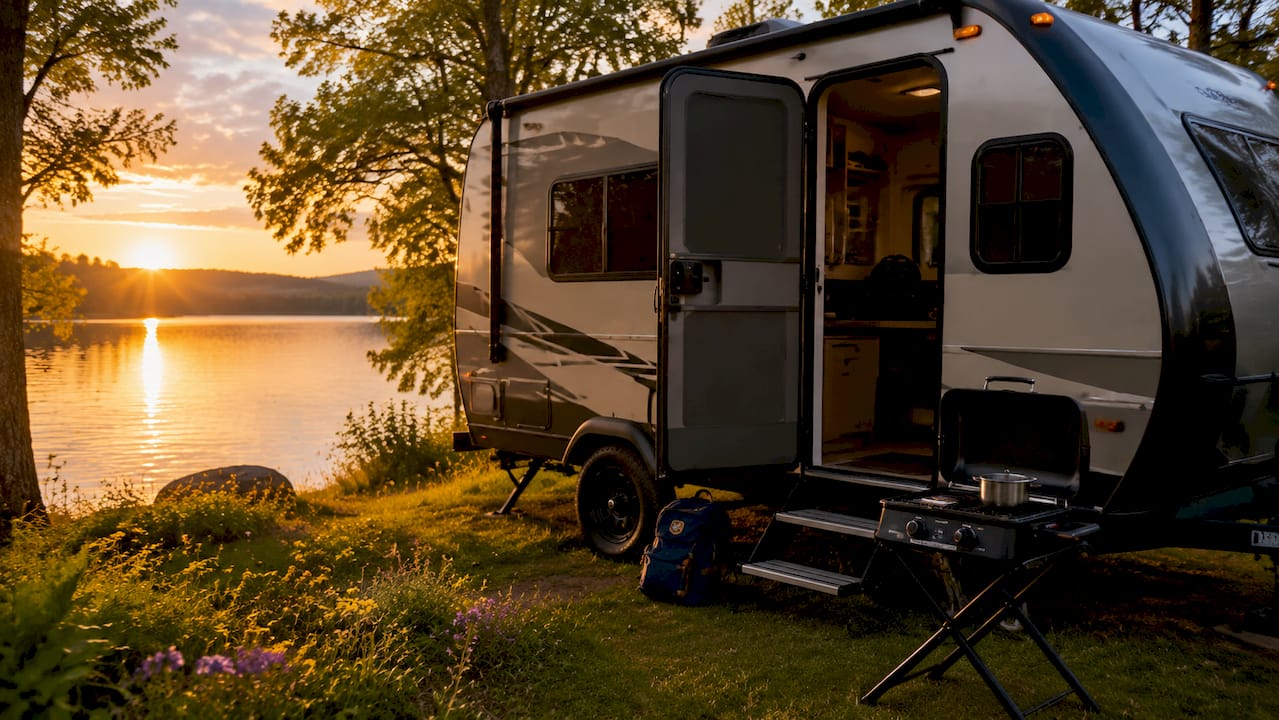
The 2026 Coleman Light 17RX by Keystone RV is a strong example of this category done right. It weighs just 2,835 lbs dry, sleeps three, and features quick utility hookups designed for fast campsite setup. Single-axle trailers like this one are easier to back into tight campsites and require less maintenance than dual-axle models.
Key features that make lightweight trailers work for weekend trips:
- Tankless water heaters that deliver hot water without waiting for a tank to warm up
- 12V refrigerators that run off the battery without needing shore power immediately
- Pass-through storage compartments for gear you load once and leave
- Simple tongue-jack systems that level the trailer in minutes
The one honest limitation is living space. A 17-foot trailer feels fine for two nights but gets cramped on a five-day trip. For weekend use, that trade-off is completely worth it.
Pro Tip: Check the hitch weight, not just the dry weight. Most lightweight trailers carry a hitch weight of 300–450 lbs, which affects your tow vehicle’s payload rating more than people expect.
2. Compact Class B motorhomes for quick weekend getaways
Class B motorhomes, also called camper vans, are the most driveable RVs on the market. They fit in a standard parking space, require no special license to operate, and can be set up at a campsite in under 15 minutes. That combination makes them the top pick for solo travelers and couples who want to move fast and camp often.
The interior layout of a Class B is tight but efficient. You get a sleeping area, a small kitchen, and a compact bathroom in a package roughly the size of a full-size cargo van. The trade-off is storage. Weekend campers who pack light thrive in a Class B. Families with kids and gear will feel the squeeze quickly.
Benefits that stand out for weekend use:
- No tow vehicle required, which eliminates one of the biggest barriers for new campers
- Leveling takes minutes with built-in systems on most modern models
- Easy to park at trailheads, breweries, and non-traditional overnight spots
- Lower fuel costs compared to Class A or Class C motorhomes
The setup speed advantage is real. Weekend travelers benefit most from rigs that are campsite-ready in under 45 minutes, and a Class B consistently beats that benchmark. That time savings adds up to hours of extra leisure across a two-night trip.
3. Why pop-up campers are a smart weekend RV choice
Pop-up campers, also called folding campers or tent trailers, offer the lowest towing weight of any RV category. Most models weigh under 2,500 lbs, which means even a compact crossover can tow one. That accessibility makes pop-ups the entry point for families who want the RV experience without buying a new truck.
The expandable canvas sections are the defining feature. When folded, a pop-up stores in your garage like an oversized trailer. When set up, it opens into a surprisingly spacious sleeping area with fold-out beds on each end. A family of four fits comfortably in most mid-size pop-up models.
Here is how to think about the trade-offs:
- Insulation limits comfort in temperatures below 45°F or above 90°F. Canvas walls breathe, which is great in mild weather and miserable in extremes.
- Setup takes 20–30 minutes for first-timers but drops to under 10 minutes once you know the rig.
- Storage is limited to what fits in the hard-sided base, so pack with intention.
- Sleeping capacity is the strength. Most pop-ups sleep 4–6 people, which beats many travel trailers at the same price point.
Hybrid trailers split the difference between pop-ups and hard-sided trailers. They feature a hard-sided center section with canvas slide-outs on each end. You get better insulation than a pure pop-up with more sleeping space than a standard trailer.
Pro Tip: Rent a pop-up for one weekend before buying. The setup process feels intuitive in a YouTube video but reveals real preferences when you are doing it in the dark after a four-hour drive.
4. Key features to look for when renting or buying a weekend RV
Choosing the right features matters more than choosing the right brand. A well-spec’d budget trailer will outperform a poorly configured premium rig on a weekend trip every time. Focus on what actually affects your Friday-to-Sunday experience.
For renters, the logistics matter as much as the rig itself. Peer-to-peer rental listings typically require a minimum 2–3 night stay with security deposits around $500. Delivery and setup services add $100–$200 per trip but remove the need to tow anything yourself. That fee is worth serious consideration for families who do not own a tow vehicle or who are new to RV camping.
Features that genuinely improve weekend trips:
- Minimal slide-outs. Slide-outs increase interior space but complicate quick stops and highway overnight parking where full deployment is not possible. For weekend use, a slide-out-free layout is often faster and less stressful.
- Fast utility connections. Look for city water inlets, 30-amp shore power hookups, and sewer connections that are clearly labeled and easy to reach.
- Automatic or electric leveling. Manual leveling blocks work, but electric systems cut setup time significantly.
- Adequate fresh water tank. A 30-gallon tank covers two adults for a weekend without hookups. Families need 40–50 gallons minimum.
For buyers, serviceability features like magnetized removable panels for plumbing access reduce downtime and make weekend trips more reliable. A rig that is easy to fix on the road is worth more than one that looks great in the showroom.
5. How to match your RV to your weekend camping style
Not every weekend camper needs the same rig. The right choice depends on how you camp, who you bring, and how often you go out. Matching the RV to the scenario saves money and prevents buyer’s remorse.
Solo travelers and couples do best with a Class B motorhome or a lightweight travel trailer under 20 feet. Setup is fast, towing is manageable, and the smaller footprint opens up more campsite options including primitive sites that larger rigs cannot access.
Families with kids need sleeping capacity first. A pop-up camper or a hybrid trailer handles 4–6 sleepers at a lower price point than a comparably sized hard-sided trailer. If the family camps more than six weekends a year, a small Class C motorhome with a cab-over bunk becomes worth the investment.
Off-grid adventurers need power independence above all else. Modern off-grid weekend rigs with high-capacity lithium battery banks eliminate the need for generators and propane, reducing noise and fuel management stress. Look for models with at least 200Ah of lithium capacity and a solar array of 200 watts or more for a two-night off-grid stay.
| Camping style | Best RV type | Key priority |
|---|---|---|
| Solo or couple | Class B or small travel trailer | Driveability and fast setup |
| Family of 4+ | Pop-up, hybrid, or small Class C | Sleeping capacity and cargo space |
| Off-grid weekender | Class B or Class C with solar | Battery capacity and self-sufficiency |
| New camper renting | Delivered travel trailer | Zero towing stress |
Choosing an RV for long-term comfort rather than weekend usability often leads to underuse. Ease of towing and setup is more critical for frequent short trips than square footage or luxury amenities.
6. How delivery and setup services change the weekend RV experience
Delivery and setup services are the most underrated option in weekend RV camping. Using delivery and setup for a rented RV eliminates the stress of towing and campground maneuvering, which is a major benefit for new or casual weekend campers. You show up to a campsite where the rig is already level, connected, and ready to use.
The math works out clearly. A $150 delivery fee on a two-night rental adds $75 per night to your cost. For a family that does not own a tow vehicle or hitch, that fee replaces a $500 hitch installation and hours of driving practice. For experienced campers, it buys back Friday evening, which is often the most rushed and stressful part of the trip.
Simplifying campsite procedures through delivery services transforms camping from a logistics exercise into a relaxing experience, especially for families on tight schedules. The goal of a weekend trip is to recharge, not to spend three hours figuring out why the water pump is not priming.
Key takeaways
The single most important factor in choosing a weekend camping RV is setup speed. A rig that is campsite-ready in under 45 minutes gives you more usable time than any luxury feature ever will.
| Point | Details |
|---|---|
| Prioritize setup speed | Choose rigs that reach campsite-ready in under 45 minutes to maximize leisure time. |
| Match weight to your tow vehicle | Lightweight trailers at 2,800–4,500 lbs fit most SUVs and half-ton trucks without upgrades. |
| Avoid unnecessary slide-outs | Slide-outs add space but slow setup and limit parking options on short trips. |
| Consider delivery for rentals | A $100–$200 delivery fee removes towing stress and recovers hours of vacation time. |
| Match RV type to camping style | Solo campers need driveability; families need sleeping capacity; off-grid campers need battery power. |
What I have learned after years of watching people choose the wrong rig
Most people shopping for a weekend camping RV make the same mistake. They walk into a dealership, fall in love with the biggest, most feature-packed trailer they can afford, and drive it home. Then it sits in the driveway for six months because hooking it up feels like too much work for a two-night trip.
The RVs that actually get used on weekends are the boring ones. The 19-foot trailer with no slide-outs. The camper van that parks anywhere. The pop-up that fits in the garage. These rigs lower the activation energy for a trip. When setup takes 20 minutes instead of two hours, you go more often. Going more often is the whole point.
I have also seen families rent a delivered trailer once and never look back. They pay the delivery fee, show up to a ready campsite, and realize they were dreading a problem that does not have to exist. If you are on the fence about towing, try a delivered weekend rental before committing to a purchase. It will tell you more about what you actually want than any amount of research will.
The other thing worth saying plainly: do not buy for the trip you dream about. Buy for the trip you will actually take. Most weekend campers go to state parks within two hours of home. A compact, easy-to-tow rig serves that reality far better than a 35-foot fifth wheel ever will.
— Christopher
Finding your next weekend RV on Gently Used RVs
Weekend camping should feel like an escape, not a project. Gently Used RVs makes it easier to find a rig that fits your actual camping style, not just your wishlist.
Browse the RV types guide to compare Class B motorhomes, lightweight travel trailers, pop-up campers, and hybrid trailers side by side. Every category includes the specs and features that matter most for short trips. When you are ready to shop, the dealer directory connects you with local dealerships carrying weekend-ready inventory across the U.S. and Canada. Listings on Gently Used RVs are geotargeted, so the closest rigs show up first. No account needed to browse. Start with what fits your tow vehicle and your campsite, and go from there.
FAQ
What is the best RV type for a weekend camping trip?
Lightweight travel trailers and Class B motorhomes are the best options for weekend camping. Both offer fast setup, easy towing or driving, and practical layouts sized for short trips.
How much should a weekend camping RV weigh?
A weekend travel trailer should weigh between 2,800 and 4,500 lbs dry to stay within the towing capacity of most mid-sized SUVs and half-ton trucks.
Is renting an RV for a weekend worth it?
Yes, especially if you use a delivery and setup service. Rental minimums are typically 2–3 nights, and delivery fees of $100–$200 remove the need to tow, making the experience accessible for first-timers.
Are slide-outs a good idea for weekend camping RVs?
Slide-outs add interior space but slow down setup and limit where you can park overnight. For weekend trips, a slide-out-free layout is faster and less complicated.
What RV works best for a family of four on weekend trips?
A pop-up camper, hybrid trailer, or small Class C motorhome works best for a family of four. These options provide sleeping capacity for 4–6 people at a lower cost than comparably sized hard-sided trailers.