
Buying a motorhome is one of the most personal purchases you’ll ever make, and the sheer number of options on the market can make the decision feel overwhelming fast. With types of motorhomes explained across three main classes and dozens of floor plans within each, knowing where to start matters. The wrong choice doesn’t just cost you money. It costs you weekends, comfort, and the kind of trips you actually wanted to take. This guide breaks down every major motorhome class with real-world context, so you can match the right rig to your travel style before you ever sign anything.
Table of Contents
- Key takeaways
- 1. Key factors to consider before comparing motorhome types
- 2. Class A motorhomes: the full-size, full-comfort option
- 3. Class B motorhomes: compact, nimble, and surprisingly capable
- 4. Class C motorhomes: the smart middle ground
- 5. Side-by-side comparison of motorhome types
- 6. How to choose the right motorhome for your lifestyle
- My honest take on picking the right motorhome class
- Find your next motorhome on Gentlyusedrvs
- FAQ
Key takeaways
| Point | Details |
|---|---|
| Three core motorhome classes | Class A, B, and C each serve distinct travel styles, budgets, and driver skill levels. |
| Size shapes everything | Length determines parking access, campsite eligibility, fuel costs, and onboard amenities. |
| Licensing can catch you off guard | Weight restrictions and license requirements vary and can limit which motorhomes you’re legally allowed to drive. |
| Match class to travel frequency | Full-timers and long-haul travelers have very different needs than weekend campers or solo adventurers. |
| Used motorhomes offer real value | Buying used lets you access higher-class features at a lower entry price, especially on trusted marketplaces. |
1. Key factors to consider before comparing motorhome types
Before you get attached to any specific class, you need to be honest about how you actually travel. Not how you imagine you’ll travel. How you actually do it.
Here are the core factors that should drive your decision:
- Size and length. Motorhome sizes range from 17 feet for compact Class B units to 45 feet for full-size Class A coaches. Length affects where you can park, which campsites you can access, and how confident you need to be behind the wheel.
- Driving experience. Larger motorhomes require real practice. If you’ve never driven anything bigger than a pickup truck, jumping into a 40-foot diesel pusher is a steep learning curve.
- Onboard facilities. A true motorhome must include a built-in toilet, shower, kitchen, and dedicated sleeping area. Class B units sometimes skip fixed bathrooms entirely, which matters if you’re camping off-grid.
- Licensing and weight limits. This is where new buyers get blindsided. Newer license holders are often limited to vehicles up to 3,500kg MAM without taking an additional driving test. Exceeding that limit without proper licensing risks fines and can invalidate your insurance entirely.
- Fuel efficiency and maintenance. Bigger rigs burn more fuel and cost more to maintain. Budget for both the purchase price and the operational costs before committing.
Pro Tip: Before you test drive anything, calculate your realistic annual mileage and multiply it by the average fuel cost for each class. The difference between a Class A and a Class B over 10,000 miles per year can run into thousands of dollars.
2. Class A motorhomes: the full-size, full-comfort option
Class A motorhomes are the largest and most residential rigs on the road. They range from 26 to 45 feet and are built on an integrated coachbuilt body, meaning there’s no separate cab section. The entire vehicle is one continuous structure, which improves insulation and reduces road noise compared to other designs.
Diesel pusher models place the engine in the rear, which makes the cabin quieter and frees up front storage space. Gas-powered Class A units are more affordable but noisier and slightly less fuel-efficient on long hauls.
What you get with a Class A:
- Multiple slide-outs that expand the living space when parked
- Full residential kitchens with ovens, full-size refrigerators, and multiple burners
- Separate bedroom areas with queen or king beds
- Large exterior storage bays for gear, bikes, and equipment
- Washer and dryer hookups in higher-end models
The trade-offs are real, though. Class A motorhomes are harder to park, can’t access many campgrounds with low-clearance trees or tight loops, and cost significantly more to fuel and insure. They’re best suited for full-time travelers, large families, and anyone who wants the closest thing to a rolling apartment.
Pro Tip: If you’re considering a Class A, spend at least one night in a rental before buying. The driving experience and the daily logistics of parking something 40 feet long are things you need to feel firsthand, not just read about.
3. Class B motorhomes: compact, nimble, and surprisingly capable
Class B motorhomes are the smallest of the three classes, typically running between 17 and 24 feet. They’re built on a standard van chassis, which means they drive almost like a large passenger vehicle. You can park them in a regular parking spot, take them through drive-throughs, and use them as a daily driver without much fuss.
That flexibility comes with trade-offs:
- Living and sleeping space is tight, especially for two people
- Many Class B units lack a fixed bathroom, relying instead on external campground facilities
- Storage is limited compared to larger classes
- You won’t find slide-outs or separate bedroom areas
Class B is the right call for solo travelers, couples who prioritize mobility over comfort, and people who want to combine camping trips with city exploration. Better fuel efficiency and easier urban access make them genuinely practical in a way that Class A and C units simply aren’t.
One thing worth knowing: if a van-style unit doesn’t include a fixed toilet and shower, it’s technically a campervan, not a motorhome. The distinction matters for insurance classification and campsite access rules.
4. Class C motorhomes: the smart middle ground
Class C motorhomes hit the sweet spot for most buyers. They run from 21 to 35 feet and are built on a truck or van cab chassis, which means the driving cab is a separate section from the living area. The most recognizable feature is the over-cab sleeping area that extends above the driver’s seat, adding sleeping capacity without adding length.
Key features of Class C motorhomes:
- Over-cab bunk adds sleeping space for kids or extra gear storage
- Built on familiar truck chassis, which makes them easier to drive than Class A
- Full bathroom, kitchen, and dining area in most floor plans
- Towing capacity to pull a small car or boat behind the rig
- Generally more affordable than Class A at comparable lengths
Class C models are more maneuverable than their Class A counterparts, which makes them a better fit for families who want comfort without needing a commercial driver’s mindset. They’re also more widely available in the used market, which means you can often find a well-maintained unit at a price that makes sense for occasional to frequent travelers.
5. Side-by-side comparison of motorhome types
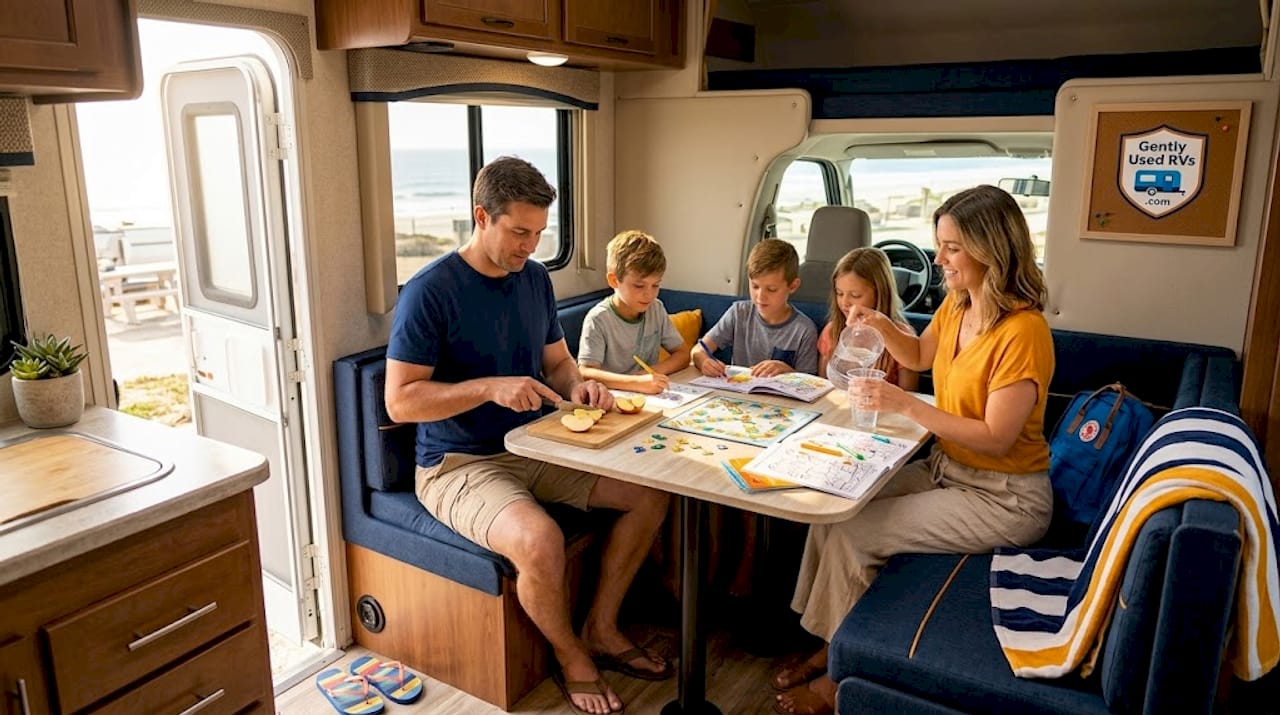
Here’s a direct comparison to help you see the differences at a glance:
| Feature | Class A | Class B | Class C |
|---|---|---|---|
| Length | 26 to 45 feet | 17 to 24 feet | 21 to 35 feet |
| Driving difficulty | High | Low | Moderate |
| Onboard bathroom | Always included | Sometimes absent | Almost always included |
| Sleeping capacity | 4 to 8 people | 2 to 4 people | 4 to 6 people |
| Fuel efficiency | Lowest | Best | Moderate |
| Purchase price (used) | Highest | Moderate | Most accessible |
| Best for | Full-timers, large families | Solo travelers, couples | Families, frequent campers |
| Parking and campsite access | Most restricted | Easiest | Moderate |
Choosing between motorhome classes is not about which one is objectively better. It’s entirely about which one fits how you actually travel. Class A is for luxury and long stays. Class B is for flexibility and spontaneity. Class C is the middle ground that works for most families most of the time.
One area that surprises many buyers: larger motorhomes face specific parking restrictions in many locations, including overnight fees and time limits that don’t apply to smaller vehicles. Factor that into your real-world cost estimate.
6. How to choose the right motorhome for your lifestyle
Now that you understand the difference between motorhome types, the real question is which one fits your life. Here’s a practical framework:
- Define your travel frequency. If you’re camping 20 or more weekends a year or living full-time in your rig, Class A’s comfort pays off. If you’re going out four or five times a year, a Class C or even a Class B might be all you need.
- Count your travel companions. A couple traveling solo has very different space needs than a family of five. Class B works beautifully for two. Class C handles a family. Class A handles everyone plus guests.
- Be realistic about where you’ll park. If you’re planning to hit national park campgrounds, check the maximum vehicle length before you buy. Many sites cap at 30 or 35 feet, which rules out the largest Class A units entirely.
- Balance purchase cost against operating costs. A used Class C might cost $40,000 to $80,000, while a comparable used Class A could run $100,000 or more. But fuel, tires, and maintenance scale up with size too.
- Check your license. Exceeding legal weight limits without proper licensing can void your insurance and result in serious fines. Know your license class before you fall in love with a specific rig.
Pro Tip: Join an RV owner forum or Facebook group for the specific class you’re considering before you buy. Real owners will tell you things no dealer ever will, from the quirks of specific floor plans to the campgrounds that won’t let you in.
My honest take on picking the right motorhome class
I’ve watched a lot of buyers get this wrong, and the pattern is almost always the same. They buy based on aspiration instead of reality.
Someone who camps four times a year buys a 40-foot Class A because they imagine the life they want. Then they spend most of the year paying storage fees, insurance, and loan payments on something they’re barely using. Meanwhile, a Class C or even a well-equipped Class B would have given them 90% of the experience at a fraction of the cost and stress.
What I’ve found actually matters more than specs is day-to-day usability. Can you confidently back it into a campsite alone? Can your co-pilot help you navigate tight campground roads without it becoming a fight? Those are real questions that no brochure answers.
The licensing piece genuinely catches people off guard. I’ve seen buyers close on a motorhome and then discover they don’t have the right license class to drive it legally. That’s not a minor inconvenience. That’s a serious legal and financial problem.
My advice: test drive every class you’re seriously considering. Spend a weekend in a rental if you can. Talk to owners, not just dealers. The right motorhome is the one you’ll actually use, not the one that looks best in photos.
— Christopher
Find your next motorhome on Gentlyusedrvs
Ready to put this motorhome types guide into practice? Gentlyusedrvs makes it easy to browse real listings across all three motorhome classes without creating an account or paying a dime. Whether you’re looking for a compact Class B for solo adventures or a spacious Class A for full-time travel, the marketplace connects you with private sellers and dealerships across the United States, Canada, and beyond.

Start by exploring the RV types guide on Gentlyusedrvs, which breaks down every class and RV category in detail. When you’re ready to browse actual listings, you can search used motorhomes filtered by location, so the closest options always appear first. And before you hand over any money, take a few minutes with the RV scam safety guide to protect yourself through every step of the buying process. Our community is here to help you buy smart.
FAQ
What are the three main types of motorhomes?
The three main motorhome classes are Class A (26 to 45 feet), Class B (17 to 24 feet), and Class C (21 to 35 feet), each offering a different balance of size, amenities, and drivability.
What is the difference between a Class A and Class C motorhome?
Class A motorhomes use an integrated coachbuilt body for a smoother, more residential feel, while Class C units are built on a truck or van chassis with a distinctive over-cab sleeping area, making them easier to drive and generally more affordable.
Is a Class B motorhome the same as a campervan?
Not exactly. A true motorhome requires a fixed toilet, shower, and kitchen, while many campervans rely on external facilities. Some Class B units qualify as full motorhomes, but others technically fall into the campervan category.
Do I need a special license to drive a motorhome?
It depends on the vehicle’s weight. Newer license holders are typically restricted to vehicles up to 3,500kg MAM and may need an additional driving test to legally operate heavier motorhomes.
Which motorhome class is best for families?
Class C motorhomes are generally the best fit for families, offering full bathroom and kitchen facilities, over-cab sleeping space, and a driving experience that doesn’t require specialized skills or a commercial license.