
Bumping refreshes your listing’s timestamp so it jumps to the top of “recent” sorting, giving you an immediate but short-lived spike in views. That spike only pays off if the listing itself is ready to convert, with sharp photos, an accurate price, and a description that answers buyer questions before they ask. Treat bumping as a distribution tool, not a fix for a weak listing.
TL;DR:
- Bumping resets your listing’s timestamp to increase immediate views, but it does not improve content quality or relevance signals.
- Manual bumps are effective for single listings, whereas auto-bumps save time but risk wasting budget on non-converting or saturated slots.
- Bumps have a short visibility window that diminishes quickly and are less effective against paid ads or featured placements.
- Preparing a strong listing with-quality photos, clear specs, and a competitive price maximizes bump effectiveness and conversion chances.
- Repeated bumps without content improvements or strategic upgrades can lead to wasted spend and diminishing returns over time.
Table of Contents
- What Bump Listing to Top Actually Means
- The Three Ways Sellers Bump a Listing
- What a Bump Can and Can’t Do for You
- Get the Listing Ready Before You Spend a Bump
- What Bumps Cost and How to Know They’re Worth It
- How to Tell If a Bump Actually Worked
- A Repeatable Bumping Routine You Can Run Weekly
- How Gently Used RVs Supports Sellers Who Want to Bump
- Bumping vs. Featured Listings vs. Promoted Ads
- The Real Risks of Relying on Bumps
- Seller Perspective: When Bumping Is Worth It and When It Isn’t
- List, Upgrade, or Bump: Your Next Move on Gently Used RVs
- Sources
What Bump Listing to Top Actually Means
A bump is a promotional action that resets your listing’s posting time, so it reappears at the top of feeds and search results sorted by recency. It doesn’t change your listing’s content or quality score. It just tricks the clock, and platforms honor that reset because most classifieds marketplaces sort primarily by recency rather than by a complex ranking formula.
That’s a meaningful contrast to organic ranking, which usually weighs:
- Relevance to the buyer’s search terms and filters
- Seller history, including response time and completed transactions
- Listing completeness, like photo count and filled-in specs
- Freshness, which is exactly the lever a bump pulls
Bumping is the only lever on that list you can pull instantly, on demand. Everything else takes days or weeks to build.
The Three Ways Sellers Bump a Listing
Most platforms give you three paths to the top, and picking the wrong one wastes either time or money.
- Manual bump. You open your listing dashboard, find the “bump” or “refresh” button, and click it. The listing’s timestamp updates instantly and it reappears near the top of recency sorted results within seconds.
- Auto-bump. You set a schedule or budget, and the platform bumps the listing automatically at set intervals, often with a cooldown period between bumps to stop sellers from gaming the feed every five minutes.
- Bulk bump. Dealers or high-volume sellers select dozens of listings at once and refresh them in a single action, usually available only on paid or dealer-tier accounts.
Manual bumps work best for a single high-priority item you’re actively trying to move. Auto-bump suits sellers who don’t have time to log in daily, but it comes with a real risk: auto-bump tools often carry cooldowns and a “burn rate” that spends your budget on listings that aren’t converting unless you’re watching the numbers.
Pro Tip: Before you turn on auto-bump, set a mental threshold, like “pause if I haven’t gotten a message in three bumps.” Automated tools don’t know when they’re wasting money, so you have to.
What a Bump Can and Can’t Do for You
A bump’s visibility window is short, and it decays fast. Most marketplaces display the boosted position for a few hours to a few days before newer listings and other bumps push you back down, and some platforms cap bumped visibility at fixed windows like three or seven days, or until the item sells, depending on the marketplace’s own rules.
A few things limit how much a bump can actually do:
- A stagnant listing wastes the spend. If your photos are blurry or your price is stale, extra eyeballs just mean extra people scrolling past you.
- Competing bumps cancel each other out. If ten other sellers bump at the same hour you do, your boost gets buried again almost immediately.
- Paid ads and featured placements outrank bumps. A bump only affects recency sorting. It does nothing against a listing that paid for a guaranteed top slot.
There’s also a longer-term ceiling worth knowing about. AI-driven search and discovery tools are shifting weight toward topical authority and content depth, which a timestamp trick can’t fake. A bump gets you seen today. It does nothing for how you show up in a buyer’s research six months from now.
Get the Listing Ready Before You Spend a Bump
A bump multiplies whatever is already true about your listing. If it’s weak, a bump multiplies mediocre performance. If it’s sharp, a bump multiplies real interest. Run this checklist first.
- Shoot enough photos to comprehensively cover the exterior, interior, and all relevant features of your listing. Cover the exterior from all four sides, the interior cab, the sleeping area, the kitchen, storage bays, tires, and any damage. Buyers assume anything you don’t photograph is hiding a problem.
- Front-load your title and description with specs. Year, make, model, length, and price should appear in the first line, not buried in paragraph three. Clear, benefit-led titles and complete specs measurably raise conversion rates on any listing platform, not just RVs.
- Price with intent, not hope. State clearly whether the price is firm, negotiable, or open to offers, and note who covers delivery or pickup costs.
- Respond within the hour when you can. A bump brings a wave of views in a tight window. If you’re slow to reply to the first few messages, you lose the momentum you just paid for.
- Set clear appointment availability. Buyers who message during a bump-driven spike want to move fast. Give them real times, not “I’ll get back to you.”
Pro Tip: Pair your bump with a small, visible change, like a new hero photo or a $200 price drop. Some marketplaces blend recency with relevance signals, so a fresh detail alongside the timestamp reset can pull double duty.
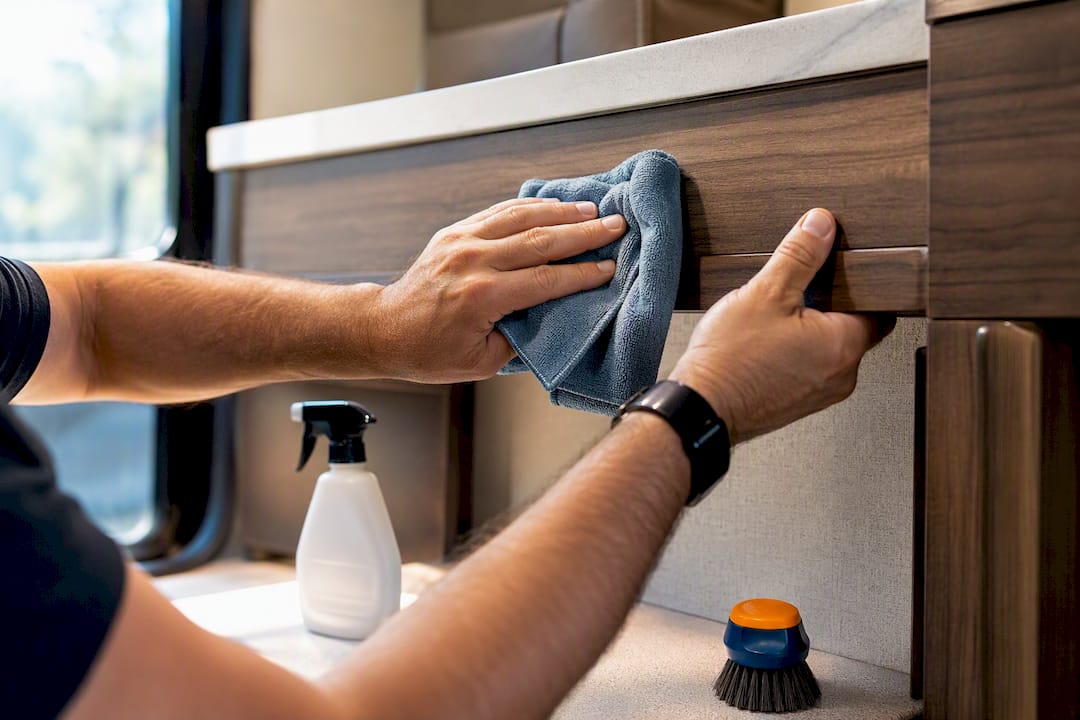
If you’re staging the RV itself before any of this, a detailing checklist built for sellers covers the cleaning and repair steps that make those photos worth taking.
What Bumps Cost and How to Know They’re Worth It
Billing models vary more than most sellers expect. Some platforms charge a flat one-time fee per bump. Others only charge when the item actually sells.
- Flat one-time fee: you pay a small fixed amount per bump, win or lose.
- Pay-on-sale percentage: some marketplaces charge a percentage of the final sale price instead of a flat fee, which lowers your risk on items that don’t sell but costs more on a successful high-value sale.
- Subscription quotas: a monthly or seasonal plan bundles a set number of bumps with other perks, like wider geographic reach.
The break-even math is simple: compare the bump fee against your expected margin on the sale. A $0.99 bump on a $40,000 travel trailer is a rounding error. Ten repeated bumps a month on a slow-moving unit might cost more than a single upgrade tier that gives you standing visibility instead of repeated one-off pushes.
How to Tell If a Bump Actually Worked
Watch four numbers: bumped views, click-through rate, messages or inquiries, and conversion rate from message to sale. Most platforms surface at least the first two in a listing insights dashboard, and boosted-listing tools on other marketplaces report spend-to-sales attribution so sellers can see whether the money is doing anything.
Expect view counts to move within hours. Messages usually lag a day or two behind the view spike.
- Views jump, messages don’t: your price or photos are turning people away. Fix those before bumping again.
- Views and messages both jump: you’re on the right track. Reprice slightly firmer or hold steady.
- Nothing moves at all: you may be bumping into a saturated time slot. Try a different day or hour next time.
A Repeatable Bumping Routine You Can Run Weekly
- Audit the listing. Confirm photos, price, and description are current before touching the bump button.
- Pick your timing. Evenings and weekend mornings tend to draw more browsing traffic than midweek workdays.
- Bump the listing. Manual for a single push, auto-bump if you’re managing several units.
- Monitor for 48 hours. Track views and messages against your baseline from the days before.
- Follow up fast. Answer every message within the day the bump goes live, while your listing is still near the top.
- Space out repeat bumps. Give at least three to five days between bumps on the same listing so you’re not paying to compete against yourself.
How Gently Used RVs Supports Sellers Who Want to Bump
Bumping can be part of a broader visibility strategy rather than the only lever available. Listings often start with limited geographic visibility for a limited time, and sellers may have options to add upgrades to extend reach.
- Bronze ($29.99/month) extends reach to 50 miles and allows up to 50 photos, useful once you’ve built out that full photo set.
- Silver ($59.99/month) pushes visibility statewide for sellers competing across a bigger buyer pool.
- Gold ($199 for six months) adds nationwide reach, live buyer chat, and appointment scheduling, built for RVs that need a national audience.
- Bump to Top ($0.99 one-time) is the fast, low-cost push for a listing that’s already optimized and just needs a fresh timestamp.
The AI-powered autofill tool pulls year, make, model, specs, and photos straight from another URL, which cuts the setup time that otherwise eats into whatever bump budget you’ve got. Search results may be geotargeted so that buyers see listings closest to them first, helping bumped listings reach nearby potential buyers.
Bumping vs. Featured Listings vs. Promoted Ads
Bumping, featured placement, and promoted ads all chase the same goal, visibility, but they work on different mechanisms and suit different budgets.
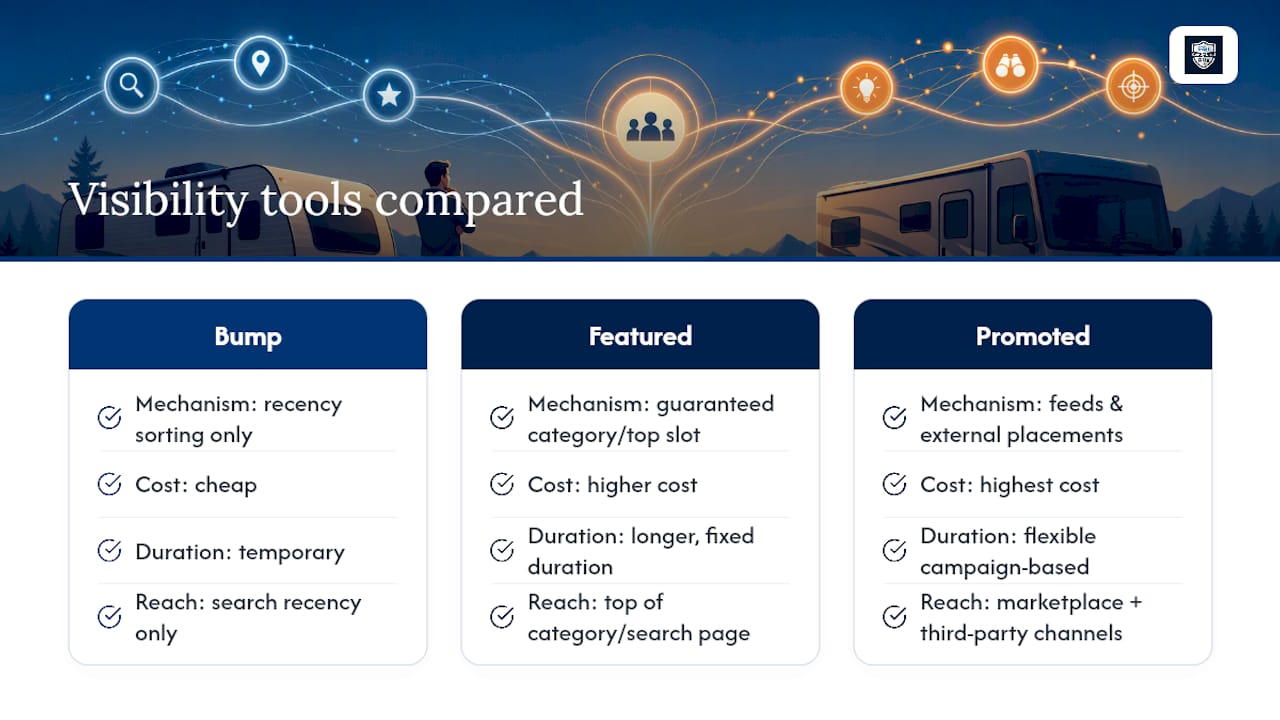
A bump only affects recency sorting. It’s cheap, fast, and temporary, and it does nothing to override a platform’s other ranking signals. It’s the right tool when your listing is strong and you just need a timing refresh, like after a price drop or a slow weekend.
A featured listing typically buys a guaranteed slot at the top of a category or search page regardless of how recently it was posted. That’s a stronger, longer-lasting placement, but it usually costs more and often locks you into a fixed duration whether or not buyers are actively searching that week.
A promoted ad goes further still, often pushing your listing into feeds or placements outside the marketplace’s own search results entirely, sometimes even into third-party channels. Promoted ads tend to carry the highest cost and the most flexible targeting, but they also demand the most setup and monitoring.
For most private sellers, the practical order of operations looks like this: optimize the listing first, use bumps for routine visibility refreshes, and reserve featured placement or promoted ads for high-value units or slow-moving inventory where a bigger spend makes financial sense. Dealers managing volume inventory often lean harder on subscription-tier visibility and dealer-focused platform features instead of repeated one-off bumps, since predictable reach across dozens of units beats manually refreshing each one.
None of these tools substitutes for the others. They stack. A well-optimized listing bumped at the right hour, backed by a featured slot during a peak selling season, covers more ground than any single tactic alone.
The Real Risks of Relying on Bumps
The most common mistake is bumping a listing that was never going to convert in the first place. Extra views on a bad price or a thin photo set just means more people scroll past you faster, and you’ve paid for the privilege.
Fees add up in ways sellers underestimate. A $0.99 one-time bump feels harmless, but ten bumps over a slow month is $9.90 spent on a listing that hasn’t moved. On percentage-based models, the math shifts differently. A pay-on-sale bump fee that seemed trivial on a $500 item becomes a meaningfully larger dollar amount on a $60,000 motorhome, even at the same percentage rate.
Effectiveness also erodes with repetition. The first bump in a week gets real attention because your listing genuinely looks new. The fourth bump in that same week starts blending into the noise, especially if competing sellers are bumping just as often. Marketplaces that allow unlimited manual bumping create their own arms race, where everyone’s pushing to the top at once and nobody’s actually rising above the pack.
There’s a structural risk too. A bump does nothing for how your listing performs in AI-driven search summaries or long-term discovery tools, which increasingly reward depth and topical relevance over recency tricks. If you’re leaning on bumps as your only visibility strategy, you’re optimizing for a channel that’s shrinking in relative importance, while ignoring the one that’s growing.
Finally, auto-bump tools carry a quiet risk of budget drift. Left unmonitored, they’ll keep spending on a listing that stopped generating messages weeks ago, because the tool has no way to know your item isn’t selling. That’s money spent on autopilot, not strategy.
Seller Perspective: When Bumping Is Worth It and When It Isn’t
Bumping earns its keep on a listing that’s already strong and just needs a timing nudge, especially heading into a weekend when browsing traffic peaks. It stops earning its keep the moment you’re using it to cover for a stale price or thin photos. At that point, a $500 price drop or a full relist with new pictures beats five repeated bumps every time.
Fold it into a routine, not a panic button. Check performance every few days, bump when the numbers say the listing is being seen but not messaged, and reprice or refresh content when a bump doesn’t move the needle. Budget for a handful of bumps a month, not daily clicks.
— Christopher
List, Upgrade, or Bump: Your Next Move on Gently Used RVs
Gently Used RVs is the option built for sellers who want control over how far a listing reaches without paying agency-style fees or getting locked into a long-term contract. Listing is free with no commissions, and every upgrade tier, from Bronze’s 50 mile reach to Gold’s nationwide chat and scheduling, exists to expand exactly the kind of visibility this article just walked through.

If a listing is optimized, a low-cost bump option can refresh its timestamp without a monthly commitment. If you’re managing more than a handful of units, the dealer inventory tools sync automatically instead of forcing manual refreshes on every listing. Either way, start by checking how your RV type should be categorized in the RV types guide, then post your listing and decide from there whether a bump, an upgrade tier, or both gets you to a sale fastest.
Sources
- What is Bump? – Carousell Help Centre
- What is “Bump” and how does it work? – Reverb.com
- How AI changes visibility — Ahrefs blog
- Amazon listing optimization tips — eDesk